

Many high-performing women grew up being praised for being responsible, dependable, and prepared. Over time, that external validation can become internal pressure.
Farah Khan

Many women believe the biggest pressure in their careers comes from external sources, demanding workplaces, ambitious goals, and constant expectations.
But for many high-achieving professionals, the loudest pressure isn’t coming from a manager, client, or deadline.
It’s coming from the voice inside their own mind.
This internal voice—often referred to as the inner critic—constantly evaluates and questions every decision. It wonders whether something could have been done better, whether a mistake will be noticed, or whether success was truly deserved.
Over time, that voice can quietly become the most demanding boss you’ve ever had.

What The Inner Critic Really Is?
The inner critic is the internal dialogue that monitors our behaviour and performance.
In healthy doses, it can help us reflect and improve. But when it becomes dominant, it shifts from constructive feedback to constant criticism.
Instead of encouraging growth, it fuels:
- perfectionism
- self-doubt
- overthinking
- fear of making mistakes
Research shows these patterns are becoming more common. A major study published in Psychological Bulletin found that perfectionism among young adults has increased significantly over the past three decades, particularly self-critical expectations and pressure to perform.
Why High Achievers Often Have The Loudest Inner Critics
Ironically, the inner critic is often strongest in capable, ambitious individuals.
Many high-performing women grew up being praised for being responsible, dependable, and prepared. Over time, that external validation can become internal pressure.
The brain begins to associate self-criticism with motivation. The thinking becomes:
“If I stop pushing myself this hard, I might fall behind.”
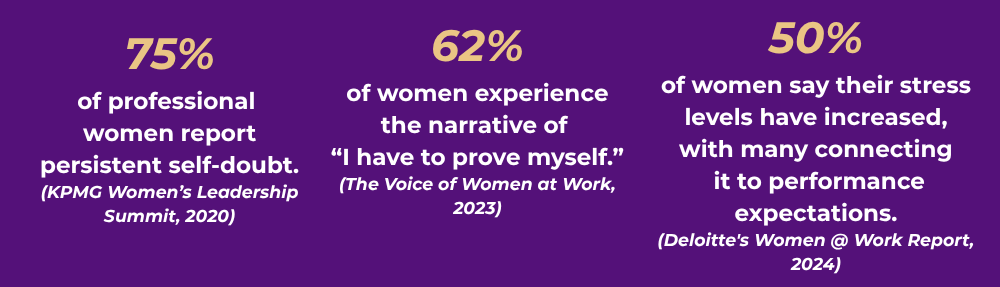
But research shows the opposite can happen. Chronic self-criticism is strongly associated with higher stress, anxiety, and burnout, particularly among high-performing professionals.
Instead of driving excellence, the inner critic can quietly drain the mental energy needed to sustain it.

Signs Your Inner Critic Is Running The Show
When the inner critic becomes dominant, it influences behaviour in subtle ways.
You might notice yourself:
- Re-checking work repeatedly before submitting it
- Hesitating to speak up unless you’re completely certain
- Feeling uncomfortable receiving praise
- Over-preparing for tasks others approach more casually
- Focusing more on mistakes than achievements
Externally, you may appear confident and capable. Internally, it can feel like you’re working for a boss whose expectations are impossible to satisfy.
Why Self-Criticism Drains More Than It Motivates
While the inner critic often believes it’s protecting you from failure, excessive self-criticism can have the opposite effect.
Studies linking perfectionism and burnout show that individuals with strong self-critical tendencies are more vulnerable to emotional exhaustion and mental fatigue.
Over time, this creates a cycle where the inner critic pushes harder in an attempt to maintain performance—while simultaneously draining the energy needed for sustained success.
A Simple Way To Quiet The Inner Critic
The goal isn’t to eliminate self-awareness or accountability. Instead, the goal is to change the tone of your internal leadership.
One helpful practice is to pause and examine the voice behind the thought.
Ask yourself:
Is this feedback or criticism?
Constructive feedback is specific and useful. Criticism is often vague and absolute.
For example:
Inner critic: “You’re terrible at presentations.”
Inner coach: “That presentation felt rushed. Next time, slow down and emphasize the key points.”
One voice creates shame. The other creates growth.
A Leadership Skill Most People Never Learn

The Shift From Criticism To Self-Leadership
If any part of this felt familiar, it’s worth paying attention to.
Because the way you speak to yourself isn’t just background noise, it shapes how you show up, the decisions you make, and the level of success you allow yourself to sustain.
The inner critic isn’t something you need to eliminate. It’s something you need to understand, and more importantly, learn how to lead.
When you begin to shift that voice from constant criticism to clear, constructive guidance, everything changes.
You stop second-guessing your every move.
You stop tying your worth to perfection.
You start making decisions with clarity instead of fear.
And over time, you build something far more sustainable than pressure-driven success.
You build self-trust.
Because true confidence isn’t built by silencing your inner voice.
It’s built by learning how to lead yourself with it.
Disclaimer: The views, thoughts, and opinions expressed in this article are solely those of the author and do not necessarily reflect, whether in whole or in part, the views of The Open Chest Confidence Academy, its owners, directors, management, employees, subcontractors, partners, affiliates, clients, or members.