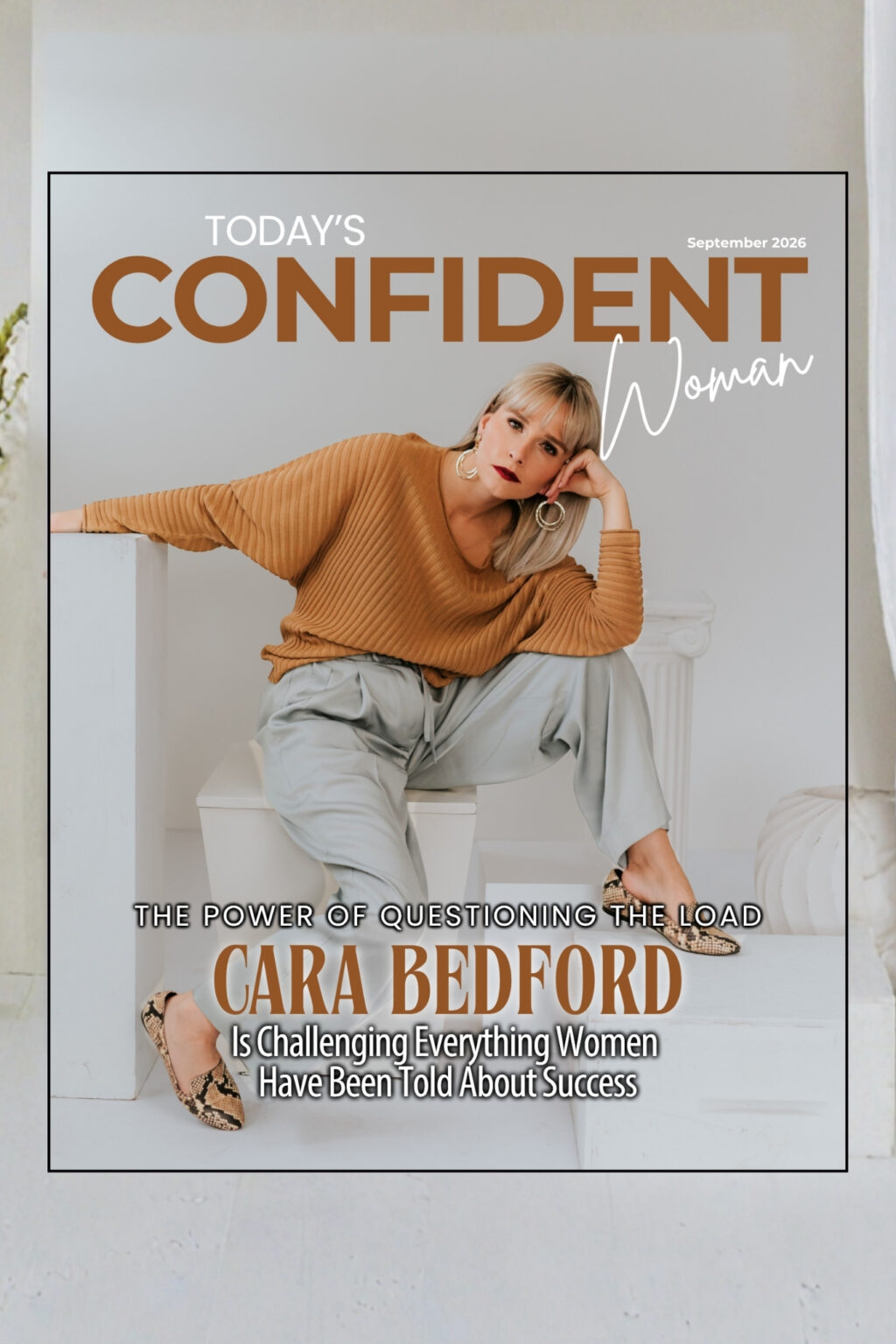
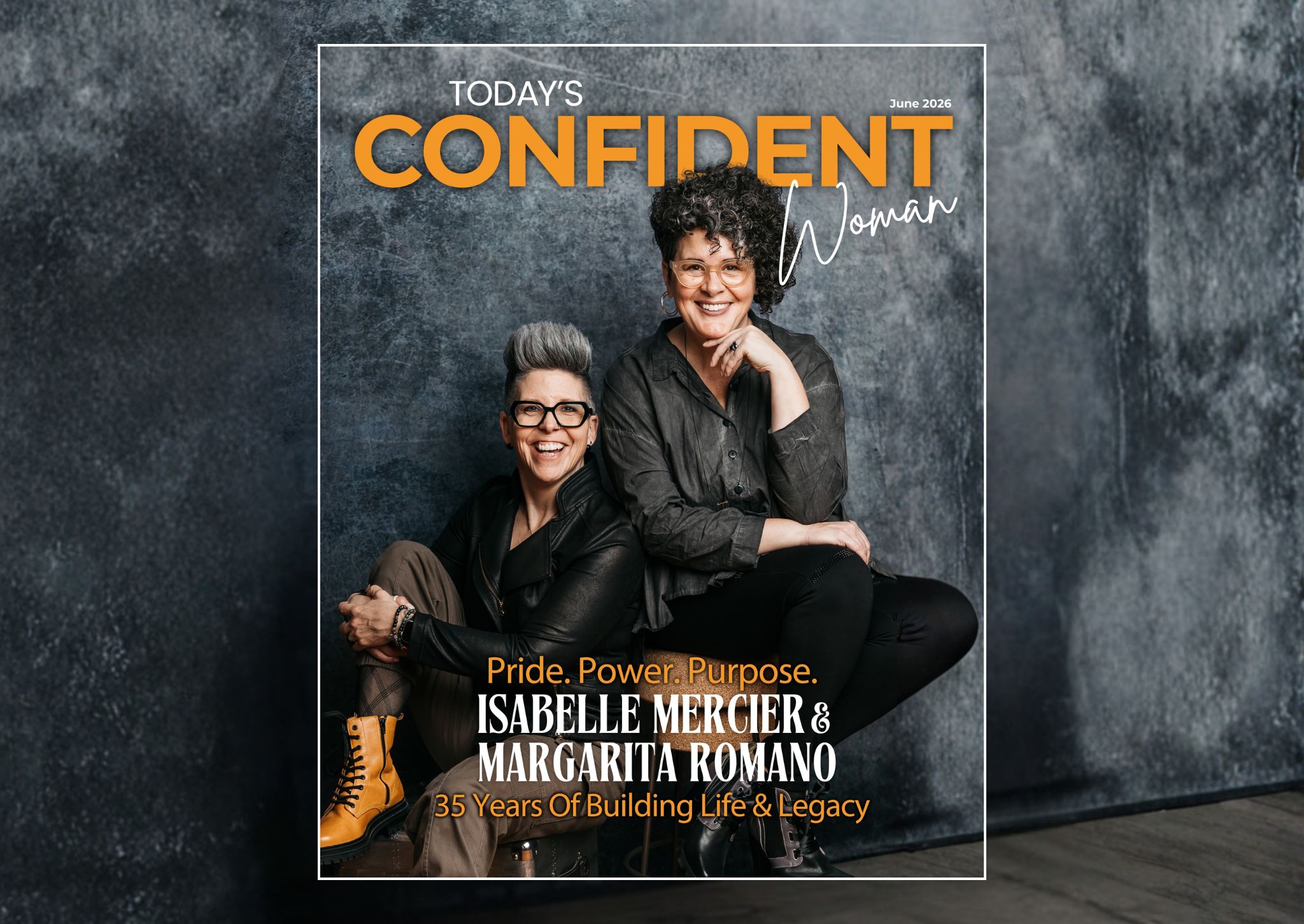
ABOUT ISABELLE MERCIER & MARGARITA ROMANO:
Isabelle Mercier-Turcotte and Margarita Romano are award-winning entrepreneurs, bestselling authors, speakers, and co-founders of LeapZone Strategies Inc. and Trailblazers Retreat Centre. Partners in both life and business for over 35 years, the duo has built a reputation for helping entrepreneurs, business leaders and teams create businesses rooted in clarity, alignment, and intentional growth.
Known for their bold approach to leadership and communication, Isabelle and Margarita have spent more than three decades guiding brands, teams, and founders through transformational growth. Together, they built one of Canada’s most awarded branding and creative firms, working with globally recognized organizations including A&W, TEDx, TD, HSBC, IMAX, Earls Restaurants, and Robeez Footwear.
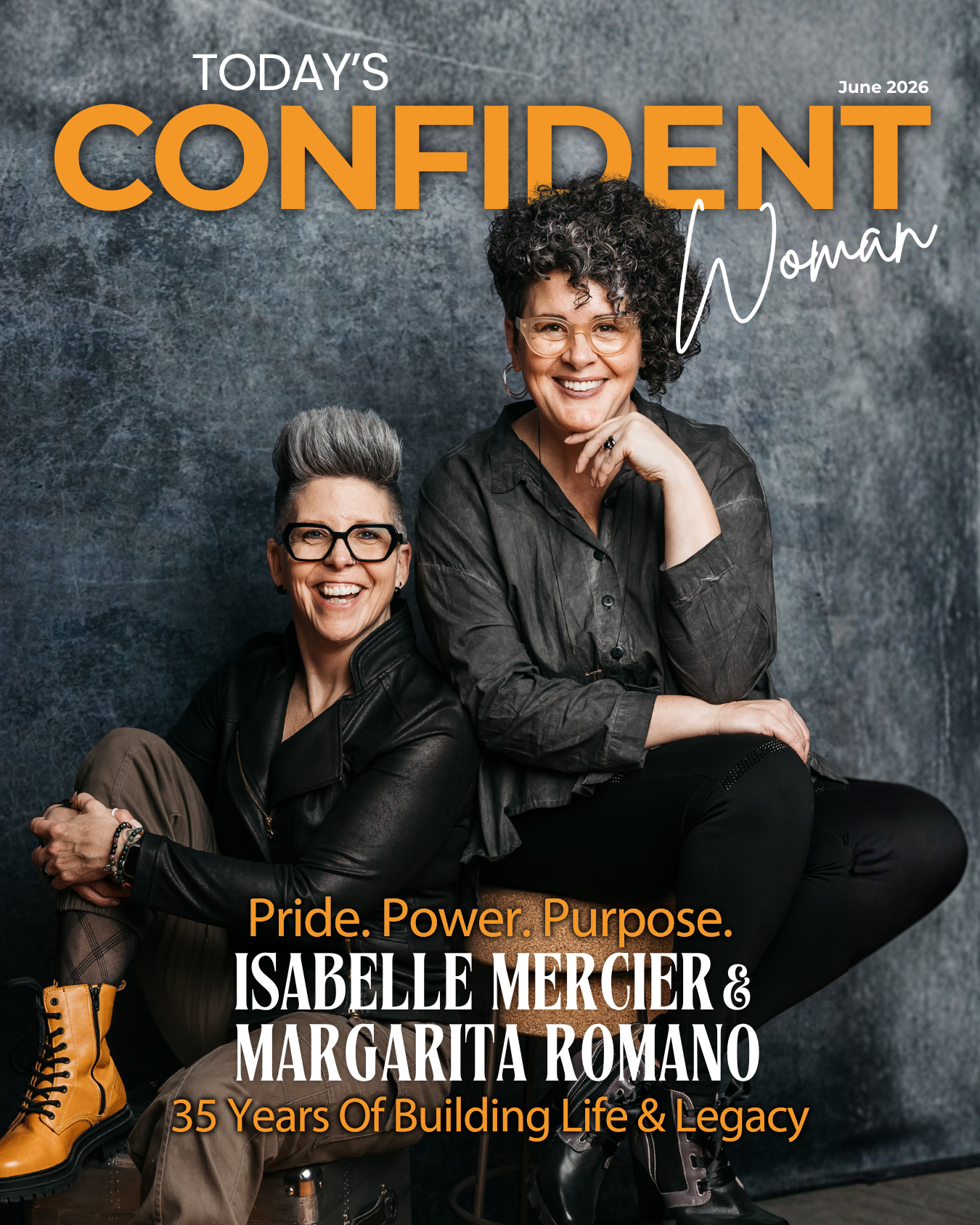
Isabelle, a renowned Brand Positioning Strategist and Business Growth Catalyst, is recognized as one of North America’s leading business influencers. She is a two-time TEDx speaker with millions of views, a best-selling author, and an online TV host known for helping businesses become “The First, The Best, or The Only” in their category.
Margarita, a certified equine-facilitated coach and best-selling author, focuses on helping entrepreneurs and leaders align success with fulfillment, truth, and emotional clarity. Her work centers around intentional living, courageous leadership, and increasing what she calls “units of happiness.”
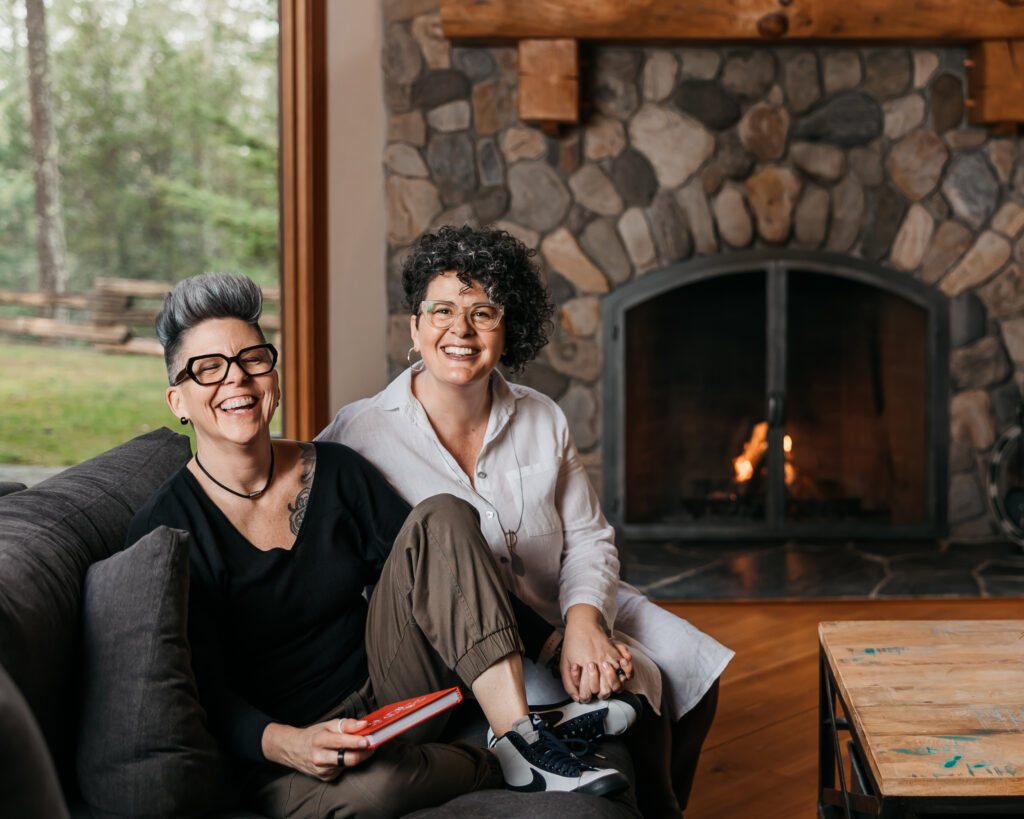
Together, Isabelle and Margarita have become respected voices in entrepreneurship, leadership, communication, and LGBTQIA+ visibility. Their work blends strategy with humanity, encouraging people to build lives and businesses by design, not by default.
Through speaking engagements, coaching, retreats, and media platforms, they continue to empower individuals and organizations to lead with authenticity, clarity, and purpose while redefining what modern success can look like.

Q&A WITH ISABELLE MERCIER & MARGARITA ROMANO:
What is your most valuable possession and why?
Our most valuable possession is our freedom.
The freedom to choose how we live, who we love, and how we build. We’ve learned that freedom isn’t something you wait for; it’s something you design through clarity, courage, and standards . . . day-to-day.
What are your top 3 life lessons and how have they changed your life for the better (in other words, how have you implemented them to better your life)?
1) Clarity is power. When we’re clear, we move faster, waste less energy, and make better decisions. We protect time to think and we build systems that keep us aligned.
2) Build by design, not by default. We don’t let “busy” drive our lives. We design rhythms, boundaries, and priorities so work supports life—not the other way around.
3) Truth creates momentum. When we stop performing and tell the truth—about what we want, what we won’t tolerate, and what matters—things simplify. That’s how we’ve built our relationship and our business.
Bonus: Treat yourself like a multi-million-dollar client.
Show up for yourself (and your own projects) with the same standards, structure, and follow-through you would bring to your biggest, most important client—because your life deserves that same level of intentionality and design.
What is the most valuable advice you’ve received and how did it set you up to win?
1. One of the most valuable pieces of advice we’ve ever received came from a dear friend’s 95-year-old mother. She said: “When you wake up in the morning, you decide if you’re on the building crew or the demolition crew with your mind—because what you believe, your actions follow.” That stayed with us because it’s brutally true. Your mindset isn’t a vibe, it’s a strategy. When we’re on the “building crew,” we look for solutions, structure, and the next right move. When we’re on the “demolition crew,” we create doubt, delay, and drama in our own head.
Example: During a season where things felt heavy and chaotic in business, that advice became our reset. Instead of spiraling into “we’re behind” thinking, we asked, “What would the building crew do today?” The answer was simple: clarify priorities, set one clean decision, and install one system so the same problem doesn’t repeat. That shift restored momentum fast, and it’s a principle we use constantly in how we lead and build.
2) Stop trying to do more. Start designing better.” Early on, we used to solve problems by working harder. Eventually we realized effort wasn’t the issue—structure was. We redesigned how we prioritize, how we make decisions, and how we communicate, and it changed everything: less chaos, faster execution, and more peace of mind. In our tandem TED Talk, we share the 3 strategies that have helped us the most in business and in life. We’ve been told it’s a game-changer. You can watch it HERE.
Show up for yourself (and your own projects) with the same standards, structure, and follow-through you would bring to your biggest, most important client.
~ Isabelle & Margarita
What is the worst advice you’ve received and how did it impact you?
“Just be grateful…you’re lucky to have this.”
That advice kept us tolerating misalignment longer than we should have—overwork, over-responsibility, and “good on paper” choices that didn’t feel good in real life. It taught us that gratitude is not a substitute for truth. You can be grateful and still choose better.
What is the one mistake you regret in life, and why?
We don’t believe in regrets. Margarita and I genuinely feel that every decision we’ve ever made, we made with the best intention we had at the time, and with the information and awareness we had then. In that sense, we’re fortunate: we carry zero regrets.
That said, if there’s anything we’d “redo,” it’s not what we said or chose, it’s sometimes how we communicated in emotional moments.
For example, I once had a massive argument with my mom. I don’t regret the truth of what I said. In fact, I wholeheartedly stand behind it, but I regret how I said it. I could have delivered it with more calm, more care, and more precision instead of sharing it like a weapon.
Changing that wouldn’t change our values or our backbone. It would simply create more connection, less damage, and more dignity in hard conversations.
And that matters to us, because how we communicate is part of how we lead, love, and live by design.

When you face a challenge, what’s your method to move past it?
We use a simple process:
- Name the truth (what’s actually happening).
- Find the pattern (what’s driving it).
- Make one clean decision (the next right move).
- Install one system or boundary so it doesn’t repeat.
We don’t stay stuck in emotion very long because we translate emotion into insight, and insight into action.
How do you create a work-life balance?
Work-life balance is honestly one of the biggest challenges when you’re partners in life and partners in business, especially when you work from home. For us, the answer isn’t “balance” as a perfect split. It’s intentional design.
One of our best practices is something we call “pencils down.” Just like in school when the exam ends and the teacher says, “pencils down,” we set a clear time where work stops. Not “soon.” Not “after one more thing.” A real line in the sand. That boundary protects our energy, our relationship, and our nervous systems, and it keeps work from bleeding into everything.
We also do something that sounds counterintuitive but works incredibly well: we schedule spontaneity. We actually talk about this in our TED talk. Most people want more freedom and spontaneity, but when life gets busy, it’s usually the first thing that gets ditched. So we block time for it. The planning isn’t about deciding what we’ll do, it’s about making sure the time exists. The spontaneity is what we choose inside that time. Since doing this, we’ve had far more “spontaneous” moments because we designed space for them. For us, that’s the real secret: protect the relationship like it’s the most valuable asset in the business because it is.
Your mindset isn’t a vibe, it’s a strategy.
~ Isabelle & Margarita
What “women” hangups have you been a victim to, that you feel sets women up to fail in their professional career?
One of the biggest “women” hangups is the likability penalty. The idea that women must be warm and agreeable to be accepted, while men can be direct and decisive and still be respected. That dynamic quietly trains women to soften, over-explain, or self-edit, which slows decisions and dilutes leadership.
Margarita and I are kind, and we believe in radical candor. I’m a Quebecer, and clarity is part of how I’m wired. Yet I’ve been labeled “harsh” for being decisive and purpose-driven which are labels that are rarely applied to men for the same behaviour.
I remember sitting in front of a client who challenged my candor and asked, “Are you always harsh like this?” It was the first and only time I brought gender into a meeting. I said, “I think if I were a man having this conversation with you, you would find me to be clear and decisive.” He paused, looked at me for what felt to be a month, and said, “You’re absolutely right.”
That moment stayed with me. It reminded me how often women are punished for the very traits that make leaders effective: clarity, decisiveness, drive, and candid truth. And it’s exactly why we believe women should refine their communication, not to be more palatable, but to be more powerful and more unmistakable.
Are you affected by the Confidence Gap, where studies show that women require confidence as well as competence to succeed in the workplace environment, whereas their male counterparts don’t?
Yes, we’ve absolutely been affected by the confidence gap and still do . . . almost on a weekly basis. Even as experienced leaders, there have been moments where we were competent, prepared, and proven…yet still felt the pressure to be more polished or more certain than male peers to be taken seriously.
And here’s what most people get wrong: people assume Margarita and I are confident 24/7. That couldn’t be further from the truth. Confidence isn’t a permanent state, it’s a fuel source. And it’s normal for confidence to wobble when you’re stretching boundaries, taking bigger risks, speaking on bigger stages, or bumping against your growth edges.
What makes the difference is not “never doubting yourself.” It’s how quickly you can come back to truth.
For us, that’s where coaches matter. We have great coaches who help us get our heads out of our asses on a regular basis because when you’re growing, your brain will absolutely try to protect you with doubt, perfectionism, and overthinking. A great coach doesn’t hype you up. They bring you back to reality: your results, your clarity, your standards, your track record.
Example: we’ve walked into high-stakes conversations where we knew we were the right choice, but could feel the subtle pressure to “prove it” more than others in the room. Our way through wasn’t to become louder or more aggressive. It was to get sharper: state the truth clearly, anchor it in outcomes, and hold our standards without apologizing for them.
So yes, the confidence gap is real. But we’ve learned (and continue to learn) to treat confidence like a strategy: return to proof, return to clarity, and surround yourself with people who can mirror your truth when your mind starts negotiating with fear.
What does equality mean to you and is it important?
Equality means not having to second-guess whether the room is seeing you or stereotyping you. It means you can show up as your full self, do excellent work, and be treated with the same respect and opportunity as anyone else.
For us, it’s personal and practical. Personal because we’ve lived in times where being openly ourselves wasn’t always comfortable or celebrated. Practical because businesses and communities thrive when people feel safe, included, and respected. We’ve both had moments where a conversation subtly shifted the second people realized we were partners in life—not just in business—and it reminded us how real perception still is.
Equality isn’t about everyone being the same. It’s about everyone having the same dignity, the same access, and the same right to build a life and career without having to shrink.
In your experience, what types of male allyship do you feel women need to foster at home and at work, to encourage an equitable ecosystem?
The male allyship women need most is the kind that’s quiet, consistent, and lived—not performative, not occasional, not only when it’s convenient.
At home, allyship looks like sharing the real workload: not just helping with tasks, but carrying the mental load—noticing what needs to be done, planning it, following through, and not waiting to be asked. It also looks like respecting rest and boundaries, and not treating a woman’s ambition as an “extra” that must fit around everything else.
At work, allyship looks like using influence when it counts: making sure women’s voices are heard in the room, not spoken over, not interrupted, and not dismissed until a man repeats the same idea. It’s also calling out bias in real time, crediting women publicly, and sponsoring women into opportunities—introductions, stages, leadership roles, visibility—not just giving advice behind the scenes.
The simplest way we’d say it is this: allyship is choosing fairness when nobody’s clapping. It’s the daily decisions that tell a woman, “I see you, I respect you, and I’m willing to back that up with action.”

What would you tell your 18-year-old self, looking back over your life’s experiences?
Stop worrying so much because most of what we worry about has either already happened or will never happen. Our imagination is a total drama queen and it steals energy we could be using to build, love, and live.
So what I’d tell my 18-year-old self is don’t waste your life rehearsing pain that isn’t real. Put that energy into creating clarity, making brave choices, and taking the next right step. And I’d add this: trust your gut sooner. It’s smarter than your fears. Fear is loud and convincing. Your gut is quiet and accurate. The sooner you learn to follow it, the sooner your life starts to feel like yours. This is exactly why I did my first TEDx talk on worry. It’s one of the most expensive habits we normalize . . . and that is costing us BIG TIME! Check it out HERE!
What advice would you give to women to help them step into their power?
- What you stand for.
- What you will no longer tolerate.
- What you’re committed to building.
Can you share one resource (book, course, mastermind/masterclass, etc.) that you feel all women need to have?
A simple one: a personal True North. A written set of your values, standards, and non-negotiables. When you know what matters most, your decisions get cleaner, your boundaries get easier, and you stop living in reaction mode.
If I had to name two books that supports this perfectly, it’s Essentialism and Effortless by Greg McKeown. Both are a powerful reminder that success isn’t about doing more—it’s about doing what matters most, with intention. It helps you design your life around your priorities instead of letting everyone else’s priorities run your calendar.
What mantra do you live by and how has it impacted your life?
Build by design, not by default: It keeps us from drifting. It reminds us to choose structure over chaos and truth over performance. AND happiness is when what I think, say and do are in harmony.
Confidence isn’t a permanent state, it’s a fuel source.
~ Isabelle & Margarita
Which therapies/modalities have helped to shape your healing and empowerment journey that you think would be helpful for other women?
For us, the most powerful “modality” has been coaching. For over three decades. Margarita and I have been coached our entire adult lives, both together and separately, and we genuinely believe it’s one of the main reasons we’ve been able to thrive personally and in business.
In many ways, our coaching has been our therapy: a consistent space to tell the truth, challenge our blind spots, strengthen our communication, and keep growing instead of repeating patterns.
Coaching has helped us stay aligned, especially as a couple building a life and a business together. It gives us a shared language, a place to recalibrate, and the accountability to keep walking in the same direction while still honouring each other’s individuality.
And the other profound modality for us has been equine-guided work with horses. Horses have a unique way of bringing you back to what’s real. They don’t respond to performance, titles, or people-pleasing, they respond to presence, integrity, and clarity. They mirror what’s happening beneath the surface, which makes self-awareness fast, honest, and deeply empowering.
If we could offer one takeaway to other women, it’s this: don’t wait until you’re in crisis to get support. Invest in mentorship, coaching, and environments that reflect your truth back to you because the right support doesn’t just help you heal; it helps you rise.
You’re not only co-founders, but partners in life—how has your relationship shaped the way you build, lead, and make decisions together as entrepreneurs?
Our relationship is the training ground for our leadership: honesty, accountability, and choosing truth over comfort. We’ve learned how to disagree cleanly, decide quickly, and stay aligned on what matters. It’s made us better leaders because we don’t hide from hard conversations—we use them to create clarity.
What does Pride Month mean to you personally versus professionally, and how do those meanings show up inside your business?
Personally, Pride is gratitude and remembrance of the people who fought so we could live openly. Professionally, Pride is visibility with integrity. We don’t build our brand around identity, but we do build it around truth, and being out is part of living that truth.
Building a company as a queer couple can challenge traditional narratives for people outside of your community. What assumptions have you had to break, both in business and in society?
That leadership has to look a certain way. That a couple can’t work together without drama. That queer relationships are “less stable” or “less serious.” We’ve broken those assumptions by building what’s real: longevity, standards, and results.
How has your identity influenced your brand (if at all), your audience, and the kind of community you’ve been able to build?
It’s influenced us most in how we lead: we value authenticity, freedom, and creating spaces where people don’t have to perform to belong. That attracts leaders who want to build with integrity and courage—people who care about making life better, not just making money.

What have been the unique strengths and challenges of building a business with your romantic partner, and how have you learned to navigate this?
One of our biggest strengths is alignment. We read each other’s signals quickly, we’re honest with each other, and we’re committed to building by design—not by default. That level of trust makes us fast and decisive when it matters.
One of our biggest challenges is that work can creep into everything if you don’t protect the relationship with structure. And on top of that, Margarita and I have very different rhythms.
Margarita is more of a night person; I’m more of a morning person. I tend to operate fast, and she tends to operate more slowly and deliberately. If we don’t respect those differences, it’s easy to create unnecessary friction, or expect each other to function the same way and that’s a recipe for disaster.
So we navigate it intentionally: clear roles, clear “off time,” and open communication about what each of us needs to be at our best. We’ve learned to honour each other’s tempo instead of judging it and to protect the relationship as fiercely as the business, because it’s the foundation of everything we’re building.
Have there been moments where your identity as LGBTQIA founders has created barriers in business? If yes, can you share a story of what this was and how you turned it into a learning moment for the other person/people?
Yes . . . especially earlier on, when it was less mainstream to be openly queer in business. We’ve experienced the subtle and not so subtle versions of: assumptions, awkwardness, or being treated like a novelty or like shit quite frankly.
And something important we’ve learned, which is not a blanket formula, but what we’ve noticed is that the moments that felt most awkward were often the moments when we weren’t fully owning our choices—when we were quieter, less confident, or slightly apologetic about who we were. That kind of hesitation can unintentionally invite the exact energy you don’t want.
When we truly own what we stand for and who we are—calmly, clearly, without apology—it changes the room. It sets the tone. And in our experience, that ownership creates respect faster than explanation ever could.
So the learning for us (and what we model for others) is: stay grounded, stay clear, let your work speak, and lead from self-respect. Over time, our consistency became the proof—and the awkwardness had less and less room to exist.
Representation matters deeply throughout the year, not only during Pride Month. What kind of impact do you hope your story has on others who have a dual-ended (personal and professional) relationship like you do?
We want people to know it’s possible to build something extraordinary without sacrificing love, and we also want to be honest: what we’ve built was not built through roses and unicorns.
Margarita and I have been together for 35 years, and there were moments along the way when we almost didn’t make it—three times, to be exact. We don’t share that for drama. We share it because it’s real. A dual-ended partnership can be intense: you’re building a life and a business at the same time, and both will test you.
What carried us through wasn’t perfection. It was dedication, love, attention, and intention—choosing each other on purpose, again and again, especially when it would have been easier to check out or “win” instead of protect the relationship.
And here’s the part we hope people don’t miss: when you do the work, a dual-ended partnership can become a superpower. Because you’re not only building strategy and results—you’re building trust, emotional intelligence, and a shared way of making decisions under pressure. You develop a level of alignment that’s hard to replicate in a typical business partnership.
We’ve learned that structure doesn’t kill spontaneity or romance, it protects it. Clear roles, clear communication, and clear “off time” don’t limit love; they create the conditions for love and ambition to coexist. When you design your partnership intentionally, the relationship doesn’t get consumed by the business, it gets strengthened by it.
Most of all, we want other couples to feel less alone, more proud, and more hopeful about what’s possible. You don’t need to fit a traditional model or prove anything to anyone. You just need to keep choosing what matters most, and design a life that can carry it.
Can you define what success looks like as members of the LGBTQIA+ community and what still needs to change to make it more equitable?
For us, success is freedom, safety, and impact.
Freedom to live and love openly without editing ourselves. Safety—not just physically, but emotionally and professionally—knowing we won’t be punished for being who we are. And impact: building something meaningful, creating prosperity, and contributing in a way that makes life better for everyone.
And honestly, success also looks like the small, everyday moments we don’t take for granted: being able to introduce each other as partners without bracing for someone’s reaction—being able to show up at a business event and have it be a non-issue—being able to lead with truth and be met with respect.
What still needs to change is that equality can’t be conditional. It can’t depend on geography, politics, or whether the room feels “comfortable” with difference. Representation matters, yes,but so do the systems underneath it: protections, policies, and equal access to opportunity, safety, and dignity.
Our hope is simple: that the next generation doesn’t have to be brave just to be themselves. They can put their energy where it belongs—into creating, leading, loving, and building lives they’re proud of.
Equality means not having to second-guess whether the room is seeing you or stereotyping you.
~ Isabelle & Margarita
ABOUT 'THE SPEAKER'S EDGE' PROGRAM:
The Speaker’s Edge is an 8-module, implementation-focused communication program created for purpose-driven entrepreneurs, coaches, and leaders who are ready to transform the way they use their voice — on stage, in the boardroom, on Zoom, and in every conversation that shapes opportunity.
Created by Isabelle Mercier-Turcotte, Co-Founder of LeapZone Strategies Inc. and Trailblazers, alongside speaking coach Valerie Galvin, the program is designed to help participants communicate with clarity, confidence, and authority — and turn presence into influence, impact, and revenue.
At its core, The Speaker’s Edge is about becoming the leader and speaker people remember in every room you walk into. It helps participants refine their core message so it lands instantly, elevate their presence so they show up grounded and magnetic, and develop the strategic ability to turn their voice into real opportunities — from clients to paid stages to career advancement.
The program goes beyond traditional speaking skills. It combines messaging, storytelling, personal branding, and business strategy to help individuals position themselves as trusted authorities in their field. Participants learn how to craft compelling narratives, strengthen delivery, and align their communication with real-world outcomes that drive measurable results.
Whether someone is just starting their speaking journey or looking to elevate an established presence, The Speaker’s Edge meets them where they are. New speakers gain the foundational tools to overcome nerves and communicate with clarity, while experienced leaders refine their message, expand their influence, and increase their impact across every platform.
Designed for those ready to stop shrinking, overthinking, or under-communicating their value, The Speaker’s Edge is more than a program — it is a strategic shift in how leaders use their voice to lead, inspire, and open doors they didn’t think were possible.
To contact or learn more about Isabelle Mercier & Margarita Ramano:
- Isabelle: Facebook, LinkedIn
- Margarita: LinkedIn, Best-Seller Book
- LeapZone Strategies Inc.: Web, Facebook, Instagram, YouTube,TikTok, LeapTV, The Speaker’s Edge, TEDx Talks