

Is Your Workplace Toxic Or Have You Been Conditioned Into Accepting It?
Raj Girn: In today’s show we will be focusing on Leadership & Advocacy in an episode entitled “How to Navigate Toxic Environments at Work”. Today’s conversation is one I wish every woman in leadership could hear early in her career because it speaks directly to something many of us have felt, but haven’t always had the language and strategy to deal with. And when a workplace becomes toxic, which we’ve all experienced on some level, even the most capable accomplished women can begin to question themselves.
My guest today is someone who has dedicated her career to naming this reality and helping both leaders and employees navigate it with clarity and courage. Catherine Mattice is a founder and she is the CEO of Civility Partners, an organizational development firm focused on creating respectful workplace cultures and turning around toxic ones.
TO WATCH:
TO LISTEN:
TO READ, SCROLL DOWN:
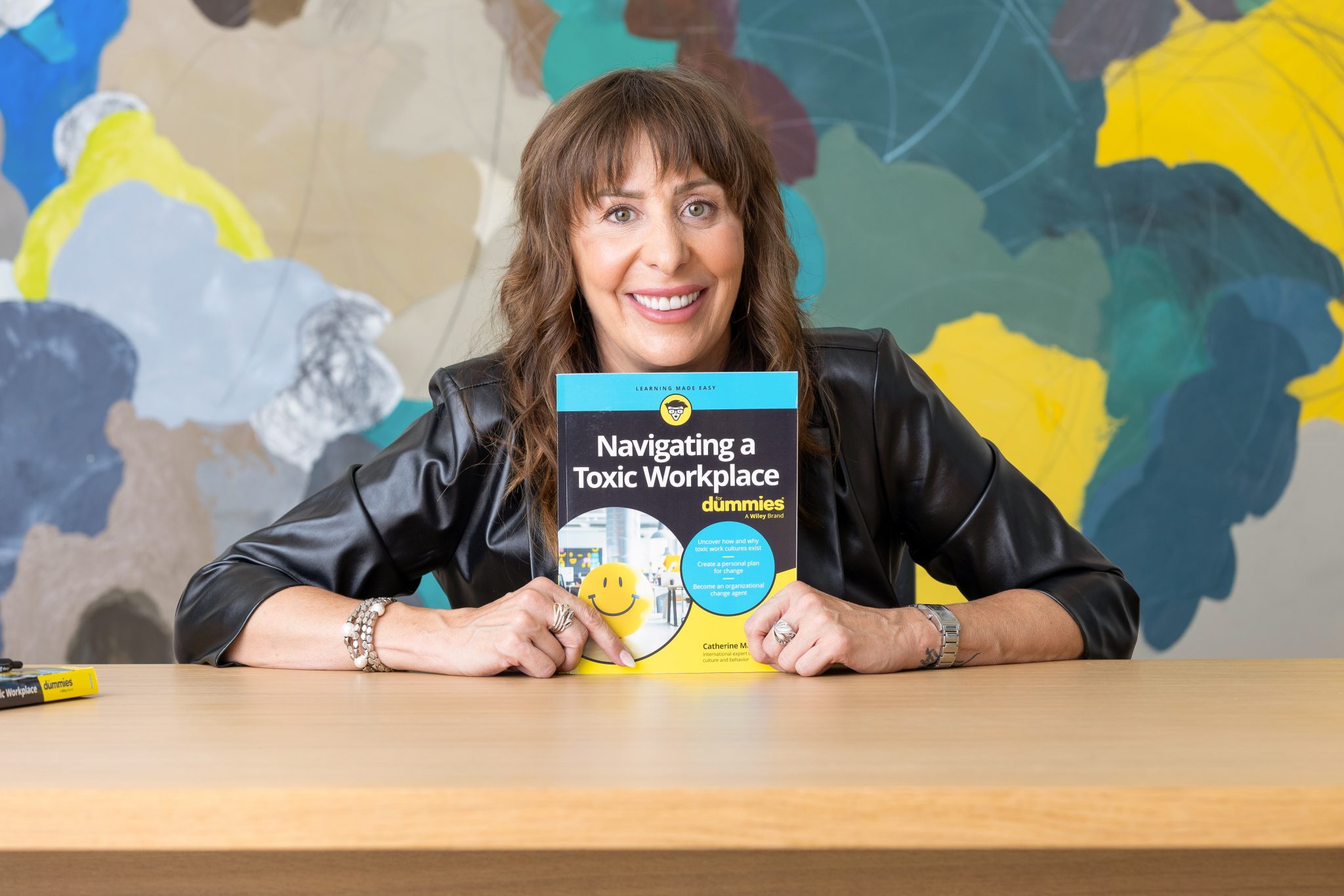
Raj Girn: She’s also a TEDx speaker, HR thought leader, award-winning author and her work has been featured in outlets like USA Today, Bloomberg and CNN. She’s also the author of Navigating a Toxic Workplace for Dummies, her fourth book no less, that offers not just insight but a roadmap for anyone who feels stuck, silent or unsure what to do during conflicts.
Catherine, oh my gosh, am I happy that you have agreed to chat with us today about this. I’m so grateful. Thank you for agreeing to come on.
Catherine Mattice: Of course! Thank you so much for having me.
Of course. So, let’s dive in. You’ve spent your career helping organizations confront something many avoid naming outright and that’s toxic workplace culture. Before we get into the work itself that you do, what first drew you to this space? I mean, cause it’s a challenging one, right? Because it’s constantly changing.
Yeah, I was an internal HR, working for a small company. It was 30 people when I started and evolved into 50 by the time I left. But we had one director who was a workplace bully. I didn’t know that at first. I knew him, I didn’t like his behaviour, I was getting a lot of complaints about his behaviour, I personally did not like the way he treated me. And so while I was working there, I decided to get my master’s degree in communication at San Diego State. And would you believe it, there’s a course, at least back then, there was a course called ‘The Dark Side of Communication.’
So that class was all about communication and domestic violence and sibling rivalry and conflict. And so, of course, I needed a topic for my paper for that class. And I thought I’m going to write about this toxic person at work. I’m frustrated, but also kind of fascinated by it. And I ended up coming across the phrase workplace bullying while I was doing the research. And it was very therapeutic for me to really read about this and see it was, I hate to say normal, but it is common.
And my boss’s reaction to it was also very common, which was to say, why can’t you just be the bigger person or that’s just how he is, let it be. And so anyway, all throughout grad school, no matter what my class was, I wrote my papers and did my research on workplace bullying, including my thesis. And there you go. I got out of graduate school and said, I think I have enough knowledge to start trying to help solve this.

Yes, and it’s such a big one to solve because it’s dynamic, right? There’s constantly different things that are always happening in the workforce. There’s different types of people that come into the workforce, so it’s almost like there’s no one size fits all, but there sort of is in certain ways as well. So, I want to be able to dive into that. But before we do, I want to ask you this question: was there a moment early in your career when you realize this is not just an HR issue, this is a human cost issue?
Yes. Well, I would say when I was working in that organization, you know, as HR people were coming to me complaining about the way they had been treated. There were some tears. I was at the receiving end of his behaviour too. And I’ll just be transparent and tell you that I got myself fired from that job because I started feeling like if you’re not loyal to me then or to here if you let this person be abusive, why would I be loyal to you?
My loyalty went down, my productivity went down and I got to a point where I was just trying to hang on until I graduated from grad school and then I would leave and I couldn’t. My boss came to me one day and just said, what’s wrong with you? You’re very different than you used to be. You know, you used to be my best performer, and I just broke into tears and said, I hate that you let this guy treat people that way and I probably need to put in my notice and he said well if you’re that unhappy you should leave now.
Wow.
Yeah, so I was depressed. I was scared, but also, I’ll say that for others in that place. Cause that’s also not uncommon for the person who bullies or who’s toxic because they’re seen as a high performer to stay and just everybody let them be like that. And then those of us who feel really targeted are the ones who leave because we’re not performing, we’re the, we are not the good employees in that scenario. And so, yeah, I really recognize the human cost on my own because of me.
Yeah, absolutely. You know, you said something there that I think is really interesting. And it’s the fact that you were one of the highest performers, but then because of just this very uncomfortable environment, you stop performing at that level. And this is what typically happens. Are you able to pinpoint or share exactly why that happens?
“A lot of people don't recognize they're being bullied or sort of picked on until it's been going on for a while because it's just like, oh, that's just how they are, I'm busy and I don't think about it.”
~ Catherine Mattice
Yeah, I think there’s a couple of reasons. So, there’s a lot of models in the academics about how bullying unfolds and they all start, they’re all kind of this timeline, right? And they all started and it seems so simple, but also profound that bullying starts when a person tries to push on you a little bit in some way, they talk down to you or make a joke at your expense.
And because those are minor, I say with quotes, we don’t push back. That gives this person a subconscious, they’re not walking away like, oh good, now I can pick on you. But subconsciously, they start to recognize they can have relational power over you. And of course, then you got organizational hierarchy and power too.
In this case, this guy was my equal, so he wasn’t my boss, but he had worked there for 14 years, I was only there for five years, so he did have some organizational power over me too. So yeah, there’s this instance where it begins and then we don’t push back. And so then over time it becomes harder and harder to push back because the behaviour is getting worse and worse.
Also, part of that is a lot of people don’t recognize they’re being bullied or sort of picked on until it’s been going on for a while because it’s just like, oh, that’s just how they are. I’m busy and I don’t think about it. And then the harm starts to sort of build-up and you sort of wake up one morning going, wait, what’s going on? Why is this happening to me? And is it happening to other people? And why isn’t the boss caring about this? And so, there’s like this too late moment where there’s no turning back unless you’re willing to really muster up a ton, a ton of courage to push back.
So you’ve worked with so many companies, Fortune 500 companies to small businesses and everything in between. What do toxic patterns look like across the board? I mean, I know it’s individualized, but because you’ve worked with enough companies, if you were to look at it across the board, what surprises leaders most when you point them out?
Yeah, you’re asking some great questions. Thank you. So, I will talk about toxic behaviour in a spectrum. So, at the kind of left end is the incivility, the microaggressions, the jokes at your expense, the gossip, stuff that’s toxic, but not unlawful, and therefore, people don’t really address it, right? And that stuffs allowed to go on, then it becomes more and more normal. So, then people continue to push the boundaries and eventually it can evolve into a toxic culture of bullying or harassment or discrimination or mobbing or hazing.
And then from there, it can involve workplace violence and that’s the other side of the spectrum. And bullying, for example, can very much incorporate workplace violence. So, for example, I coach leaders accused of creating a hostile work environment or being a bully. And a lot of times people describe, because I interview who, you know colleagues, a lot of times people will describe really aggressive body language, really aggressive facial expressions, getting in someone’s face or throwing something, yelling, you know that stuff that creates physical fear. And so that’s violence.
So, I want to put that out there. The thing in terms of what’s sort of shocking for leaders is I’m going to say what’s shocking for me is that leaders don’t seem to be able to grasp that kind of behaviour causes damage to the bottom line and to people and that it’s like I have to try to convince them that’s the case.

And so how do you do that? Like, it’s such a big issue because everybody at some point has that bully or that person that thinks their opinion is the only one that is valid in a team or in a conversation. Or some people who are very go-getters, get things faster than others, think that other people aren’t pulling their weight and complain about it. Like, It’s a lot. What are your comments there, yeah?
Yeah. So one, I’ll say that a lot of times the narrative is that when I’m going through the sales process, the narrative that HR has been trying to get budget and time and resources to solve problems because people are complaining to them, right? And they’re telling the boss about it. And the boss says, well, our revenue is up or meeting our goals. So, I don’t know what you just tell everybody to simmer down. They’re all adults. Sorry. And unfortunately, there’s some sort of slap in the face to the CEO at some point where the CEO finally goes, all right, I get it.
Maybe it’s all of a sudden even more turnover or some other important person that the leader really wants to quit because of the environment. And so, there’s something that happens or strikes. And so, from there, what we like to do is a workforce survey so that we can find out, and we’re looking at culture.
So, we look at engagement, relationships, trust, psychological safety, all sorts of things. And then we’re really able to pinpoint all of the problems that have bubbled up and created this toxic environment. And so from there, we’re able to then create a plan and help the organization make positive change.
Yeah, I love that. So, if someone was to hire your firm, can you top line so that we can kind of help those people that may need this? Top line, what would the methodology look like or the process look like if they were to hire you to come in to do this?
Well, it depends on what they hire us for. So, in simple terms, what we prefer is a workforce survey. Then we do some planning sessions with what we call an action team. So, it’s not leadership. It’s people from within the organization. So, there’s buy-in and then we’re able to publish this plan to the workforce and say, here’s what we’re going to be working on.
Then we help the organization implement some of it. They’re implementing some of themselves. And then we do a pulse survey, usually 12 to 18 months later. And I can tell you in all of the clients we’ve ever done that with, we’ve always seen major improvement on that, the next survey. And so while culture can take a while to change, that kind of intensive surgery for 12 to 18 months has a big impact. So that’s one thing.
Another thing we do is lots of training. So going back to what you were saying, we’ve all worked with the person who interrupts or finds people aren’t pulling their weight because they’re faster and smarter. We really encourage employers to teach their employees how to be upstanders and to really get that message out that we will support you if you stand up for yourself or others, and that’s part of that culture change as well, right?
“We really encourage employers to teach their employees how to be upstanders and to really get that message out that we will support you if you stand up for yourself or others, and that's part of that culture change as well.”
~ Catherine Mattice
That if we’re going to be a culture of respect, that means people have to be able to talk about it when they feel disrespected. And so that’s a key piece. And then of course, the coaching for the one or two toxic leaders. Sometimes in those bigger organizations, we’re doing all of those things and it’s like, do all this culture work and also coach, this department head and this other department head, so.
I love it. I love it. And what about the people who are on the receiving end of the toxicity? Do you also work with them?
I’m not a therapist, so I don’t feel comfortable giving them sort of some logical tips from my knowledge base. But I do encourage anybody who is feeling like they’re in a toxic environment to see a therapist. The one way that I think we’re really there for the people, is one that surveys and we make it very clear that the data is coming to us, nobody in the organization is gonna know what you said.
And part of that, we love to do listening sessions as well. And that just sort of ends up being group therapy in a way, because people are just sharing everything and crying and they’re building a trauma bonding in there. Our goal is not to give them their therapy, it’s to understand what’s going on, but we just find we’re able to really build a lot of trust pretty quickly with the workforce.
That’s incredible. You know, I want to pick something that you said there as well, Catherine. So, oftentimes in environments of toxicity, there is a psychological piece that needs to be dealt with. When do you know the line is drawn in the sand between the coaching piece and the therapy piece? So that’s the first part of the question. The second part of the question is . . . Do you ever bring, is there someone on your team that is a therapist or can deal with the psychological side of it?
Yeah, that second question is easy. The answer to that question is no, but you’ve actually got me thinking, maybe I need to do that. I do certainly have referral partners that I can refer out to. And we do, whenever we’re doing surveys, often in the recommendations, we suggest that the organization hire a psychologist too for some office hours for people to be able to go to.
We’ve had some clients take that suggestion and say hey everybody gets sort of like three hours with this person and in terms of when I’m coaching or having a one-on-one conversation with an employee who wants to share their story with me, those individuals who seek me out are in real pain and there’s a lot of crying and things. I always suggest in those conversations like here’s what I can tell you to document and do these things as from an organizational piece but do seek a therapist and I’ll say one last thing on that.
If you’re in a toxic environment and it feels bad I can guarantee you it is way worse because when you’re in it you’re putting your head down, you’re trying to compartmentalize, it hurts. You may come home and cry or vent to your friends and family. So, it hurts, but you’re also holding a lot of that because you’re trying to work. And the minute you leave is the minute, you’ll realize just how much burden you were carrying.

Absolutely. So, if this is speaking to anyone that is watching, listening or reading this, Catherine, where are we sending them to come have a conversation with your team?
Civilitypartners.com. You can also find me on LinkedIn. Our email address is info@civility partners.com You know, I poured my heart and soul into my book “Navigating a toxic work environment”. So that’s a resource that’s available on Amazon. It’s basically, not basically, it literally is everything I know about toxic environments and how to navigate them to turn them around so that might be a good place to start too.
Oh my gosh, I really want to dive into that. But before I do, I want to ask you a couple of other questions that are coming to mind. Great leaders build confidence by making people feel seen, heard, and safe. Right, Catherine? So, what does that actually look like in a day-to-day leadership role? So, the practicality of that, as opposed to the theory of it.
Yes, yes. From where I sit, I think that means being super open to feedback, asking for feedback and actually taking it. I hate it when people say, I have an open-door policy. I’m like, so people can come into your office, great. How do you respond when they’re in there? Are you defending yourself or listening?
Anytime somebody does something good or that you’re proud of or overcome something, call that out. That’s . . . something I do regularly. It’s like, oh my gosh, you’re amazing. And it might be something kind of small, but it was on my mind, or it needed to get done. So, I’m all about the like, yay. Those are the main two.
And I think also making it very clear that you won’t tolerate behaviour that causes harm and you don’t have to be mean about it. Just if you observe paying attention to the subtle things. And then when you observe those things, having a conversation with that person. You know, hey, this morning in the meeting, I observed this, let’s talk about it. So, you have to be a coach if you’re a leader.
And that’s also what, there’s, you delegate, but then you coach. So, if you want to actually lead, you shouldn’t be doing the work. You should have time to be leading. And that includes coaching, building relationships so that people trust you.
The last thing I’ll say is being vulnerable. There needs to be more vulnerability at work. And… We’re humans, not cogs in a wheel. And I think the more that leaders open up and obviously there’s a lie and you’re not sharing your whole life story. But if you were to say, for example, I’m really struggling, I’m stressed out, I’m a single mom and gosh, here’s some of the challenges I face, people will recognize that they can open up to you as well, so you’ve got to be vulnerable.
“If you're in a toxic environment and it feels bad I can guarantee you it is way worse because when you're in it, you're putting your head down, you're trying to compartmentalize, it hurts.”
~ Catherine Mattice
I love that finding. What I’m hearing you say here is that, finding some threads of commonality between you and them that helps them open up, helps there be more confidence between you, and them in that relationship. And it’s interesting because many leaders believe confidence is something that employees should just bring with them. Why is that? Belief is flawed from your perspective, from what you’ve experienced.
I think the paradigm is slowly shifting to where it used to be that we hired you to do a job and you got paid for that job and that was the exchange. The idea of learning and growth and opportunities to do new things continues to evolve, and so we’re getting there, but yeah, certainly there are plenty of people who, and it’s because things come easy to them, you know, that’s one thing that people who engage in real bullying have in common, things come easy to then, and they’ve been fighting to show off their competence their whole life.
And so I hear some of these stories where there’s this pattern that’s emerged for me where they’ve been fighting to make sure people know that they should be valued. And so a lot of my coaches just kind of like, you know, calm down. You’re the CEO of America, you know, North America and this billion-dollar company. Like you’re good. You don’t have to prove yourself anymore. But yeah, I think it’s hard to, it’s hard for them to empathize because it’s like, why don’t you get it? Why don’t you understand? I understand.
I love that, what a great answer. There’s sometimes pushback around, psychological safety as well, where leaders fear it means perhaps lowering standards. Like, how do you respond to those types of concerns?
I think it does the opposite. I mean, Google’s got that famous study they did, right? Where they figured out that the number one piece of an effective team and high producing team is psychological safety. And that’s because people are vulnerable and they can just work together and share their ideas and their complaints and why they think something might not work without being pushed back on.
So the opposite is true, psychological safety has a bottom-line impact. And the problem with a statement like that is there isn’t really any proof other than to say this company has a good culture and look how they’re doing. There’s no profit and loss line item on psychological safety and how it’s impacting revenue.
What a great answer. Thank you. Let me add another cog into that wheel. Where does advocacy show up in strong leadership and what happens when leaders fail to advocate for their people? You’ve answered this, but I feel that we need to go a bit deeper.
Yeah, I love your questions. I got to say, a lot of times, I get the same boilerplate questions, so this is a really great conversation.
I’m so glad.
Yeah, yeah, you obviously have a lot of knowledge around this stuff. We’re talking about asking these questions, advocacy. So, you know part of the problem is if you’re a middle manager, for example, and you have a boss part of it is whether or not your own boss is open to your advocacy. So that everybody from top down has to be open to hearing the advocacy coming from down below.
But I, and I always tell middle managers, for example, maybe you can’t change the whole company. Maybe you can’t advocate for your team because you’re not being heard or you don’t have that relationship, but you can advocate for your team. In the team, every single one of us has the ability to advocate for our own needs and others needs, so you can change what’s going on, at least in your little circle at work, even if the company isn’t spending money on culture change.
I love that because true leadership means that you are advocating for the best possible environment for the people that you’re responsible for. It’s like being a mom at home, right? There’s certain standards that need to be set in order for everyone to feel safe and seen and heard and valued and able to speak up when they need to, right? That’s why I always feel that women make such great leaders. But that’s a whole other conversation, isn’t it?
It is. But on that note, women are great leaders. They have a lot of that community collaboration, just hardwired because of our role in our species. You know, we have a child and to have a child you need community. And so we are generally hardwired. It doesn’t mean there are men who are not hardwiring that way. But then there’s the catch-22, right? That there aren’t as many women leaders to make that advocacy or to have those conversations, right?
Absolutely.
Women are better leaders, I think, might be better.
Well, I mean, there’s so much research out there to support that as well, because it’s that nurturing aspect, like, how do you get people to perform at their best is if they have all of these nurturing aspects, to make them feel safe and wanted and valued and all the things that we’ve been talking about.
When you feel that the people around you value you, you’re able to accomplish things that even you didn’t know that you could accomplish. We’ve all had those feelings. Like, remember grade school, when you had that teacher that just really saw you and then you just wanted to do the best for them. I feel this is a similar thing.
Yeah, I think it is. And you know, I’ll say as much as I hated that my old boss wouldn’t stand up against the bullying from that one individual. Other than that, he was a really great boss and that was part of it. He really, I just remember he’d walk into his office and his computer had his back to the door. But as soon as he heard you call his name, he turned right around.
What can I help you with? And he would listen and I would share ideas and he would either say, good, go do that, or I need more information. Can you do some more research or we’re not doing that and here’s why. And that, I think for me, that I just always did feel seen and heard. And that’s what’s such a shame about that whole scenario. I was a top performer because I am, it’s who I am. And also I did want to do good for him. I loved him, appropriately.
Of course.
But I just, you know, the toxicity took over.
But you know, thank God it did, because otherwise we wouldn’t be having this conversation today, sister.
I know. Thank goodness for that guy.
“If you wanna actually lead, you shouldn't be doing the work. You should have time to be leading. And that includes coaching, building relationships so that people trust you.”
~ Catherine Mattice
Yes, there’s always a purpose in everything that we always just have to figure out what it is that I’m meant to get out of this experience, rather than the cup being half empty, because the cup, being half-empty, doesn’t help us better our circumstances or our situation, right?
So, I want to ask you this, Catherine, you frame civility not as much as being nice. You know, being nice, but as creating permission for people to be their best selves. So can you unpack that distinction for people so that they can understand that? Because that’s the other thing we tend to do as leaders is we feel that if we are nice, that’s all it takes.
Right, right. Well, I’m going to back up to the other comment too, asking what am I meant to get out of this? Learning from mistakes or challenges. That’s another good leadership quality, right? To see mistakes that you or others make as a learning opportunity. And that’s part of bullying is getting after people for making mistakes.
So civility at its core, just on a basic level, is showing someone you value them and that could be anything from you bump into someone in the grocery store and you say excuse me that says I see you, you are human, I bumped into you I’m sorry versus if you bump in to someone and you don’t. So there is an element of sort of politeness and niceness but it also really has to be about giving people grace and being curious about them.
So that ‘s like, well, why did you do it that way? Or help me understand how you got there and left, and like drawing conversations and information out of them so that they can be their best selves. And that’s how we are our best selves. We’re not meant to work off in the corner somewhere without conversations with people, we’re meant to grow and evolve over time. We’re meant to learn something every single day. And that’s where that human element comes in from leadership.
If you’re just expecting people to do the thing, fine, and they might do it, but they’re not being their best self out of it. And I know everybody refers to Matt’s hierarchy of needs, myself included, that you have to have your basic needs met. But next up is psychological safety and physical safety. The next step is having or feeling valued and loved and like you belong. And from there is feeling like you have self-esteem. So we literally, what Maslow is saying is you literally get a chunk of self-esteem from feeling like you belong. And only then can you be your best self. So why wouldn’t organizations think about that more?
When you don’t have civility, what happens in that case that is being underestimated or missed by leaders?
So if we’re looking at the subtle end of the spectrum, the gossip, the microaggressions and things, I think it’s human nature to sort of brush those off as just sort of normal human behavior. But why? Why are we deciding that that’s normal human behaviour? Why not say, I don’t think that’s normally to hurt people, I don’t think it is normal to gossip about them. Everybody does it, so we claim it’s normal. But why not challenge that? And so I think they are missing the humans there.
When you’re a leader and people are working for you, you have a moral responsibility to make sure they feel good while they’re in your care. And we wouldn’t allow a teacher to berate our children or bully them. And we’ve come a long way, because back when we were in school, it was very different. And so why do we, it’s like this whole perspective of like, well, now you’re an adult and who cares if people are mean to you or bullying you? Like it’s frustrating to me if we’re just trying to connect as humans. Let’s not underestimate that.
And then from a bottom-line perspective, you know, if you have a culture of gossip, for example, then people, that means people aren’t working. It means we’re gossiping about something we saw earlier this morning or heard about or a bully was. Doing something in a meeting and now we’re all going to talk about it and so that’s all a waste of time and a waste of money and a wasted productivity.
So that’s unfortunately I have to make a business case to leaders a lot rather than just like, hey, it’s moral and ethical for you to have a good work environment. So when I have to make that business case, that’s what I try to help them see. I try to say, have you ever been in an environment or been bullied at work or you know, what, what was your reaction to that and try to help them see through themselves as an example, what employees are probably doing and not doing throughout the workday in that uncivil work environment.

What a great question to open up the connection between what you know traditionally is important to them as a leader so you know the things that they should be looking at. So I love that you do that and it brings me to another question where I’d love your perspective on why high performers and especially deeply conscientious women, often suffer the most in toxic environments. Like the reason I’m asking you that question is that, the coaching work that I’ve done over the last number of years, I found that to be more true than I wish it was.
Some of it is societal norms. I say I hate these norms because they’re not normal but they are that if you’re a high-performing woman, that means you have to put up with all sorts of things and develop a thick shell and engage in more masculine types of emotions like no crying and you know being a bitch as they say.
So I think women who are conscientious, to use that word, are like there, I think there’s a level of sort of the logical thought process of, well, I’m trying to get to the next level. Women have a lot to prove. I think we all carry that chip on our shoulder. And I think, women, especially those high performers and conscientious women, tend to, I think, make a choice. I’m going to do this because it will get me to my next level and that’s not fair.
Absolutely. I agree with you. You know, the role of HR over the last couple of decades has drastically changed. Can you share that shift with everyone? Because a lot of people don’t really know how to work with their HR departments when they’re an employee. Talk to me about that.
Yeah. So, part of the problem is that HR still has a long way to go to evolve. So, HR is still seen as a cost centre in many organizations. So, leaders are like a necessary evil. We have to have HR, and that’s partly the fault of each individual HR professional, that HR, when you join a company and as you’re interviewing to join a company, say, this is what I, my role is in HR, does that fit with your expectations of HR? I’m not here to be an administrative person running payroll.
Most people go into HR because they want to help people and they like people. And it gets, they keep getting squashed and smacked down back into this compliance thing. I was actually on a podcast the other day and we were talking about whether HR always has to come in a pair. You need the compliance person and the people person because that’s a left right, left brain, right brain thing. And so, I’m going to write a blog post on that. I think that’s a very great, great point.
Yes.
So, HR is seen as compliance by a lot of people, leaders and employees, and it’s up to HR to build relationships. They should be walking around, getting to know people. And HR should be, you know, and I hear a lot, HR is like, people just always come to me with complaints, they can solve themselves. And then it’s like, well, why don’t you say that to them? Why don’t you say, I’m not going to solve it for you, but I’m happy to coach you so that you can solve it. So, HR has a lot of hats, coaches, mentors, compliance, naysayers, and yeah, I think HR has a long way to go. And that partly is the fault of HR professionals.
“Civility at its core, just on a basic level, is showing someone you value them and that could be anything from you bump into someone in the grocery store and you say excuse me that says I see you, you are human, I bumped into you I'm sorry versus if you bump in to someone and you don't. So there is an element of sort of politeness and niceness but it also really has to be about giving people grace and being curious about them.”
~ Catherine Mattice
You know, it’s really interesting because I feel that, that one piece, if that could be added to the HR learning skillset, I feel the environments at work, especially the big corporations, would be a lot more able to handle these types of circumstances that you’ve had to go in and solve. So I want to ask you this, What gap did you see? In the conversation, in the experiences that led you to write your fourth book “Navigating a Toxic Workplace for Dummies”.
Yeah, so thankfully Wiley reached out and asked me if I wanted to write it, so that was pretty awesome and I got to toot my own horn. Women don’t do that often enough, right? I asked her, Tracy, my contact there on our first call, I said, am I up against other authors or do I need to prove to you that I’m the author? And she said, oh no, I want you to write. And so I was like…you know, Dummies books are very sort of logical, instructional, they’re not meant to be read from start to finish, and I think that’s why she picked me.
I think a lot of people talk about culture in a very abstract way, even culture consultants, because I’m not sure they fully understand all the components. A lot of culture consultants focus on people, because yes, culture exists in people. But I see culture as three things, the organization’s behaviour, the individual behaviour, and the leadership team’s behaviour. So we call that the oil model. And that’s what makes us special.
We address all three of those things. So we’re not there doing training on living core values where they’re asking the organization, well, are you helping people live the core values or hindering them with your own behaviour and processes and decisions? So yeah, I’m really proud of my book . . .
Of course, I’m biased, but yet to come across another book that talks about culture in such a checklist way, you can change your culture if you follow the instructions in my book.
Oh my gosh, I love that. And the book, obviously, it’s available everywhere that books are sold, audio books are sold, correct?
Yes. That’s correct. Yeah.

Okay, wonderful. So let me ask you this. If someone feels stuck right now, what does your book offer them that’s different from generic advice like, well, just quit.
Yeah, or just document it and go, yeah, I think one unique piece of advice that I have is to make a decision. And so, one of my books is where I collected what we called success stories. So I put out a call, and I said, if you’ve been bullied, but you’re on the other side of it and you feel you’ve successfully come out of it, tell me about that. And we got a lot of stories of people just complaining about bullying, but we did get 23 stories where people did define themselves as successful.
And the theme I noticed in those stories is every single one of them, myself included, made a decision to take back their power. Now I was laid off or let go, but on the drive home, I could have been depressed and decided my life was over. And what I did was – watch me, I’m going to get out of grad school and just watch and that was my decision.
And another woman, she’s black, lesbian, PhD, she got a lot working against her in terms of a white male-dominated place and her decision was – you know what? I’m going to make this workplace better for everyone else. So I’m going to stick it out and I’m in a fight like hell. And she ended up having a congressional hearing and I mean she took it far. That was her decision. So now it’s not – I’m the victim of your behaviour. It’s – I have power.
Another woman, she described that she was a facilities person. So, I just can imagine she had like a ball of keys, and she said that she just walked into her boss’s office and dropped the keys on his desk and said – I quit, and then she went outside and immediately cried her eyes out. But you know it was the way she quit. It wasn’t like, oh, I guess I should quit. It was very purposeful, intentional, like this place sucks.
I just love it.
Yeah, so that’s the advice. Make a decision to take your power back, whatever that looks like.
And this book you’re talking about. Can you please share it? So, you know, because I already know that I want this book.
Oh, my goodness. Let me pull it. I can’t. It’s got a long, long title. Let me find it.
“Women have a lot to prove. I think we all carry that chip on our shoulder. And I think, women, especially those high performers and conscientious women, tend to make a choice: I'm going to do this because it will get me to my next level, and that's not fair.”
~ Catherine Mattice
Find it. We’ve got time.
Hang on one second. I got it for you. It is called, uh, what is it called? It is called “Stand up, speak out against workplace bullying, your guide to survival and victory through 23 real life testimonials”.
And is that also available everywhere books are sold or is it on your website?
It is on my website, I hope it’s still. So that book was written for, oh yeah, it’s on Amazon as well. And you can get it from the books page on my web site. It’ll take you to that very long title.
And so give us your website address again for everyone.
Perfect. And all your other books there too, because this is your fourth, the Dummies book is your fourth book, right?
Yes, all of the books are there, two of them are self-published. So those are easy to get to. And then that standup book we actually wrote and all proceeds go to a nonprofit. I started calling the National Workplace Bullying Coalition.
Oh, I love that.
So, we did it through the coalition and I’m not involved anymore. I had to move on. But that coalition is really working on getting laws passed against workplace bullying, because many countries do prohibit equal opportunity harassment. And we do not. That’s the loophole. If you want to be an asshole, just make sure you do it to everybody and you’re fine.
Love that. And that’s really hard to do. So don’t do it. Let me ask you this. How does someone begin reclaiming their agency over themselves when they are working in an environment that doesn’t support it?
Because we’ve talked a lot about the workplace environment, we talked about the leader. Let’s talk about the person that’s working as part of the team. How do they do that?
I would recommend taking a week-long vacation from work, not to go on vacation because that’s exhausting in itself. To be at home by yourself or maybe rent yourself an Airbnb in your city, like I’m talking about keeping this low key non-stress. This isn’t taking a vacation and going to Hawaii. It’s a vacation so that you can sit and think and meditate because you can’t do that clearly with the noise of work.
And if you have kids and things, maybe you can even get your partner to help you out or some friends to help out so that you can just focus on you. And tying back to leadership, a lot of successful leaders talk about doing that. I know several owners of businesses who take a week or even two where they disappear and it’s so that they can figure out their next moves. And so let’s all take a lesson from them.
And then, because you can’t, you just, you can think clearly with all the noise and it’ll take you a day or two of that first week, just to have your nerves calm. And then it’ll take you a couple of days to figure out what you even need to be thinking about, and then it’ll take you the last couple of days to start to craft yourself a plan. And again, part of that would be deciding, am I willing to put in the courage and the effort to take my power back here? Do I take my power back by leaving? Do I start with therapy and just craft your, your life plan and turn in the context of like getting yourself out of this problem, if the organization isn’t helping you, then why stay.
Absolutely.
But don’t quit because you feel helpless. That’s not good for you. Quit because it’s what you needed to do to survive and you decided to quit.

Absolutely. There’s a big mind shift and a lot of courage that goes along with that, because sometimes people need to be in jobs for financial reasons. And so there’s that whole fear around that. But then, I always say that it’s better to look for a job before you quit.
Like there is an answer to every challenge, you just need to find it and action it. Right?
Yes. Yes.
So what is the very first shift you’d encourage Catherine, someone to make when they realize they’re in a toxic workplace? What is the first thing that they should do?
Recognize that this is a challenge to overcome, not the end of your life. But I mean, that’s the basic kind of Resilience 101. That resilience is basic by any means, but that’s what resilient people do. You know, I’ll tell you too, I’m not religious. And so I wasn’t turning to God or anything. In those stories, several people did. And that was great for them. But I find that all of the personal development industry isn’t that far up from religion, right?
Instead of praying, you’re putting things out into the universe instead of, I don’t know, there’s a lot of similarities, just different words. And I actually started reading a lot of those books by Tony Robbins and all the people. So that’s another maybe tip is to start there and start to put your confidence through that you are, each of us, amazing and awesome and has a lot to offer in our own way. And don’t let somebody tamper that or slap you down. So that was helpful for me. For me, it was academic research. I was learning about my situation in a place that wasn’t emotional.
Mm-hmm.
Which is another tip for you. Don’t be careful who you’re talking to because I do, sometimes I go on Facebook, like workplace bullying groups, and it’s a lot of complaining and telling each other your life is over and HR will never help you. That’s not a place for you to be. I wasn’t, so I don’t do that.
You know, I was looking at a very unemotional, you know 800 people took the survey and here’s what they said. And that was super helpful for me. And then combine that with the personal development information I was taking in that obviously still sticks with me today and I still look at that stuff. That was also very helpful.
I always find that another thing that’s very helpful is to ask yourself the questions, if you were to stay there versus not stay there, it’s the versus, it is the exercises where you’re doing the versus this versus that, this versus that when you do that exercise, things become very clear to you as to which side you want to be on, versus which side are you actually on.
Right. Right. We do that exercise in our upstander training, because that’s very, it takes a lot of courage to speak up, right? And we do the same thing where we say, talk in your group. And in this case, you could journal about it or talk to your family members.
What’s the worst thing that could happen if you speak up in your organization? That’s what we ask. And for you, as somebody who’s maybe in a bullying, toxic situation, ask yourself that thing – what’s the worst that could happen if I quit? What’s worse, the worst it could happen if I stand up for myself, what’s the worse that can happen if I go to HR and then you start, then you can look at it and you start crossing off things like, well, that’s just my imagination running wild.
“Take care of you. Nobody can take care of the way that you can take care of you, so take care of yourself, whatever that means for you.”
~ Catherine Mattice
Yeah.
So cross that off the list. That’s not going to happen. And then you end up with an actual list of possibilities of the worst thing that happened, could happen, and maybe then try the other side, what the best thing that could. And it’s okay for all of that to be dreamy. Don’t cross anything off of that list. And you start to realize toxicity can be managed in a logical way. But you have to calm your nerves and be able to have those conversations with yourself.
Absolutely and you know we’re so close to closing off and I wish I could ask you so many more questions.
I know. Lets’s—Can we have another power podcast and forget the rest of the day? Lets just . . .
I love it. You know what it means? It just means I have to have you come back on. That’s what it means.
Sounds great, because honestly, I’ve said it a couple of times. This is one of the best conversations I’ve had on a podcast. So kudos to you for obviously being intelligent and thoughtful about everything we’re talking about.
Oh my gosh, that means so much to me. Thank you so much. I really appreciate you, Catherine.
So as we get ready to close off, any leader that is watching, listening or reading this, what is one thing that they could change today, tomorrow, in the near future to improve the culture at their work? Like what could that one thing be? And obviously we’re going to need to normalize.
Yeah, the one thing could be talking to people, opening your eyes and getting curious and just start asking people, what is it like to work here? What did, and just, start building those relationships. You have to be curious.
You know, there’s one thing that I found that a lot of people are dealing with who are in a position of responsibility at work. I mean, one size fits all doesn’t always work, especially in today’s work environment, when we are dealing with multiple generations with their own individual value systems, right?
And when you couple that with the fact that we are also working both in office environments and also at home. How do we create and maintain civility faced with these realities of today? It’s harder.
It is harder. And I think that’s part of the problem is that being civil, setting boundaries for yourself and holding people accountable to them, being conscious of how you might be impacting people. All of that takes mental space and in a world of just go, go, go, it can be hard.
My suggestion is to push back on all of that go, go, go a little bit and like, give yourself time to breathe and give yourself time to think before I hit send on this email, is it really what I want to say, all of those things. So it does take extra mental space and therefore if you want to be a civil person and you want part of your personal brand to be seen as respectful and inclusive, then that’s part of the work.
Absolutely. And when workplaces get this right and civility, confidence and leadership align. You’ve already said this throughout the podcast, but I’m going to ask you, what becomes possible, Catherine? Everything. Everything that is positive, right?
Exactly. You know, we’ve just closed out working with the client that did, they had a big strike and when they called us in, it was because the people on the front line at the strike were not behaving very well. So it was this thing where leaders are like, all right, you went on strike. Fine. That’s the nature of it. But did you have to say those things on social media?
So the leadership was pretty angry about the behaviour they witnessed and they were hurt. And they realized they weren’t going to be able to move past. I mean, they literally had like, I’m not talking to that person. I read their sign. Forget managing them. I don’t want to be near them. And so we came in and did all these listening sessions and we really helped them find a path to repair.
And in talking to the leader now, he says things like, we have conversations that we never have had before. We talk about problems in the organization that we’ve always all known were there, but we just pushed them down. And just to hear him talk, he’s like, when the civility partners team comes here, you guys walk on water, we want this environment. And now that we’ve been through that, we can see. We have a long way to go, but it is possible to still be extremely effective and operational in all the things that we do, but we can also have really strong relationships as part of that.
And, hey, that’s actually really key to our success. And so it’s been fun to watch them grow. And yeah, then it’s, that positive mindset creates so much more in terms of opportunities. You need that. You need that.
Is there anything that we haven’t talked about that you’d like to close off with, Catherine? And if not, any words of wisdom, any advice that you would like to impart before we close off?
Yeah, I’ve said it, but I’ll say it again. Take care of you. Nobody can take care of the way that you can take care of you, so take care of yourself, whatever that means for you.
I love it. Thank you so much for this conversation, Catherine, and for the work that you’re doing to name what so many people feel but struggle to articulate. Your work is so important, especially in today’s multifaceted work environment. I mean, we need what you’re doing, I think so.
And folks, please go and check out Catherine’s book. I’m going to say it again. It’s called “Navigating a Toxic Workplace for Dummies”. Oh, my God. I’m definitely going to pick that up. It is available everywhere. We’ve already talked about it. So just go check it out. Go and check it and hang out with Catherine as well. She mentioned she’s on LinkedIn. Also, go check out all the things that her company does on their website. Catherine, one more time, your website address.
Civilitypartners.com and we have a ton of free resources, checklists, self-assessments, guides, so go over there and get everything you can.
I love that. Thank you so much, Catherine. And if today’s conversation resonated with you, please share it with someone who needs to hear it. And, you know, this is a really important podcast conversation that we’ve had today. Catherine is doing something that other than being important is really quite unique.
To be very honest, Catherine, you’ve dedicated your career, the best part of your career, to helping people solve these problems that oftentimes you think, well, what’s the big deal? Well, the big deals are all in the research, it’s all in data. If people aren’t happy at work, the work environment isn’t able to work at its optimal, you know possibilities. Any final words on that, Catherine, before we close off?
Oh, just leaders need to pay more attention to that. Again, it’s the leader’s moral and ethical responsibility to take care of the people that are taking care of business. And, I don’t understand how leaders can sleep at night, knowing that there’s a toxic work environment or just brushing it off and recognizing that just because they don’t feel it because they’re at the top.
It doesn’t mean people down below aren’t frustrated. I mean, being bullied can cause PTSD and depression and physical problems, headaches and sleepless nights, not eating. It’s up to leaders to have an environment that doesn’t do that to people.
Absolutely. So this book is really important for leaders and also for employees. Please go, please go pick up that book. And because there could be things that you don’t recognize you’re doing or perhaps not doing that this book will open you up to. And you’ll just be able to infuse just so much more of a positive environment in your workplace.
And isn’t it better to be in that environment where people genuinely want to do the best for the company? Then you constantly have to be on top of them to do that. I mean, create advocacy in each, each and every individual that works in your company and in your environment. Like, how would that change things? Like massively changing it for the positive, right?
I will see you next time with another insightful episode like this one of the Transform your Confidence Podcast and if you enjoyed it, folks, please again, share it with everyone you know that you feel needs to watch, listen or read this and go and give it a five star rating right now before you forget and tell everyone you know to come hang out with us to stay connected with us on our socials at The Open Chest Confidence Academy and visit us at theopenchestconfidenceacademy.com to see what products services, you know, we have content there with our magazine blogs, these podcasts and so many freebies as well, to just get you guys to be able to identify what that gap is that you have between your competence and your confidence so that you can close it once and for all.