
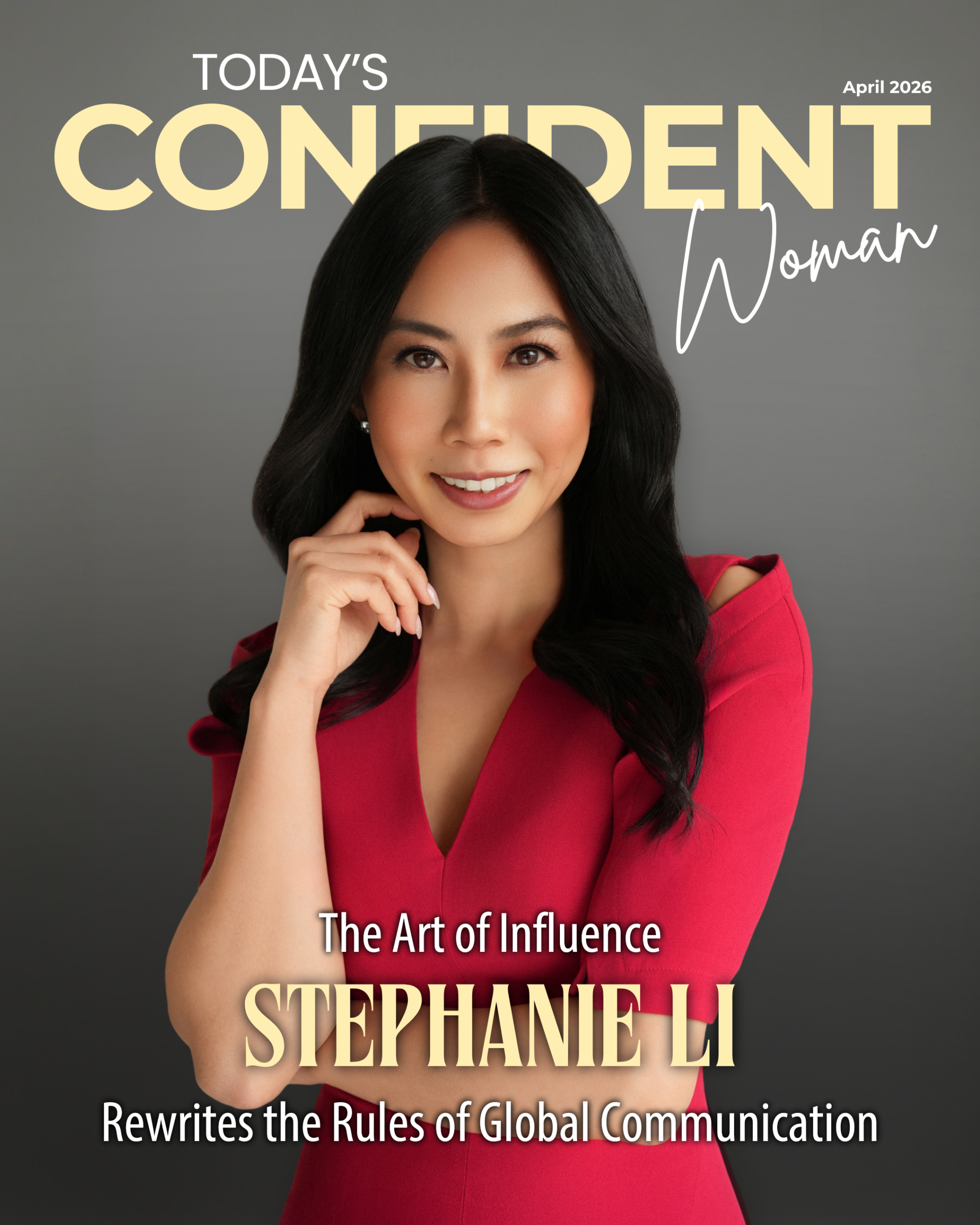
ABOUT STEPHANIE LI:
Stephanie Li is a globally recognized strategic communications and marketing strategist and the Founder & CEO of Spotlight West Communications, an award-winning firm known for its work in high-stakes communications, brand positioning, and market strategy. With over two decades of experience, she has built a reputation for guiding leaders and organizations through moments of visibility, growth, and transition that require clarity, precision, and strong positioning.
Her work lives at the intersection of strategy and cultural intelligence. From luxury and real estate to hospitality, retail, and financial services, Stephanie has supported brands across industries as they expand, evolve, and step into greater visibility. She is especially known for supporting clients in navigating complex, high-stakes environments.
What sets Stephanie apart is how she approaches leadership and decision-making. There is a high level of intention behind everything she does, whether it’s advising on executive presence, shaping a brand narrative, or guiding cross-market growth. Her ability to see the bigger picture while staying grounded in strategy has made her a trusted advisor in the space.
Her academic journey reflects that same commitment to excellence. She holds a Bachelor of Arts from the University of British Columbia, completed the General Management Program at Stanford University’s Graduate School of Business, and earned her Master’s in Management from Harvard University, bringing both depth and perspective to her work.
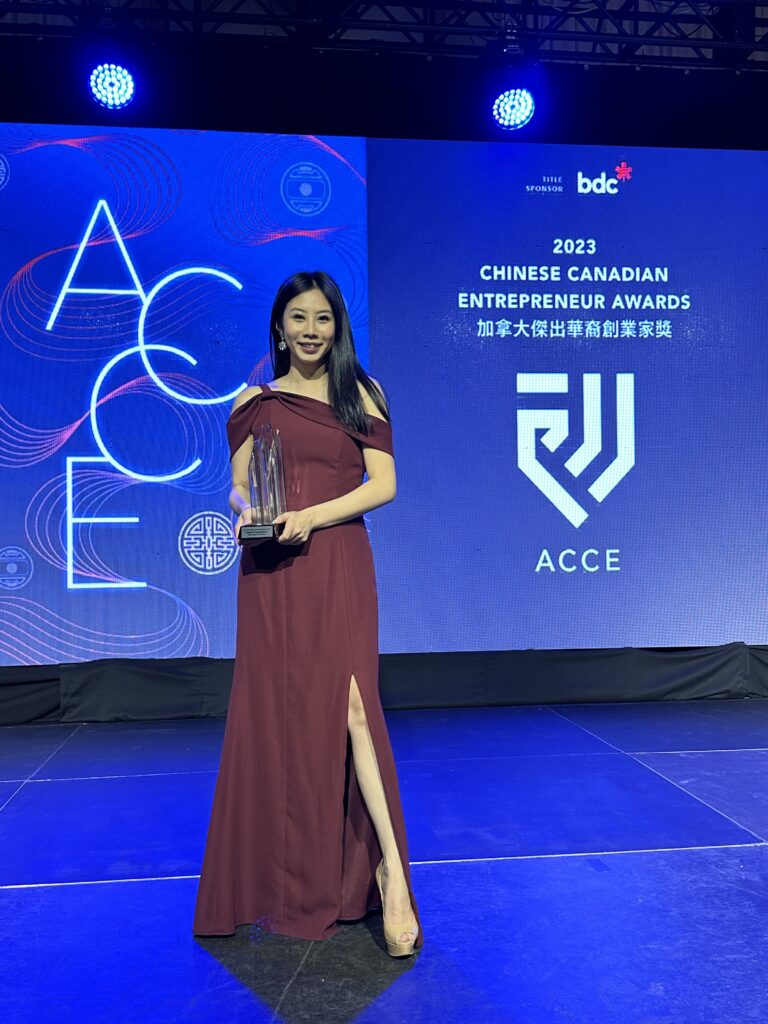
Stephanie’s impact extends far beyond business. Her leadership has been recognized with honours and nominations, including Harvard University’s Emerging Leader Award, the Inspiring Canadians Woman Entrepreneur of the Year Award, as well as recognition for her contributions to community service and multicultural leadership in British Columbia.
Outside of her professional world, Stephanie leans into creativity and curiosity. From writing commercial film scripts to exploring history through mudlarking along the Thames, she embraces experiences that keep her grounded and inspired. She is also deeply involved in community work, serving on multiple boards and as a founding partner and advisor to The Eyeglasses Project.
Q&A WITH STEPHANIE LI:
What is your most valuable possession and why?
My family. I grew up in a Chinese culture where family isn’t just important, it is deeply woven into how you live, how you think, and how you show up in the world. Family is something you understand instinctively, even if it’s not always articulated.
For me, my family has always been my anchor. They’re the people who have seen every version of me, who remind me who I am outside of work, and who support me unconditionally. In many ways, they’re also my biggest champions.
In a career that can be fast-paced and often high-pressure, that kind of grounding is invaluable. It gives me perspective, keeps me centred, and allows me to approach everything else with more clarity and intention.
What are your top 3 life lessons and how have they changed your life for the better (in other words, how have you implemented them to better your life)?
I see life as a continual learning process, where each stage brings a different level of realization and awareness.
First, leadership isn’t about being the loudest in the room. There was a time in my career when I felt pressured to speak more and prove my value in visible ways.
Working across markets also shaped that perspective. In North America, leadership is often associated with being outspoken, extroverted, and highly visible. In many Asian contexts, it’s often expressed through presence, restraint, and a more measured approach to communication. That contrast challenged how I initially thought about authority and what effective leadership looks like.
Over time, I’ve learned that effective leadership is less about volume and more about judgment. It is about knowing when to speak, what to say, and how to guide a conversation forward. That shift has changed how I show up and how I lead, with more intention and ultimately, greater impact.
Second, relationships shape your experience more than you realize. I’ve always valued relationships and invested in them intentionally, but over time I’ve become more selective about where I focus my time and energy. I think carefully about alignment, shared values and long-term connection. That shift has had a direct impact on both my personal life and my work, particularly in how I build meaningful and sustaining partnerships.
Third, self-trust is everything. Earlier in my career, I often looked for validation externally. Now, I listen to my gut and trust my judgment more. That confidence has fundamentally changed how I make decisions and how I lead.
Effective leadership isn’t about being the loudest in the room, it’s about knowing exactly when and how to use your voice.
~ Stephanie Li
What is the most valuable advice you’ve received and how did it set you up to win?
“Play chess, not checkers,” or as I sometimes jokingly say these days, think in 3D chess.
It’s a familiar phrase, but the idea behind it has stayed with me. It’s simple, yet it’s shaped how I approach both business and life. Early on, it’s easy to focus on what’s directly in front of you. However, over time, I’ve learned to think about second- and third-order impact and how decisions play out. That shift has made me more intentional, strategic, and ultimately more effective in how I build, lead, and make decisions, particularly in how I advise clients and approach complex situations.
What is the worst advice you’ve received and how did it impact you?
“Say yes to everything.” Worst advice ever.
I understand the well-intentioned thinking behind it, to not let opportunities pass. And for a period, I did exactly that. I said yes to almost everything, which led to being stretched too thin and constantly operating with a full plate.
Over time, I realized that saying yes to everything often means you’re not being intentional about anything. Learning to say no and be selective has been a turning point. It has allowed me to create space for the right opportunities, the ones that are aligned and actually matter.
What is the one mistake you regret in life, and why?
Letting fear take over at certain points and missing opportunities because of it.
Fear can be subtle. It often shows up as overthinking, hesitation, or waiting for the “right” moment. The reality is that the perfect moment rarely comes. Looking back, there were times I hesitated to step into more visible roles or higher-stakes opportunities, and those windows don’t always reopen.
What I’ve learned is that hesitation often costs more than making the wrong move. Now, I see fear as a signal rather than a stop sign. It usually means there’s something worth leaning into. The goal isn’t to eliminate fear, it’s to move forward despite it.
When you face a challenge, what’s your method to move past it?
I focus on getting clarity quickly. Most challenges feel bigger than they are because they’re not clearly defined or understood. I approach it like a Harvard Business School case study, especially in high-stakes or time-sensitive situations, by stepping back to identify what the actual problem is, separating facts from assumptions and emotions, and understanding what really matters. From there, it becomes a decision. And once the decision is made, I move. Clarity drives action, and action creates momentum.
How do you create a work-life balance?
“Work-life balance” is often talked about as if it’s something static, but in reality, it’s much more dynamic. I see it more as alignment.
Research and leadership thinking increasingly point to integration, rather than strict separation, as what drives both performance and well-being. For me, that means being deliberate about where I place my time and energy in different circumstances.
There are periods where work requires more focus, and others where I prioritize my personal life, travel, and relationships. What matters is that those choices are intentional, not reactive. That sense of alignment is what allows both performance and fulfillment to coexist.
What “women” hangups have you been a victim to, that you feel sets women up to fail in their professional career?
There’s a lot of conversation around “feminine” and “masculine” energy, and how women are expected to navigate both.
In professional environments, traits traditionally associated with masculine energy, such as decisiveness, assertiveness, and direct communication, are often rewarded. At the same time, women are expected to calibrate their tone, manage perception, and navigate the emotional dynamics of the room. It creates a very narrow range of what is considered “acceptable” behaviour, and that range is often more constrained for women than it is for men.
I’ve experienced this firsthand, walking into boardrooms that are still predominantly white and male-dominated, and being expected to both command the room and soften my presence at the same time. There’s an unspoken calibration happening in those environments. You’re not just thinking about what needs to be said, but how it will be received, how direct you can be, and how much space you’re allowed to take up without it being interpreted the wrong way.
There’s an added layer when you’re a minority in those spaces. You’re operating within systems and expectations that weren’t built with you in mind, which introduces a different set of considerations in how you show up and lead.
That creates a different level of discipline. You become more deliberate in how you communicate, how you carry yourself, and how you navigate the room. Over time, that shapes a more intentional and considered approach to leadership.
Research supports this. Studies, including those from McKinsey, have shown that women are more likely to receive feedback on their style and demeanour, while men are evaluated more on outcomes.
What I’ve learned is that effective leadership isn’t about choosing one set of traits over another. It’s about range and knowing when to apply each with precision. The deeper challenge isn’t capability; it’s that leadership is often evaluated through a lens that was never designed to see you clearly. The work is learning how to navigate that lens without diminishing your voice or presence.
Saying yes to everything often means you’re not being intentional about anything.
~ Stephanie Li
Are you affected by the Confidence Gap, where studies show that women require confidence as well as competence to succeed in the workplace environment, whereas their male counterparts don’t?
Imposter syndrome is very real. Earlier in my career, especially in rooms where I was younger or seen as a minority, I would certainly feel it. There’s a natural tendency to question whether you belong in those spaces. What shifted for me was a combination of experience and perspective. Someone once told me that when you’re in a room, thinking everyone is focused on you, the reality is that most people are too busy thinking about themselves. That stayed with me. It was a simple reminder that everyone is navigating their own internal dialogue, often questioning how they’re being perceived as well.
I’ve also seen this at the highest levels. Some of the biggest names in global entertainment, people performing in front of sold-out arenas with millions watching, still experience intense anxiety before they step on stage. You would never know from the outside. But they feel it, and they go out and perform anyway. Knowing this behind-the-scenes reality reframed things for me. Confidence isn’t the absence of doubt; it’s the ability to act despite it. Now, I focus less on how I’m perceived and more on the value I bring and the outcomes I deliver.
What does equality mean to you and is it important?
To me, equality is about access and the ability to fully participate. It matters because different perspectives lead to better decisions and stronger outcomes. In my work, particularly across different markets and cultures, I see how cross-cultural thinking creates a real advantage.
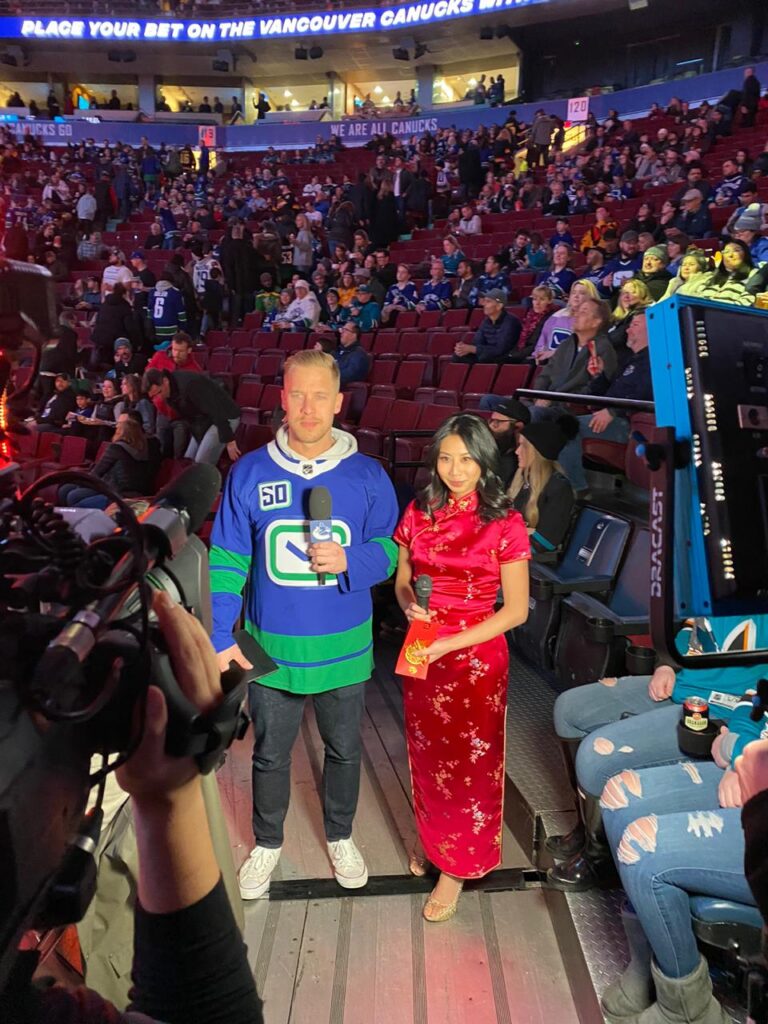
In your experience, what types of male allyship do you feel women need to foster at home and at work, to encourage an equitable ecosystem?
Active support that shows up in real ways. That means advocating for women in rooms they’re not in, ensuring they’re considered for meaningful opportunities, and reinforcing their voice when it matters. It’s less about intention and more about taking action.
What would you tell your 18-year-old self, looking back over your life’s experiences?
Be gentle and kind with yourself, and trust yourself sooner.
I think when you’re younger, there’s a tendency to be overly critical, to question your decisions, and to look outward for reassurance. What I’ve learned is that growth doesn’t come from pressure; it comes from self-awareness and self-respect. At the same time, trusting yourself earlier would have changed the pace of everything. So much of what we hesitate on, we already know the answer to. You just need the confidence to act on it. When you combine self-compassion with self-trust, you move forward with a sense of purpose and resiliency.
What advice would you give to women to help them step into their power?
Be clear about what you want and say it directly. Power often comes down to positioning. In my work, I see how clearly defining your value and articulating it with confidence directly shapes the opportunities you attract. It influences how people engage with you, what they expect from you, and where they place you. If you don’t define your value, others will.
Confidence isn’t the absence of doubt; it’s the ability to act despite it.
~ Stephanie Li
Can you share one resource (book, course, mastermind/masterclass, etc.) that you feel all women need to have?
Build a strong community of people who both challenge and support you.
The people you surround yourself with shape how you think, what you believe is possible, and the standards you hold yourself to. Being around thoughtful, high-calibre individuals expands your perspective and pushes you to grow in ways you wouldn’t on your own.
Over time, that kind of environment doesn’t just support you, it changes how you think and operate.
What mantra do you live by and how has it impacted your life?
Which therapies/modalities have helped shape your healing and empowerment journey?
Reflection, mindfulness, and creating space to think.
Whether through mentorship, conversations, or simply stepping back, I’ve found that self-awareness and the ability to recognize your blind spots are critical.
More than a decade ago, I took a mindfulness program at the University of British Columbia, where I was introduced to the concept of being fully present. One exercise that stayed with me was eating a meal without distractions, no phone, no multitasking, just being fully in the moment and paying attention. It sounds basic, but it was a powerful reminder of how often we operate on autopilot with distractions.
That awareness has shaped how I approach both work and life. It’s helped me slow down when needed, be more deliberate in how I respond to situations, and not feel the need to control or perfect everything before moving forward.
I’ve also been drawn to the Japanese philosophy of Wabi-sabi, the idea of embracing imperfection and transience, and letting go of the need for everything to be perfect or complete. It’s reframed how I think about perfectionism. In the past, I felt a need to have everything fully thought through or resolved before acting. Over time, I’ve learned that not everything needs to be perfect to be effective. Letting go of that has made me more decisive, less constrained by perfection and more open to creativity. I truly believe that the better you understand your patterns, thinking, and relationship with control, the more effectively you can lead.
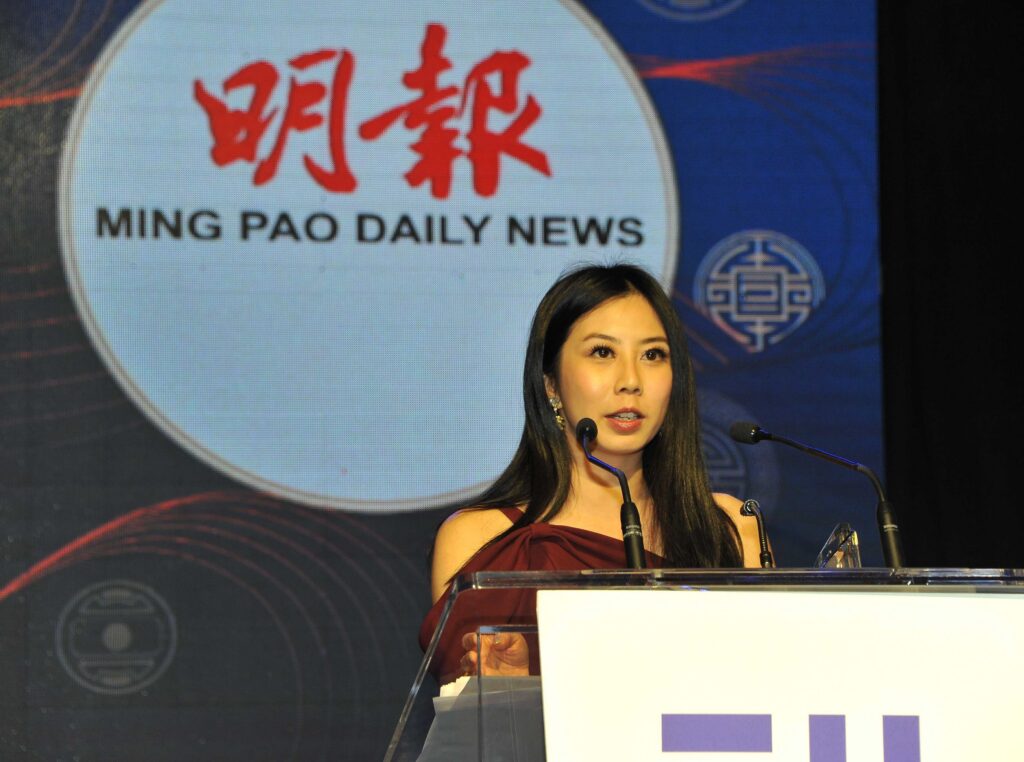
ABOUT SPOTLIGHT WEST:
ABOUT
SPOTLIGHT WEST:
Spotlight West Communications is a global communications, marketing, and strategy firm that supports leaders, brands, and organizations through moments of growth, visibility, and transition. The firm’s work spans communications and business strategy, brand positioning, media and public relations, executive visibility, social media and content, campaigns, and cross-cultural marketing, bringing together high-level advisory with thoughtful execution.
With deep expertise across North America, Asia, and global markets, Spotlight West helps clients navigate complexity, enter new markets, and connect authentically with diverse audiences. Its work integrates strategic insight with cultural intelligence, ensuring brands are positioned with clarity, relevance, and impact.

Core advisory engagements include the Spotlight VIP Advisory Day, Executive Personal Branding Program, Global Market Expansion Advisory, and Strategic Communications Retainer.
Across all engagements, Spotlight West brings a culturally informed, globally minded approach that strengthens positioning, builds credibility, and supports long-term, intentional growth.