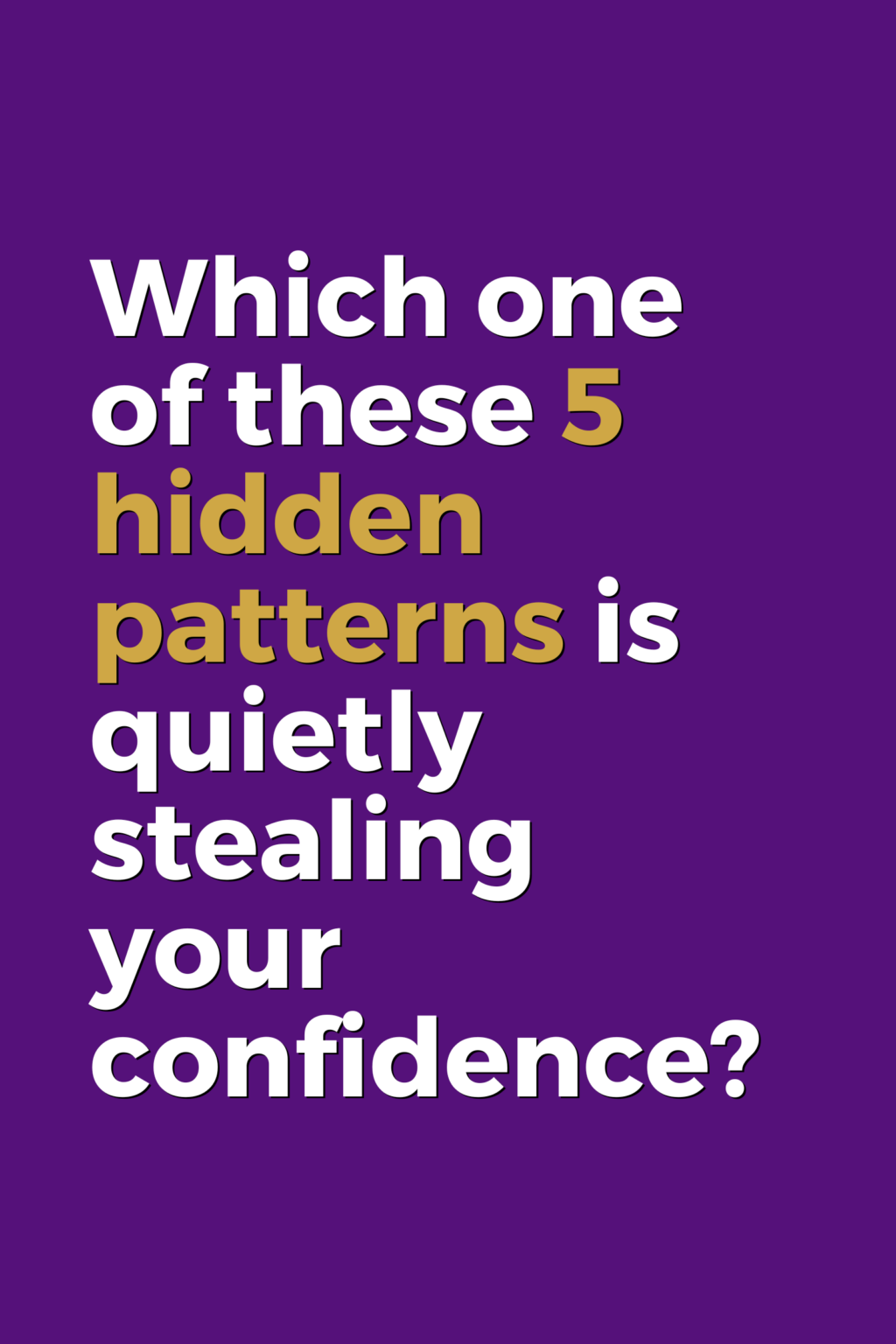


“Every woman has one dominant pattern—sometimes two or more; even all—and until we can name ours, we’ll keep trying to ‘fix’ the wrong thing.”
~ Raj Girn, Founder & CEO

What better time than the present to make changes that lift you up to become a stronger, braver, and more confident version of yourself?!
For over two decades, I’ve worked with high-performing women across multiple industries—founders, executives, professionals, celebrities, creatives, leaders, and visionaries.
On the outside, they look capable, driven, and accomplished (and they are).
On the inside, many are quietly battling the same question they have had for years, which they have not been able to answer:
“Why does confidence still feel so hard, even when I’m doing everything right?”
The truth is that confidence isn’t about competence, because if it were, the above question wouldn’t exist.
It’s about patterns we repeat, because they were either conditioned into our subconscious subtly or forced into us consciously (or both), through nurturing, coercion and/or the journey of life. So, with these not typically being a choice we have made, it becomes difficult to know when they don’t benefit us, because we don’t have an opposing marker to compare it to.
Through years of coaching, research, and deep emotional work, I’ve seen that most women don’t lack confidence in the conventional sense—they’re actually leaking it through unconscious coping mechanisms and strategies they have learned in order to survive, compete, succeed, and/or be accepted, rather than acknowledging that what—correction—WHO they are, is ENOUGH!
I ask myself:
“Why are we STILL here? We are more than competent, so why are we STILL not feeling confident?”
After greater focus, I’ve found through my experience working with women on the highest levels, that all women fall into one (or more) of these five distinct, confidence-lacking dominant personality types (yes, I mean EVERY woman).
- The Over Giver
- The Love Seeker
- The Self-Neglector
- The Inner Critic
- The Scarcity Thinker

Every woman has one dominant pattern—sometimes two or more; even all (like I have had)—and until we can name ours, we’ll keep trying to “fix” the wrong thing.
Putting effort into fixing the wrong thing has deep, psychological effects on us, because when we see that all of the effort we’re putting in isn’t changing our narrative, we oftentimes fall deeper into our cocoon, so, the problem continues to anchor deeper and plays with our minds where we convince ourselves that there’s no way out and we should just accept our lot and move through life with the weight of it all.
Ugh, just the memory of being there makes me shudder.
If truth be told, it does rear its ugly head once in a while—in moments of weakness—but because I have figured out how to rewire it when it does, it’s always fleeting and a great reminder of how far I’ve come. For those of you who don’t know my multi-layered trauma story, here it is in shortform:
- Woman.
- Of colour.
- Staunch, traditional upbringing that didn’t support my artistic tendencies, so I was never able to pursue them.
- Coerced arranged marriage which brought me to Canada (which I had never been to previously, nor wanted to come to either) from the U.K.
- Having to leave behind everything and everyone I knew.
- Divorce and single motherhood.
- Founding a multimedia brand to help solve all of the trauma I had faced, by helping others in my position to be seen heard, and valued—with no business degree, no media degree, no celebrity “ins” or corporate network; just a mission and hard-work ethic.
Now, 20+ years later, as a serial entrepreneur in multiple verticals, I help women beat the competence vs confidence gap, as I have done for myself and countless others.
Now that you know a bit about me, let me deep dive the 5 dominant personality types that I’ve learned every woman fits into (in most cases more than one):
1. The Over Giver
“If I’m needed, I’m worthy.”
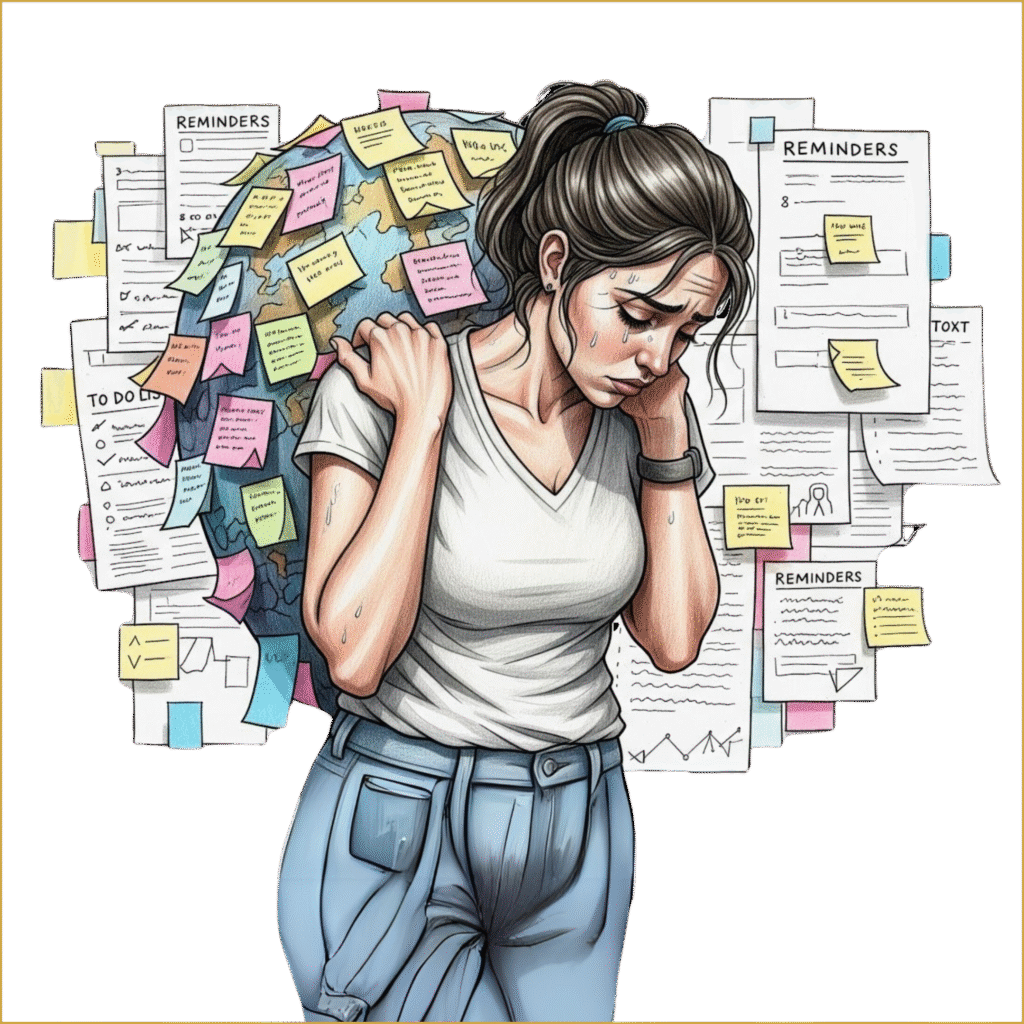
You’re the helper, the fixer, the one everyone relies on. You say “yes” when you’re exhausted, overextend without complaint, and feel guilty putting yourself first.
The research: Studies show women are far more likely than men to take on emotional labour—unpaid, unseen work that leads directly to burnout and resentment.
According to the American Psychological Association, women experience significantly higher stress tied to caretaking and role overload.
Women disproportionately take on caregiving roles and report higher levels of caregiver stress, burden, and psychological strain compared to men.
This isn’t just “being nice”.
It’s a social pattern that wears away your nervous system and your sense of self-importance.
You’re not failing at confidence.
You’re replacing your capacity for self-care by caring for everyone else.
The cost: Your confidence can erode every time your needs come last.
2. The Love Seeker
“If I’m chosen, I’m safe.”

You crave connection and approval. You may shrink, over-adapt, or silence your truth to avoid rejection. Being liked feels more important than being aligned.
The research: Attachment research shows women with anxious attachment patterns are more likely to equate self-worth with relational security, often at the expense of authenticity.
Attachment research shows that women, on average, display higher levels of attachment anxiety—a style linked to dependency on others for emotional security and self-worth, than their counterparts.
When your confidence is tied to other people’s reactions, it’s not freedom, it’s verging on emotional suicide.
The cost: Your confidence can erode every time you outsource your decisions.
3. The Self-Neglector
“I’ll take care of myself later.”
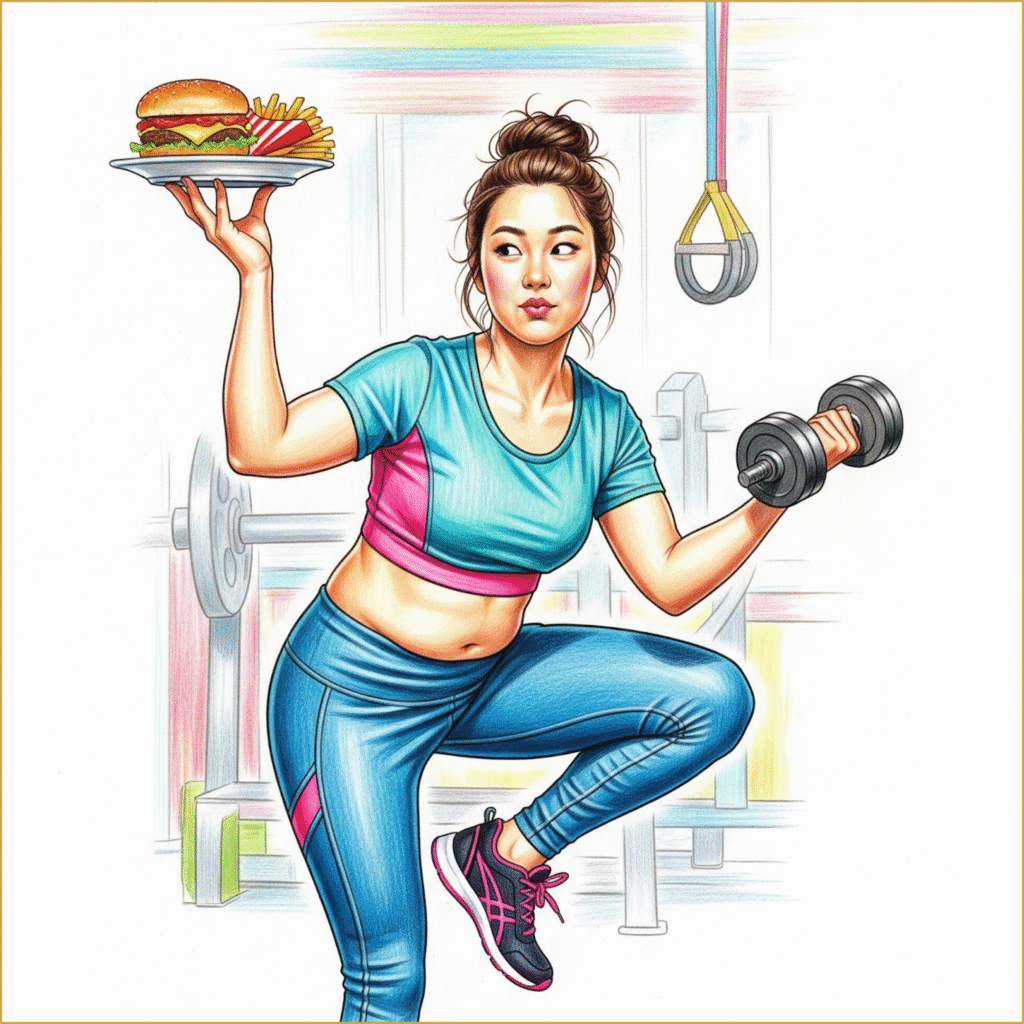
You’re productive, capable, and constantly “on,” making fitness, exercise, and rest optional. You power through exhaustion and disconnect from your body until it demands attention (chronic fatigue, sickness, gaining weight).
The research: Harvard studies link chronic self-neglect in women to increased anxiety, hormonal dysregulation, and diminished self-trust. When we ignore our bodies, we stop trusting ourselves.
Caregiver stress research and broader studies on stress show that neglecting one’s own needs (sleep, nutrition, downtime) is directly tied to higher stress, poorer health outcomes, and depleted emotional reserves.
Ignoring your body is a cost your confidence pays every day, because confidence lives in a body you can rely, not in a body you use up.
The cost: Your confidence can erode every time your body collapses and doesn’t feel safe or supported.
4. The Inner Critic
“I’m never quite enough.”

Your inner voice is harsh, demanding, and perfectionistic. You push yourself relentlessly, then punish yourself for every perceived flaw.
The research: Psychologist Kristin Neff’s work shows women score significantly higher than men on self-criticism, which directly correlates with lower confidence, higher anxiety, and fear of visibility.
Patterns of self-criticism—harsh inner judgments and perfectionistic thinking— are robustly linked with anxiety, depression, and barriers to psychological growth. Self-criticism itself appears across many forms of emotional distress and inhibits confidence and resilience.
There’s also strong evidence that insecure attachment and self-criticism are related, meaning that your inner voice didn’t just emerge randomly, but residually.
Your inner critic is loud because it was protective once—now it’s obstructive.
The cost: Your confidence can erode every time achievement never feels like enough.
5. The Scarcity Thinker
“There’s never enough time, money, opportunity, support.”

You live in a constant state of vigilance. You hesitate to invest in yourself, fear the worst, and struggle to trust that more is possible.
The research: Scarcity mindset research (popularized by Mullainathan & Shafir), shows that perceived lack narrows thinking, reduces confidence, and keeps people stuck in survival mode, even when resources are available.
Not enough time, not enough money, not enough support—your brain is always scanning for what’s missing, not what’s possible.
Behavioural science shows that scarcity—whether financial, temporal, or emotional—doesn’t just limit resources, it literally narrows cognition and decision-making ability. That means when you feel like you’re juggling “too little and too much,” your brain starts prioritizing survival over long-term confidence and growth.
Scarcity doesn’t just stress you out, but it also steals your bandwidth.
The cost: Your confidence can erode every time fear dictates your decisions.
Why This Matters More Than You Think!
Here’s what most women don’t realize:
👉 Your personality type does not define you.
👉 Once you name it, it can be rewired.
You might be thinking:
"Most women attach their identity to their dominant personality type, which is the reason why they struggle with self-confidence."
But here’s the thing:
Your dominant personality type isn’t your identity. It’s a pattern that developed to protect you. Once you name the pattern (find out which personality type dominates your life), you are one step closer to solving it. Confidence is a muscle built by aligning your internal wiring with how you actually want to move through your life, so that you can better handle what life throws at you.
BUT
We need to first identify the leak, so that we can then move to fixing it.
That’s why I created this Confidence Quiz. But don’t be fooled. This isn’t a quiz to make you feel validated, it’s a diagnostic tool to reveal to you:
✔︎ Which lack of confidence personality type is strongest in you.
✔︎ How you can replace the lack in a few rewiring exercises.
When you know your dominant personality type, you can finally stop forcing solutions that don’t fit and start building confidence in a way that feels aligned, attainable, and sustainable, throughout life’s ups and downs, because those will keep coming, whether you meet them head on or allow them to bulldoze you through life.
I know which I would choose.
Still not convinced? Then read on . . .
The Most Important Question Isn’t:
“What’s Wrong With Me?”
It’s . . .
“Which pattern am I running and how can I stop it?”
If any part of this article has felt uncomfortably familiar, that’s not coincidence. That’s awareness knocking.
- You don’t need more motivation.
- What you need is clarity & a solution.
✨ Take the FREE quiz. Meet your dominant personality trait. Get the solution. Change who you identify as forever. ✨
✨ Do it now & join thousands of women on the other side! ✨
Disclaimer: The views, thoughts, and opinions expressed in this article are solely those of the author and do not necessarily reflect, whether in whole or in part, the views of The Open Chest Confidence Academy, its owners, directors, management, employees, subcontractors, partners, affiliates, clients, or members.