
PREFACE:
What if the biggest threat to your career is believing that what made you successful yesterday will keep you relevant tomorrow?
If you’ve ever wondered whether AI will replace your job, whether working harder is getting you anywhere, or whether you have what it takes to lead through change, this conversation is for you.
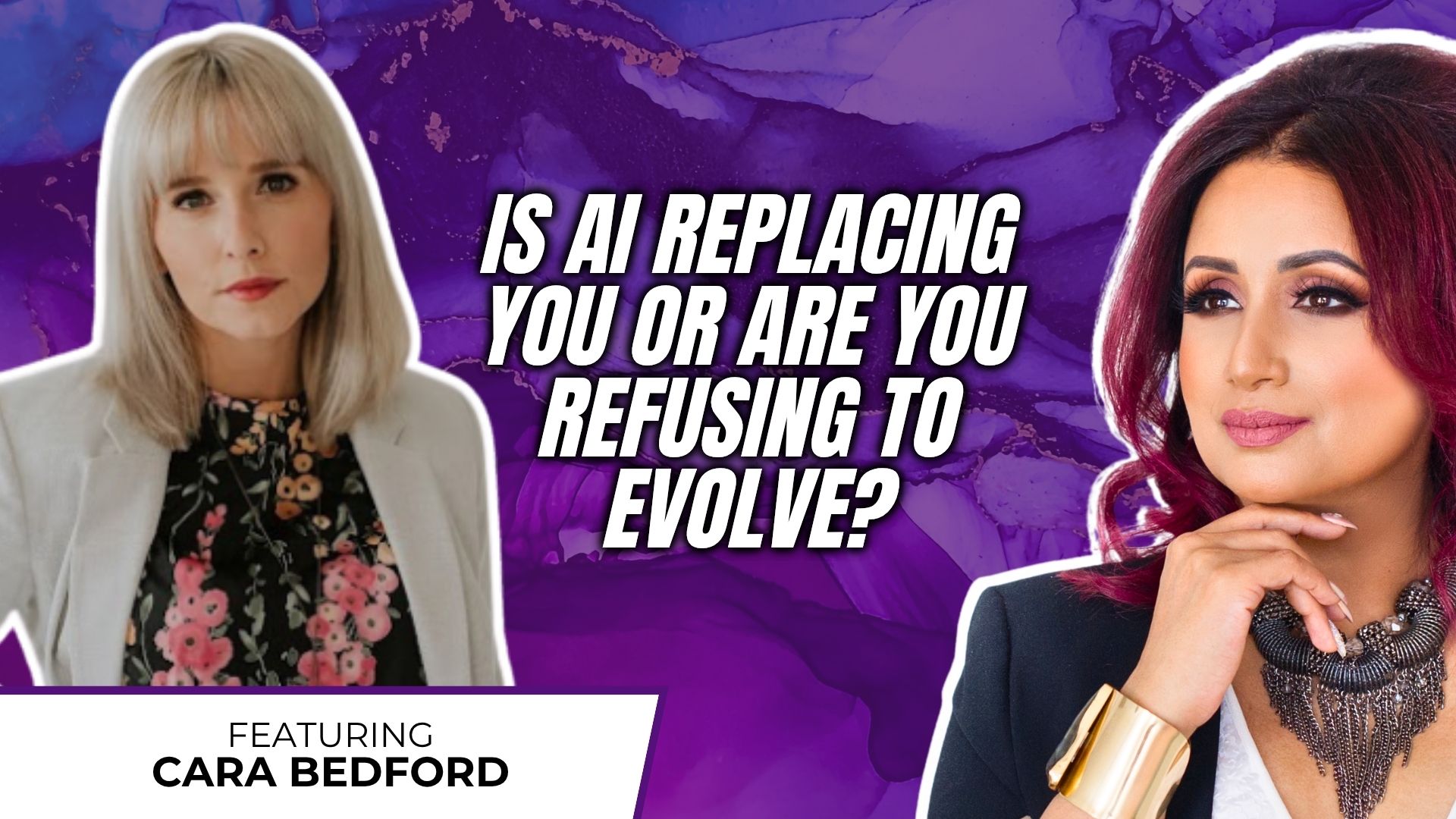
Today, I’m joined by Cara Bedford, Founder and CEO of Infinite Marketing, whose approach to fractional leadership and global talent challenges on how businesses hire, lead, and grow may be exactly what you need to know to transition your company and your team now!
We’re exploring what’s broken in the workplace, why leaders resist change, and which human skills could become more valuable as AI continues to transform how we work in the future. For women navigating these shifts, we’ll also unpack how to build the confidence to challenge gender expectations and how to move forward before you feel completely ready (because are we ever really ready?).
TO WATCH:
TO LISTEN:
TO READ:
Raj Girn: Hi Everyone! welcome to another episode of Transform Your Confidence With Raj Girn. In every episode, we explore what it really takes to build lasting confidence for women. The kind that allows us to challenge conventional wisdom, reinvent ourselves time and time again, and lead with the type of purpose that fits our value system as we evolve, shift, and adapt to life.
Today’s guest has done exactly that. Cara Bedford is the founder and CEO of Infinite Marketing, pioneering a disruptive model that gives organizations access to world-class fractional marketing leaders and global talent. With more than 20 years of executive leadership experience, she’s challenging traditional hiring, reshaping the future of work, and helping businesses grow smarter.
Today we’ll discuss challenging outdated business models, AI and the future of work, women in leadership, and why the people who thrive over the next decade may not be the smartest, but they will most definitely be the most adaptable.
Cara, oh my gosh, welcome to the show, my dear. I’m so very much looking forward to our conversation today around the revolutionary work that you do. Thank you for agreeing to be on.
Cara Bedford: Oh, I’m so humbled. What a great intro. I thank you for all of those great wonderful shoutouts around the work in my business and who we are as people at Infinite. You captured that beautifully. So, thank you so much.
I’m so absolutely honored that we’re going to get to have this conversation. I just want to start where I normally like to start because I always want to assume that people may not know who you are.
So I want to start at that juncture where we set context around the woman that you were before you founded Infinite Marketing. Who was she?

Yeah. I would say she was finding her voice. I think all women go through this. It’s really, as I step into, becoming an older woman, and reflect back on, like what would I tell my 20-year-old self or what would I tell my even 15 or 14year-old self um around work and life? And I would say we’re just, we’re set up to fail.
We’re just there’s nothing you will do no matter how hard you try in some situations where you will win. And a lot of the time it’s not even about winning or losing. And I think as a young person we’re so used to getting the gold stars and checking the check box and getting the accolades because that’s what school teaches us, right? Is to go get all the gold stars.
And so, looking back and looking at my leadership and my confidence style now, I just don’t take ownership of those things anymore. They’re not mine. And so, one of the biggest things that I think women do because we’re nurturers and carers and we hold, right? We’re the chalice. We hold. And so we hold other people’s emotions and other people’s issues and other people’s maturity and other people’s things.
I think one of the biggest things we can do is just remind ourselves that we’re set up to fail the moment we wake up. I mean, look at the way a day is set up. School starts at 8:00 a.m. and pickup is at 3pm. And if you’re a working woman, you’re expected to be in an office usually from 9-to-5. You’ve already failed. So, what systems can we build that help us create safety for us to do our best work? And that’s what Infinite is.
Whether we’re looking at, whatever we’re trying to solve for our clients or for ourselves, I want to build a system where people feel safe
Oh my gosh, I love that. That is it. It just makes me think of so many things that I want to lead with from what you’re saying, but I feel that the the biggest thing of value is going to be this: what gaps or problems did you see in the work space in addition to what you just mentioned there, that encourage you to launch Infinite Marketing? What was that?
Because, we don’t just get up one day and decide, okay, well, we’re going to start a company. We usually start it from a place of frustration.
100%. Right.
So what were those gaps?
Yeah. I wanted to hire me like I wanted to hire what Infinite is, that was literally it. And so I was a director of marketing and then a VP of marketing and I went through all the channels, coordinator at one point I was a researcher. I had really worked through all of that.
And every time I was in any role where I was hiring a vendor. I just always said like why isn’t there one place that just does this? Because what happens is companies will hire especially as they get bigger multiple vendors who don’t talk to each other and then we create these silos and then we wonder why our systems and our processes are fragmented, or we have bad data, or we have the sales team and the marketing team not aligned.
Well, they’re using different vendors and the vendors are doing different things sometimes for the same thing. Like sometimes you’ve got a CRM specialist who is literally working on the marketing and then sales hires this another vendor who is also a CRM specialist and now nothing’s talking right and so I just was like I am so done.
And as I went up the corporate ladder I became a vendor manager, I ended up not, my time wasn`t being spent being creative or creating these amazing campaigns anymore. I was babysitting. It was gross. And so I just wanted to eliminate that. And so with Infinite, we truly are infinite. If you can think of it in marketing, we can do it.
Oh my gosh. So let me ask you that question. What I mean I feel like it’s going to be a very open-ended question, but I have to ask you. What does infinite marketing do to solve some of these challenges that you talked about? Like I don’t know if you can give us an example perhaps of how you’ve done this. You share.
Yeah. So, I love hockey because I am Canadian. And what I noticed in sports and in hockey is that they have benches and they have specializations on their benches. And so they have a defensive line and they have an offensive line, and they call upon those specialties when they need them in the game in real time. And everybody knows what’s going to happen when you pull the defensive line or the offensive line on or off. Okay, it is a well-oiled machine that there are specialists all along that makeup of the bench.
So we call it in our organization the power bench. So, all of our talent sits on a power bench and they all have different specialties and skills. And during a month, I might sub in and sub out multiple people over a month to get the work done and done quicker because I want the expert who has done it before for my client and who also knows the industry. There is no junior people at Infinite.
Everybody at Infinite has to have a high tenure. You have to work in a client’s industry. Like we would not put somebody who’s worked in finance on a construction client. And that’s not how an agency runs. So we are not an agency. We are an ecosystem. And I am so bullish about that. I think the agency model is dead. And there is no way that I am going to sit here and say this person is the best one for you and be able to look you in the face and say that when they’re not like they’re just not.
And so for me and our CMOs, the ability to just sub in and sub out, hey, this resource is getting a little tired. They need a break. Let’s sub them in and sub them out. And we literally look at that month by month, month by month. It is always working for you and we are making those calls. And there is a big trust like our clients have to really really trust us at Infinite. They need to trust our talent and they need to trust the outcomes for it all to work. And we are really really lucky that the clients let us get to that point. It does take some time, like it planning and strategy and trust building takes time with anybody but there’s a pivot moment usually around day 60 with any new client where they start to just let us run, and that’s when it gets super powerful.
Confidence is not loud. It is a quiet confidence. It is a calm confidence.
Cara Bedford
Wow. You know, you just said something I feel is really, really important for us to maybe hone in a little bit on, and that is how did you convince your clients that your model works?
Because you just mentioned that it’s usually two months in that they’re like “Hang on a minute. I think these guys really know what they’re talking about. We’re going to let them roll with it.”
But to get there and even perhaps to get clients in the first place, how did you convince people that your model works considering it’s so revolutionary and people aren’t doing what you’re doing?
No. And a lot of people find us because they want a fractional CMO, but that’s not all we are. Sure, I’ve got a ton of fractional CMOs and I’ve got some amazing ones across North America and now into the EU, but what the really big piece for us is is I have had so many, especially now we’re at the end of the year and we have um companies calling us and they go, I have this plan from a fractional CMO, but I have nobody internally to do it.
And so there’s a gap because the person who’s building these fractional plans are truly just consultants and they do not know how to execute and it creates a gap because a lot of the time too people are calling themselves a CMO and they’re not. At Infinite, you have to have held a CMO role at a company as an employee and have that tenure to be able to even call that.
I got, I’m fixing a plan right now from a friend of mine’s business who they hired a CMO, a fractional CMO. She didn’t want to call me. I don’t know why. And I’m just like, hey. She’s like, I just didn’t want to mix business and personal. I’m like, I get it. But she phoned me and she said, help. I needed to fix this. And when I looked into the CMO who did this plan, the person had only ever been a graphic designer.
Oh boy.
So they paid all this money for a CMO level plan and what they got was a design plan. It happens all the time. And so when you are actually creating that strategy and plan from a CMO level, we very quickly can show you the business impacts. What the ROI is going to be, what processes we need to change, how to empower your people.
I think one of the biggest things that we do that not many fractional CMOs will do is if you have people in place already doing marketing, like directors or coordinators, we’ll coach them. We’ll help them get better. We’re not here to go in and get rid of them. If you’ve invested in people and you need that person to, for them to just even talk to, great.
And then now there’s the CMO layer, which is us, your coordinator, which is your boots on the ground, and then our team down here to do all the execution. Like it’s a beautiful little sandwich, right?
So, at the end of the day, we are looking to build trust. We’re looking to build long-term relationships. We have very low attrition in our business and our customers truly look at us as a valued member of their leadership team and that’s what we should be. We are running the full department. We’re not just making a plan and walking away.
So I need to ask you two questions out of what you’ve just said there. The first question is can you define for people because people think they know what this is but they oftentimes don’t and I experience that through my business. What is a CMO?
Oh yeah. So it’s a Chief Marketing Officer. And so a chief marketing officer should be able to do things like budgeting and forecasting and revenue forecasting. The really really good ones will also work kind of pseudo almost in a CRO style capacity to align sales and marketing.
They are not a CSO, so a Chief Sales Officer. That’s kind of where they start to stop, but they should be able to at least start to work to bring alignment between the marketing and your sales team to create what we call demand generation or growth marketing. I’ve heard it called as well, because when those two teams are working in a beautiful dance. It’s funny, revenue all of a sudden starts to come in.
So, it’s this idea where we really start to build out these growth engines, and what a lot of companies fail to to even realize and they could be. There’s a client we work with, they’re over 30 years old, like they’ve been in the business a really long time. And one of the biggest things we found in the audit was their current marketing team and their current sales team just were calling things different things. Like they were, they just weren’t using the same nomenclature.
So all we did was build a nomenclature guide for the business and within a few months they were 3-x-ing the sales outcomes. That’s it. That’s all we did. Just “hi everyone. Let’s just all talk that the sky is blue and the grass is green”.
I know that sounds so simple, but having a third party come in and find that and again, you kind of have to be a bit of a helicopter view to be able to find that. And so that’s where the fractional model gets so amazing is I’m not so embedded in your business that I’m not coming with things new. I will never as a CMO get stuck in the way, we always do it this way.
I will always breathe new life and new ideas because my value as a fractional leader in your business is to constantly be on the forefront of innovations and campaigns and ideas. And so sometimes, we’re going into these places and we’re talking about these really amazing ideas and the visionaries with us and that’s really really great.
And then you got the rest of the team who’s like “whoa, no”, right? And so how do you bring operations and everybody along with the vision? And marketing’s job is to listen to the visionary of the business and decide what can the market handle and what can the business handle so that I’m not growing marketing past the operational efficiencies of the business because that creates gap and also how do I bring that vision that he’s been salivating on probably for years to life and how long will that take.
We’re not going to make it happen in a year, but like if we actually did it and we worked it backwards, what would it look like?

It’s really interesting because my second question, it I think you kind of answered it, but I’m going to ask you anyway. Who is your ideal client then considering all the buckets that you are able to fix in what you do?
I want to ask you that question because I know there’s going to be a lot of people that think they need you or think they don’t need you and I want to make sure that the right people are going to come to you. So yeah, let’s see if we’re going to answer that question for everybody.
Because, marketing is such an umbrella term.
Well, and it’s subjective, right? Well, some people think marketing is a pretty brochure, and I would challenge that hands down. I believe that when marketing is in the leadership of your business, it can really make a difference. But then there are also people who want to just try out the talent. And so that’s why we have our concierge division. So we have a few divisions that talk through that.
So, let me talk about our first main ideal client profile. So Infinite likes to work with companies that are across North America and now the EU, that are growthminded. So if you are a growthminded business we are a really good fit from the Infinite Marketing side, you are willing to make an investment in your marketing of at least $60,000 because we are looking at everything. We are looking at everything from the strategy to the social media to the processes to the tech. This is why we have the additional pieces, right?
So we have strategy, we have demand generation, we’re looking at sales enablement, we’re looking at digital marketing, um we’re looking at intelligence with AI powered marketing, automations, systems build and we now also offer in our intelligence system fractional CIO. So a lot of the time those projects come out of marketing and sales.
Hey, we want automation here, right? And so we’ve started to build out that as well. So um that is our infinite marketing. You want to make an investment. You are growthminded and you are okay with the CMO sitting on your leadership team. Those are the three things we need.
So, if there’s someone watching, listening, or reading this today, how do they get hold of you and your team, should they feel that, you know, this would be a right fit for them?
Yeah, absolutely. So, if they’re going to that bucket, they can go on to our website and contact us. If that’s not something you want, though, and you’re just like, “Hey, I just need a project. Can someone come in and just like, audit all of our competitors or do these things?” We also have that over on concierge. So we have our concierge side which is one off projects.
So we have both. And so for concierge again it’s just you’re not going to have a team, right? We’re not building a department. We’re not building a team. So, that also has a different checkout over on the website as well for concierge. So infinitemarketing.ca is how you can find us online, and the easiest way 100% is to book a discovery and we’ll help you find the right bench for your business, right? What bench is it that you need and we’ll help discover that. If you’re listening to this and you’re like, “Wow, that sounds really good, but I don’t know.” It’s worth a discovery call. I’ll happily have coffee.
The confidence isn't something we're born with. It's something that we intentionally build one tiny step at a time through what we learn, what we action, and how we build resilience towards the things that happen that come from left field.
Raj Girn
I love that. You know, there’s so much more I want to pick your brain on, just from a leadership and thought leadership perspective Cara, but before I get there, I have to ask you this. It’s coming to me, so I’m going to ask it to you now.
And that is – in those moments of insecurity, limiting beliefs, imposter syndrome, the things that many of us women are constantly grappling with, no matter how far up the totem pole or how many awards or fabulous things we accomplish in our profile, what would you say to that woman, from your experience of any time that you’ve been that woman, because we all have, right?
We all are that woman. We all are that person at least I would say, if not at times of change and uncomfortability, when I start feeling that way, it’s usually because there’s something that’s going to happen that’s going to grow. And so I’ve outgrown the current version of me that I now need to take into this new part of whatever it is that is coming up for me.
Whether it’s personal or business or being a mom, right? Oh man, the mom part, so much insecurities there it’s not even funny. Right? So that’s a whole another podcast.
And that never goes away.
No. And I don’t think that ever goes away. Am I doing enough? One of the things I write every morning is “you are enough”. I write that every morning before I start my day on my paper. It literally says you are enough.
I cannot believe you just shared that, Cara, because that’s exactly the identical thing that I tell myself every single day.
Yeah, you are enough.
We are aligned, sister.
And I love that. The other piece is to get a community of women who just love you. One of the best things you can do as a woman who’s wearing multiple hats is have other women support you. We have gone a way in North America of building community and people will come and go out of your life and that’s there, that’s for them.
But if you hold space for community, some of the best therapist sessions I’ve ever had were not from my therapist, they were from a girlfriend or going to coffee or talking to another CEO, right? Another woman CEO. And so I would just say build the community that you see yourself in so that when those moments happen and the writing on the paper may not be enough that day, there’s someone you can just phone and say, “Hey, having a rough day. Can we chat?”
It’s really that simple. And it’s being aware enough to know that’s what you need and not feeling guilty that you can ask for what you need. We can all ask for what we need. We don’t, we don’t do it.
Especially women.
Especially women. And if there is any woman listening to this who truly feels like they don’t have that person, my LinkedIn inbox is always open. And I will tell you how fabulous you are and how amazing you are. And I will give you the virtual hug that you need. But ladies, we are strong. We’re strong. We’re stronger together.

You know, Cara, confidence is a big part of what we talk about here on this show. It’s a central theme of my business as well. And what I find is the reason why that’s so crucial, especially for women, is because everyone is different and without the core ideology behind what your version of confidence is I find that, from my experience with working with lots of women, is that it stunts us and it stops us from the action that’s needed to move forward when we’re challenged.
So from your experience of work and life, how would you define confidence and its ability to make the impossible things feel reachable, feel possible as I mentioned especially as a woman and one too who is on a mission to help businesses adapt and think differently which is what you’re doing here.
And to end off this very long way of me asking you this question is especially because we fear becoming irrelevant and I want to talk about the AI thing with you shortly. But what is in a nutshell this idea of confidence for you through your experiences?
You know, I used to think that confidence was you always had to have an answer or that you were the first for people to bring their problems to or you held space for other people even, maybe, they didn’t deserve it.
I used to think confidence was being there. Now, I do a different confidence. It is a quiet confidence. It is a calm confidence.
It is owning my reactions to things. It is owning my piece in a narrative. It is owning, my way I show up that day for my kid or my husband or my family or my business or my dog, whatever, whatever it is that we need to show up for that day.
I think for me when we can take full ownership and accountability of the parts that we play in our story and in our lives, the quiet confidence starts to kick in and I don’t necessarily need to look for outside validation to feel confident anymore.
Let me talk to you about this. I have an example. When I started Infinite Marketing, it took me over a year to put the title CEO in my email signature. I couldn’t do it. It felt like a fraud. I had never been a CEO. I had never started a business. I was a damn good CMO, but I didn’t feel like I had earned a CEO spot. How stupid is that?
We do this.
But we do this. We do this all the time. And it was a girlfriend who said, “But you have all the risk.” And that was the moment. That was the moment where I went, “Oh, you’re right. I do have all the risk of owning this business.” And then I put CEO in my title. But it was almost a year. It was a little bit over a year I think. Anyway, but those are the things we do.
I didn’t feel like even though I was starting the business and I was the one in front of it and leading the charge, I didn’t feel like I had earned that title. And I earned that title the day I opened and registered my damn business.
But we don’t wait for external validation. I needed my friend to tell me that. And I look back at that now and it’s almost 5 years ago and I go, “Oh, little one. It’s okay.” Right?
So now, right now, and hindsight’s always 2020, I also think just owning that was bad. That was that I shouldn’t have done that. Bad on you. Okay, great, now we’re moving on and I’m going to own that in any title that I should ever own for the rest of my life.
One of the best things you can do as a woman who's wearing multiple hats is have other women support you.
Cara Bedford
I love that. Yes and that is one part of it for us women especially those us women who own our own businesses. I feel the other part is and I want your opinion on this through what you’ve seen. Why is burnout and disengagement increasing in today’s society and and let’s and let’s narrow it a bit so, because we can go in all kinds of directions here where it pertains to women?
I think in our age group, we are the first generation of women that are not shackled to the system that we had previously, like our mothers and grandmothers had been dealt. Our cards are different for the first time and society hasn’t, the system hasn’t caught up to that yet.
I know that my mother and grandmothers while they had jobs, it was second to the home. and the home and the life at home and multiple kids, multiple multiple very big families, right? Those are the normal generational things.
The other thing is a lot of the times the husbands owned the money all like no they would bring the money in but they had no say around where the money would go. So, I think a lot of us women watched this as children growing up and went, “Whoa, no.”
And we’re the first generation from a statistical standpoint. I’m not saying that there aren’t women who didn’t do this in past generations. So, please don’t come at me because that’s not what I’m saying there are some amazing women who trailblazed, right?
But we have choice because of those trailblazing women. Because of what happened generations before us, because of women who decided that our rights matter and we’re human and not property and that we should be equals in a partnership, in a marriage.
On the flip side of that, we have men for the first time in this generation finding a partner, which should be a partner, but don’t have a road map on how to partner.
But want to, that’s what I’ve experienced. They want to. They ally us.
They of course, but they didn’t have that role model with their fathers and grandfathers and whatever because it wasn’t needed. So we’ve changed the game. The game has changed. The system has some things to do to catch up to it.
But at the end of the day, burnout happens because we’ve done too much. We have too much on our shoulders and we have too much on our plates and it’s not sustainable for a single human being to have.
And so what do you think needs to change in our generation?
Partnership role. You need to have a partnership role whether that’s again a community or a partner or spouse or a friend or there has to be partnership that helps you. One of the things in our mother and grandmother generations is they had neighborhoods that watched the kids.
I’m too scared. I don’t know about you guys, but it took me a really long time for me to have my kid go and ride his bike by himself around the block. And still I look at my clock and like we’re these heightened we’re so heightened, right? The statistics of something happening are super super low.
But we live in more densely areas. So there’s more cars and more risk and we’re more educated around the risk, and the risks is on our phones and it’s constantly at us. So we are so overstimulated and then you want to add on top of that that women are working in a system not designed for them.
A lot of the time, even corporate, is not designed for a woman to work especially when they’re in child rearing years. I found it almost impossible to work the first year I had my son just trying to figure out how to manage breastfeeding. That was a job in itself.
It’s these moments that were, they’re just not designed. They’re not, it’s just not designed, the system is not designed for us. And so what companies and leaders have to do if they are finding more women at their companies is design a system where women feel safe in their company. That’s literally it. That’s it. That’s the magic.
Because don’t you want your employees or the people working for you to succeed? I do. I think we hire them and we invest in them and we want them to succeed. And so what barriers are in place and how do we remove them?
That’s the the number one thing that we can look at as leaders in business is where if the outcomes are there and you have a strong performer in somebody and she has to go early because the school calls her and not dad when something’s wrong and she had to leave to go pick up her kid who’s throwing up because that’s what happens. We’re still getting penalized. We’re still being punished. We’re being punished for being human.
So, what do you think is broken in today’s hiring model?
I think the AI hiring model is really broken. How many times have you read the story about people put in a system and these really smart devs get the job, but they don’t know actually how to do the job, they just were able to break through the AI system with prompting. That’s my favorite. Those are my favorite ones recently.
Is like you hired a you know whatever ex person who’s supposed to have all these technical skill sets and they said all the right things to the AI bot and then uh you hire them and then you realize by like day two they actually don’t have any of those technical skills.
That’s a good one. That’s one I’ve been reading a lot lately.
Everyone is different and without the core ideology behind what your version of confidence is I find that, from my experience with working with lots of women, is that it stunts us and it stops us from the action that's needed to move forward when we're challenged
Raj Girn
And I can’t wait to dive into some AI questions that I have with you, but I want you to continue with your thoughts here first.
Yeah. My biggest thing on hiring the bench is I truly believe that good talent can be anywhere. Can be anywhere if you’re brave enough to go look for it.
So, what happens to organizations that refuse to evolve? Because I feel that that’s a lot of what we’ve just been talking about here.
Yeah. I think there’s probably a reason why they’re refusing to evolve. There might be risks or capital challenges or unknown. That’s what a good CMO is supposed to remove for you are the barriers to growth. If you are coming in with a fear mindset versus an opportunity mindset, then that’s going to limit you already, right?
I don’t know. I just, I choose to go into life with an opportunity growth mindset versus a fear, and I need to know what all my competitors are doing at all the times and that’s two different strategies and that’s a choice that you get to pick, right? I promise you one leads to burnout faster than the other one.
Because your cortisol levels are going to be so high. I guess my point would be why are you so resistant?
So I feel like I have some thought around this and I’d love your opinion on it. Why do leaders resist remote hybrid and fractional talent hiring over in office structures? Let’s go there because you are that.
Yeah. We’re all fully remote. One of the big things that we see is cyber security. So we will have, we usually meet with an IT team very quickly on, to be like okay this is how we’re compliant, we can show you this, this is what we do, this is how our systems are built. I mean we figured this out and prior to me opening this business.
I want to just say that I built this model for other businesses so this model was already being tested and built out while I was a CMO at a company. Actually no, I was a .. when I built it originally I was the director and really starting to to figure out what worked and what didn’t work and what they were a tech company so cyber was a really big deal.
So smart you did that.
So, we were starting to already build the model, so while the business is new the model itself is actually, I would say 12 or 13 years tested, so that’s a long time in market, and so we kind of know already when you come at us what you’re going to say, like well how are you, like what’s your compliancy and do you have cyber insurance, and all of these things that every person asks we have, because that’s called running a business.
So I’m glad that you brought this up about compliance.
Yeah. So one of the things I’ve heard before is like we were going to call you a quarter ago but we weren’t really sure if we should because we weren’t sure what to ask. And I was like okay great, here’s our onboarding packet and here’s our FAQ and this is what this looks like. They’re like okay, great. So, proof points are important here.
The other thing is calling other companies we’ve gone away from in business. Do you remember the period where you would actually phone the references? Like I give you a list of them and and sometimes I’m actually baffled that you go with us without calling them. Maybe I did that good of a job and that’s great. But I call references all the time.

So do I, because it’s not just to legitimize who they are, but it’s also to find out the best way to work with them because there’s a personality element associated with what you’re hiring in addition to the skill set, right?
Correct. And a cultural one, where our people have to be what I call culture chameleons because they’re going into your business that has a culture. And one of the biggest things that a CMO can do, and I’ve seen this with other CMOs, not Infinite, but they go in and they try to make you fit them. But we’re coming into your business, if it’s a good fit, it should not just be skills, it should also be culture, right?
So, when we’re vetting and mapping our talent and figuring out what type of CMO is going to work for you, we also get a pretty good feel from talking to you around the culture. And so, I call it like CMO matchmaking a little bit. And we’ve tried to process this out, but sometimes it’s just a feeling like we have processed it, but sometimes it’s just a gut feeling where you get off a call with a CEO and you’re like, “Wow, they would love working with this person” and it becomes the matches made in heaven, right?
Yeah. So I want to ask you this because I feel like it’s natural to what you just said there and that is, how should companies measure performance?
I love that question. What do you believe performance means?
Accomplishing what is required of a person in whatever means they use to accomplish that within the confines of the culture of the company. That’s what I would say.
Okay. So, how do you know if somebody is performing for you within the business?
Because I feel that every single person in the team has a specific requirement to fulfill so that other team members can also do the same with their task.
If the task doesn’t get done, some wheel along the cog aka person hasn’t done their thing so the next person can do their thing is one is one way I would say from my experience, your thoughts?
Inside Infinite, you say you want a banner. It’s a rollup banner. And I know, because I have done this a long time, that you need a content writer plus a print graphic designer to do that. However, I promise you that for people who have not done this before, they’ll just send it to the designer and they might not even be a really good print designer.
That’s the difference. The difference is I’m giving you a print specialist designer who has a minimum of X tenure and I’m giving you a content specialist who already knows your brand guide, and all of this and all the things if we’re working together already and you would have just given that to your marketing coordinator to do. She’s not a print specialist. She’s not a content specialist. She doesn’t know how to write a CTA.
She’s going to go into Chat GPT and write one and it’s going to look the same as every one of your competitors. No. If you want to stand out and not be a part of the sea of sameness and you want the output and the outcome to outweigh the expectation, you need to get specialists versus generalists to work on accounts.
And that is my core belief is that marketing has done a disservice to itself in the agency model by hiring a bunch of generalists and not specialists because they don’t want to have to employ a specialist that can only work at one third of their customer business.
But that customer might really need that person. Whereas in our model, we’ve already got 600 vetted talent plus on the bench waiting and ready to go for you. They are there. You just have to ask for it.
It doesn't have to be perfect to be wonderful. I don't know how many marketers I've ever met who won't let something go out the door just because it wasn't perfect, and perfection killed speed and they missed the opportunity in the market.
Cara Bedford
So I feel that what you just shared there also is a great testament to great leadership. So what do you feel great leadership needs to look like? Because now we’re going from the fulfiller to the person that’s the strategizer. So, let me ask you that again. What does great leadership need to look like today?
Oh, if I knew that I would be so, I would be on a plane in the and I’d be at the Bahamas. I think a great leader is going to mean something to everybody else. I’m trying to be a leader that I didn’t have.
So, there are times where those biases come in where a lot of the time I had to figure it out
and I wish a leader would have held my hand and helped me figure it out. And so I tried to do that. But I also really, especially at Infinite, we have a very, coming from an employee model into this model, where I’m only as good as my last job, right?
It’s different. And so that is what people believe contractors to be. I’m only as good because it’s my last job. So, a lot of them come in with that mentality and there is an underlying hunger to be the best. It’s like when your kid tries out for the community team in soccer versus the competitive team. That’s what it kind of feels like.
And the people at Infinite have that in them. They have the, we want to be part of the best team in the world. How are we building that? And I know that’s so big and ambitious, but man, some of the people that work and choose to be at Infinite are so much smarter than I am.
But isn’t that the best?
They’re so much smarter than I am. They’re so amazing at the skill that they have. And I would be a fool to stand in their way and micromanage them or control them. And you know, as we continue to grow, I would just say I don’t know what being the leader, the good leader, the best leader looks like.
I just know that I can show up every day and hope that I am creating safety. I think that’s my moniker of a leader is, I just want people to feel empowered and safe to do their best work.
And for me, it’s really that simple because if that’s happening my clients are happy because they’re getting the best outcomes.
Have you ever felt because I feel that this is something that we do grapple with at some point in our career as a woman in leadership. Have you just because the scene has been historically dominated by men, still is, have you ever felt pressure to lead like a man?
Oh gosh yes, especially younger. Right.
Thank you for your honesty there.
Absolutely. I mean, yeah, who wouldn’t? Because the leaders we see and have seen since we were little have been men. That’s who we attribute leadership to. I have to say for me, the first time I saw a quiet leader was Oprah Winfrey. You know, here’s this beautiful woman on television being quiet and calm and not yelling at you like some of the other talk show hosts.
Not that they’re leaders. Not that talk show hosts are leaders, but early 90s you’re homesick from school and that’s all that was on, right? I remember watching her and just thinking, “Wow, that power that she has.” And maybe that’s it. Maybe it’s the feeling powered or empowered inside. I’ve never had that feeling when I’ve led like a man, when my feminine wasn’t honored.
So, let me ask you. Oh my god, I just have to ask you. Let’s go there a little bit. What strengths do women uniquely bring to leadership? If there’s anyone out there watching, listening, or reading this that is convinced that you have to be a male or have male attributes for leadership.
I want you to answer from your experience, Cara, or perhaps what you have seen or or what you’ve seen is missing. What strengths do women uniquely bring to leadership that’s missing today?
They’re them. They’re just them. And the men are going to go be them. But I can’t be an effective leader if I’m trying to put a square or a circle in a square hole, whatever the saying is that my brain is not capsulating right now. I won’t do that because it’s not authentic.
So rather than it be to me male leaders versus female leaders, to me it’s are you being authentic to yourself and leadership. And if you’re saying as a woman, I have to be a man to lead, that’s not authentic to you. It’s just not.
That’s an issue that you need to understand for yourself because obviously you still need that third party validation we talked about to feel whole and you haven’t developed that awareness yet, right? So, I don’t think you need anything but yourself and a whole whack of courage and an open mind and..
Confidence.
And confidence to not just jump but also to fail.
Yes, there’s a lot of confidence in failure.
Like I learn the most when there is egg on my face.
Likewise.
I just, that’s how you learn.
So, let me ask you then just to close off this component because I’m dying to get your perspectives on AI before we close out.
What advice, definitively, what advice would you give women who haven’t been in leadership roles from a work perspective that they should be looking at in terms of the ingredients to be, feel capable to do it.
All your decisions have to be databased.
I love that. I don’t even think you need to say anymore. I love that answer. You’re absolutely correct.
That’s it. That’s where any leader fails, male or female.
You don’t let data lead the strategy and you let bias in human nature take over and then success isn’t defined and then the strategy fails.
Brilliant answer, Cara. Brilliant answer. I don’t think I’ve ever had anyone answer that question. So simply, but so absolutely correct. Thank you for that.
I really appreciate that’s a great close out on the leadership component that I wanted to get from you, gleaning from your experience. And I’m dying to dive into AI, so I got to ask you the million-dollar question. Is AI coming for our jobs?
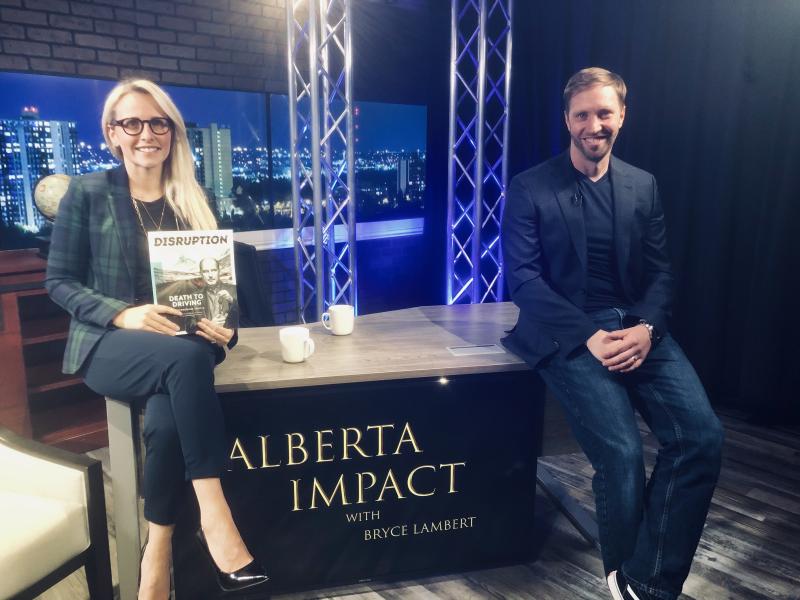
This question is so fun. I think I’ve been asked it on the last four podcasts. If you let it. So, one of the things that I think everybody needs to do just like when the industrial revolution hit or the big internet boom hit, is they started to look at what are the skills that you possess.
So, one of the big things we talk about a lot at Infinite with our talent is skills can come in many different forms. So, it can be soft skills, it can be creative skills, it can be technical skills, it can be all of these things, right?
There’s all these buckets of skills and know that for yourself. And if you don’t know those things, I’m going to steal from Roy Group one of the best exercises I’ve ever done for myself.
And you ask basically 30 people that are leaders or business colleagues or whatever, and you ask them how do you see me? Sorry that’s not the question, the question is how the outcome is, how do you see me, the three questions are when have I performed at my best. And sorry, Ian, if you’re listening to this and I totally screw this up, I’m sorry.
When have I performed at my best? When have you noticed where I didn’t perform at my best? And what are a few things that I do better than anyone else?
And getting those answers floored me. They were not at all what I thought I contributed to this world. It’s not that, what I thought was incorrect. It’s that theirs was so much more impactful and deep and succinct. And now you have your personal brand, you now have what it is that you do better than anyone else.
And that’s where you can either choose to use a tool because AI is just a tool in a tool box. Everyone is talking about it, like it’s this thing and sure it’s a thing and it’s going to move through the cycles of disruptions.
There’s a thing by Peter Diamus which talks about the the disruptive cycle when something goes into market and it moves through all these 60s and highly recommend somebody reading that if you haven’t and you’re super scared about AI, so go and search out Singularity University and read, it’s like a little hockey stick and it’s got a bunch of D’s.
Anyway, so they move through all of these cycles. But to my point is really what we need to have happen here and what we need to focus on is what am I in control of and what am I not?
And I’m going to take what I’m not in control of right now and I’m going to park that over here, because I’m not going to let anxiety or worry or anything take my energy for that because I have no control over this. But what I do have control over is this over here. And I’m gonna really focus on that and I’m going to build that because that is what AI probably can’t take.
In those moments of insecurity, limiting beliefs, imposter syndrome, many of us women are constantly grappling with, no matter how far up the totem pole or how many awards or fabulous things we accomplish in our profile.
Raj Girn
So, I have to ask you right there with what you just said, which human skills become more valuable because of AI?
I think anything to do with admin and inefficiencies start to become way more powerful. There is a thing called human error. That is a thing. It does happen. I don’t even know how many event lists I got where we send it out as marketing and then sales comes back and goes, “Oh, I invited the wrong person.” Right?
But it can only be as good as the processes and datas behind it. A lot of the companies that want AI powered marketing or they want automation and there is some weird thing where people are confusing AI and automation right now, and I don’t know why but they’re two different things.
And then there’s robotic process automation. That’s a whole other different thing, but they’re just saying AI is like blanket technology and that isn’t true and stop doing it. So, AI doesn’t mean all tech is solved. No, no. There are layers to technology and those layers all have different strategies and outcomes and AI is just again one of the layers, one of the tools.
So, just going to throw that out there, because I keep getting into these leadership conversations where they’re like, “Oh, well, we can AI it.” And I’m like, “I think you mean you want to automate that.” So, I’m going to throw that out there as an educational thing that I keep hearing and I’d love it to go away. But the biggest thing here around again, your skill sets and what are the main ones. I really believe that we’re going to get better around those administrative tasks just not having those errors or those attention to detail things.
And then the other thing is big data. So one of the things in marketing that we’re constantly looking at and if you are not constantly looking at it you’re not doing marketing, is total addressable market economic forecasting, big chunks of data that comes out publicly so that we know where our clients can land, what’s available to them especially right now at the end of the year.
We’re not making a plan where we go “oh I think you need content like that isn’t it?” It’s rooted in data. So, for us it’s we’re always constantly intaking data and so having to not read before bed, 147 page report from the Municipality of British Columbia is fantastic. Now I can just have AI summarize it and work through that. And so I’m able to get a breast of information faster and if I want to go deeper I can. Whereas before it was like okay get to the point, like, come on.
It was all it was, it was only long form. Exactly.
Always. And so that again as a strategic leader my job is constantly reading and reviewing documents. And so having that time back where I can be creative, I’m way deadlier of a CEO and a CEO because I still do have a couple clients than I was, I would say a few years ago for sure.
So Cara, I want to ask you this. How should businesses implement AI without creating fear in their workforce?
I would ask, do you have a culture of fear already? What’s your culture today? Does your culture do things like when you do an ERP implementation, are they all freaking out? Probably need to have some talks around change management in the way that we do change management in the organization, right?
You can’t take a baby and say you’re now walking. Doesn’t work. They have to develop the muscles to do that. So, the AI journey isn’t new. People should have been talking about this for the last five years really.
The tools are getting better but it`s not like it hasn’t been on the radar in every business magazine that you have picked up for the last five three years for sure. So is your culture, can your culture handle it? And I’ve seen some marketing agencies go in and go and AI a whole whack of pieces of their business and their people quit because they didn’t ask them, right?
Like, well, what do you want to do? How do you want to use AI? And leadership just decides this is how we’re using it. And again, I have feelings about the agency model, but I also have feelings for those people who are probably amazing at what they do, right?
So, I don’t think you can just say that as a business and depending on how big you are, you can do this faster or not, but I think here’s the culture today. Here’s the culture we want it to go to, do I have curious people working for me? If you do, go have some tools with some guard rails and go let them fail in it. Go let them play. If again, it’s not a compliance issue. There’s some industries where you just can’t based on the way that the data is encrypted and such. So, there is not a one-stop solution for everybody when it comes to AI right now because there’s so much unknown.
And so, there’s a book by Jane McGonagal and it’s called Imaginable, this book right here. And I would say put this on your reading list for over Christmas, if you have not read it. And it’s really about how to start thinking future readiness when things feel impossible. I use a ton of the frameworks and thinking frameworks that are in this book.
Can you hold it up again? Can you hold it up one more time for everyone?
There.
Perfect. Okay. All right. It’s going to be on my list.
I highly recommend it. It’s not huge. It’s not a huge read, I think the page count is like 350 pages. Like it’s not like you could do it in an afternoon if you really want to do it. But a CMO who I really admire gave this book to me when I finalized my big hairy audacious goal for the business. And one of the questions I had is how can I lead in such times of uncertainty?
This was a couple years ago and so we’ve only become more uncertain but I said you are asking me as the leader of this business to make calls when I can’t see the outcome and this book what it did was at least started to make me think around becoming a future forecaster becoming a designer of the world I want to shape.
And that’s where what I can control versus not control comes from. It’s a fantastic tool. I use it every day. The other tool I’m here talks about putting something on a scale. So, if you’re a one to three or a one to five or a one to ten, whatever scale is going to work for you and you go like, is this decision I’m going to make like I’m a one to five. A five. Five is like the whole world is ending. Like aliens have invaded our planet and I got the bugout bag and I need to leave, that’s five, right?
And then you build your scenarios down from there. And so is this part is this decision that I am making right now. What number is it? And it’s funny how the pressure goes off all of a sudden. And I think that’s the biggest thing with fear and resistance when we’re talking about AI is there’s so much pressure to not get it wrong because we don’t want to fail and there’s just so much pressure. So how do we take away the pressure in making those decisions?
So let me ask you a couple of quick questions around some of the things that people are discussing right now.
One of the things is which careers do you believe are the most vulnerable for AI taking over? Bearing in mind that you don’t believe in that is what I’m hearing you say.
A little bit. Yeah.
Yeah, because, are there certain careers that you feel perhaps we shouldn’t encourage our kids to go into because AI will do it better anyway?
Yeah. Like, are there going to be jobs that are obsolete?
Yeah, basically.
Is more what you’re asking me. Yeah. I mean, like every company I’m talking to is automating like the junior accounting role. So that’s going to be a big deal for accountants who used to learn by doing the junior accountant role and now the junior accountant role becomes obsolete.
So that’s a thing that is currently going on in the world and we’re seeing that but we’ve been seeing that before the age of AI. We were seeing that based again with RPA and automation. Anything that is repeatable, a repeatable taskual process has the ability to potentially be either robotics run or AI run.
What companies and leaders have to do, if they are finding more women at their companies, is design a system where women feel safe in their company.
Cara Bedford
So with that said, what is one thing unequivocally so we can just put people at ease from your perspective? What is the one thing that AI will never replace? I feel it’s obvious for me, but I’d like to hear what you have to say.
Creativity. And I’ve heard this before and I’ve heard other leaders say this. Remember, a few years ago, maybe seven or eight years ago, where everyone was putting their kids in coding school because coding was the next thing. And now AI has taken over coding and those skills have literally obsoleted themselves in seven years and people spent all this money for their kids to learn coding.
And I still think those skills are valuable, so don’t get me wrong, because they can now code some of the AI things, but AI can also code itself. And so there’s a whole whack of things that it can do and learn and I am not a coder so I probably totally screwed that up and I’m sorry if anybody listening is a coder, but to me it’s creativity around problem solving. It’s picking up the phone and talking to another human.
I don’t know how many times in a week that I still will just pick up the phone and phone somebody. I’m like, “Hey, old school phone style.” And the generation behind me does not pick up the phone. And I go, “Well, wait. Do you just wait for the information to come to you? You don’t just go get it?” They’re like, “No, no, no. It’s rude to do that.” They hate when I phone them. They’re like, “Oh my god, I’m in trouble.”
And so I’ve literally had to start the phone calls with like you’re not in trouble and you’re not answering me in Slack and I only have 15 minutes before my next flight. So that’s been a really big piece. I think that soft skills, those soft skills like we’re gonna, we’re losing them but they need to come back.
Well, what I’m hearing you say because creativity, soft skills, they all align, is that if we’re able to establish our personal brand, I feel that we’ll become even more valuable as AI continues to evolve because AI is going to be what can do all of the repetition stuff.
And creativity, which is something humans have, is something that’s going to become a valuable commodity if we can hone in and understand who we are as individuals. So, this comes right back to that piece. Your comment on that.
Yeah, you nailed it. I think always, always working on ourselves and knowing and being aware. Again, what I said at the beginning of this is there are weeks where I rate myself as “man, I did not give myself any time this week to think”. I was back-to-back meetings. I did, it was not a good week for me. I didn’t protect my time.
And I measure my success around how much time I’ve had to be able to think for my business and myself and the clients that I serve. And so I really, for me, not having that creative time is actually really detrimental to all of those outputs. So it’s all in it’s all connected.
That’s the thing that I think people forget. They feel like this life is being done to them and they forget that they have a choice. You have a choice to decide if today you’re going to make room in your calendar or not. You have a choice to say “Hey, I really, I really need a mental health day today. Like, I just really need it.”
We just are so programmed not to do that or ask for it. And it’s a skill I’m constantly working on and I have not perfected it. Please don’t think that I’m saying this and I’m a master at it. I fail every day, multiple times, and that’s okay.

But you’re acknowledging that it’s important and that it’s necessary and that it’s needed and it needs to be a part of what sits in the top three things that are priorities in your life.
And like you said, at the end of the day, this is where we differ from AI. We can’t always get it right. Can AI always get it right? Depends on the prompt, but that’s a whole other discussion. But, it’s okay. That’s what’s beautiful about the human experience is that we are ever evolving, right?
Yeah. And there’s beauty in messiness sometimes.
Yes. Absolutely.
We forget that you there’s this saying of like it doesn’t have to be perfect to be wonderful. I don’t know how many marketers I’ve ever met who won’t let something go out the door just because it wasn’t perfect and perfection killed speed and they missed the opportunity in the market.
I’ve seen this so many times where it’s just get it out the door. It’s okay that the green is two shades hex colored different than the one you wanted in your brain. No one’s gonna, I promise you, go, the sales team needs it or this event needs it. So those are always really really important things.
So Cara, I would love to close off our conversation with a quick rapid fire. Are you game?
I’m game. Let’s go.
Let’s do it. Finish these sentences. Confidence is . . .
Calm.
The biggest misconception about successful women is . . .
We have to do it all.
One belief you’ve had to unlearn . . .
Being liked is the same as being effective.
Failure taught me . . .
That it’s okay.
The hardest leadership lesson I’ve learned . . .
Time is something that you protect no matter what.
A moment that completely changed how you lead . . .
Failing.
The quality every future leader must develop . . .
Resilience.
One fear you’ve overcome . . .
I’m enough.
One piece of advice you’re glad you ignored . . .
That I have to lead like someone else versus me.
One decision that transformed your career . . .
Becoming a business owner.
What would your younger self be most proud of . . .
Creating safe spaces for women.
What are you still working on . . .
Being the best version of myself that I can be each day.
When self-doubt appears today, what do you tell yourself . . .
That I’m enough. And sometimes there’s a hug involved or a really good cup of tea.
What’s often mistaken for confidence but isn’t . . .
Loud.
If anyone watching, listening, or reading this remembered only one lesson from you today, what would you want that to be . . .
Learn who you are in your personal brand.
AI is going to be what can do all of the repetition stuff, and creativity, which is something humans have, is something that's going to become a valuable commodity if we can hone in and understand who we are as individuals.
Raj Girn
Before we finish, Cara, I’d like to end by giving everyone a confidence breakthrough from you. So imagine a woman watching, listening, or reading this today who’s standing exactly where you once stood, prefiguring out what you have learned or what you want to do with your life.
They’re doubting themselves. They’re afraid to take the next step. They don’t believe they’re capable, maybe. Looking directly in the camera, what would you say to her?
Dream it. Do it. Life’s too short and build a village.
Cara, thank you so much for your thoughtful conversation and all the insights that you’re leaving the community with. One more time, where can people find you and hang out with you?
Oh, come find me at infinitemarketing.ca. or my LinkedIn. I love LinkedIn. So, if you have questions or you just want to connect or you disagree, I love talking about things that people disagree on on my podcast. I get messages like that sometimes. So hit me up. I love connecting with people and businesses and yeah, happy to reach out on LinkedIn and see if we can have a coffee combo.
I love that. Thank you again.
Thank you so much for your time, guys. Today’s episode was about having the confidence to challenge convention, embrace change, build something better that works without losing who you are or the value that you bring to the workplace or to your life.
In today’s conversation, if it inspired you to think positively about your career, about your worth, or about your future, please share this episode with everyone in your ecosystem who you feel needs these insights today.
And don’t forget to subscribe to our YouTube channel at The Open Chest Confidence Academy and on our podcast anywhere that you receive your podcast, just search Transform Your Confidence With Raj Girn.
And I humbly ask you this question. Please, please, please give us a five-star rating so that the algorithms can put us in front of all the other women who can benefit from the wealth of wisdom that my guests bring each and every show.
And please remember, confidence isn’t something we’re born with. It’s something that we intentionally build one tiny step at a time through what we learn, what we action, and how we build resilience towards the things that happen that come from left field. That’s when the true test of the confidence that we’ve built matters.
These are my final words to you. Please build confidence, hone it, and as Cara has shared today, adapt it so that whatever comes in life that you’re always set up to win, but do it as you.
Until next time, please take care of yourself and your loved ones.