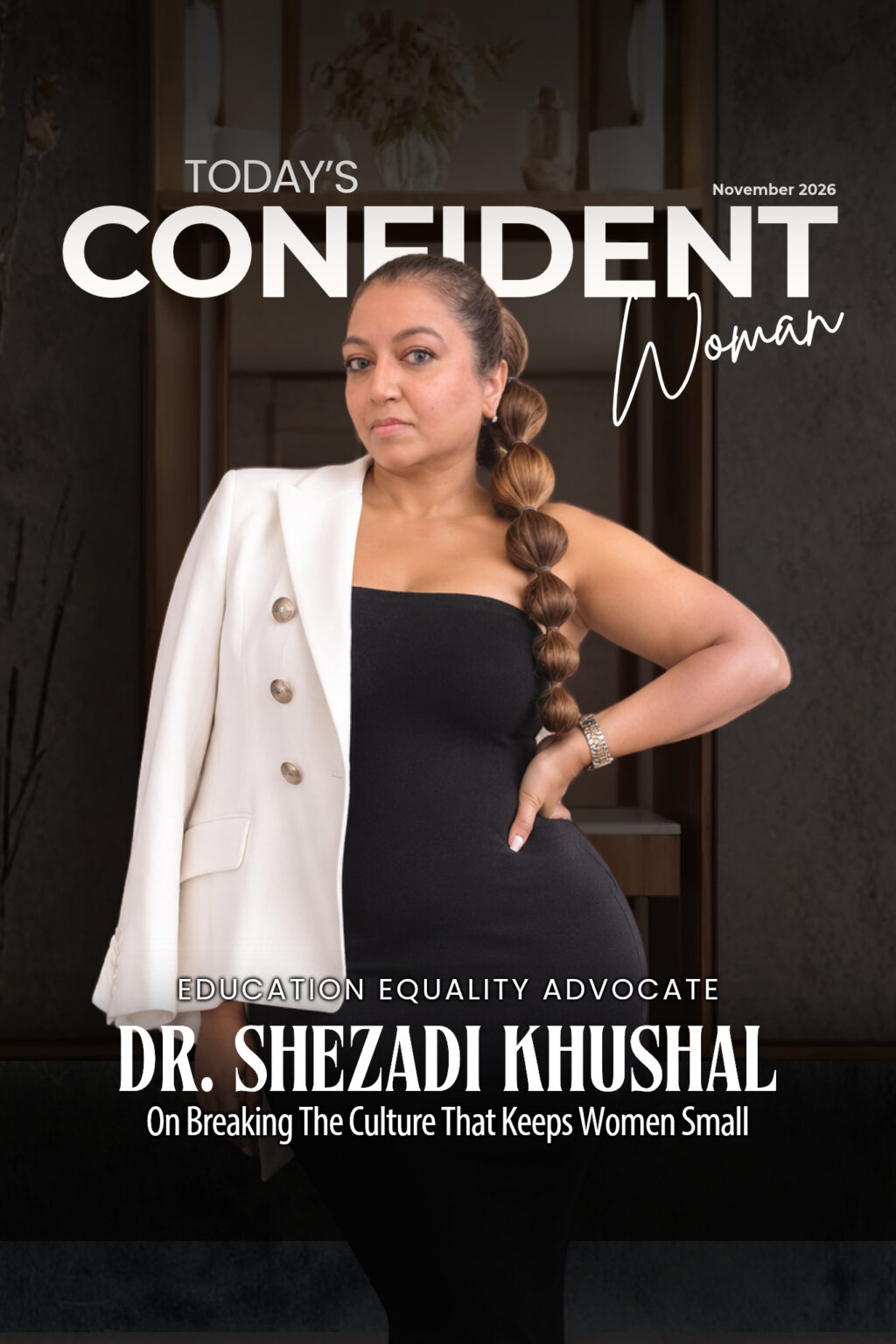


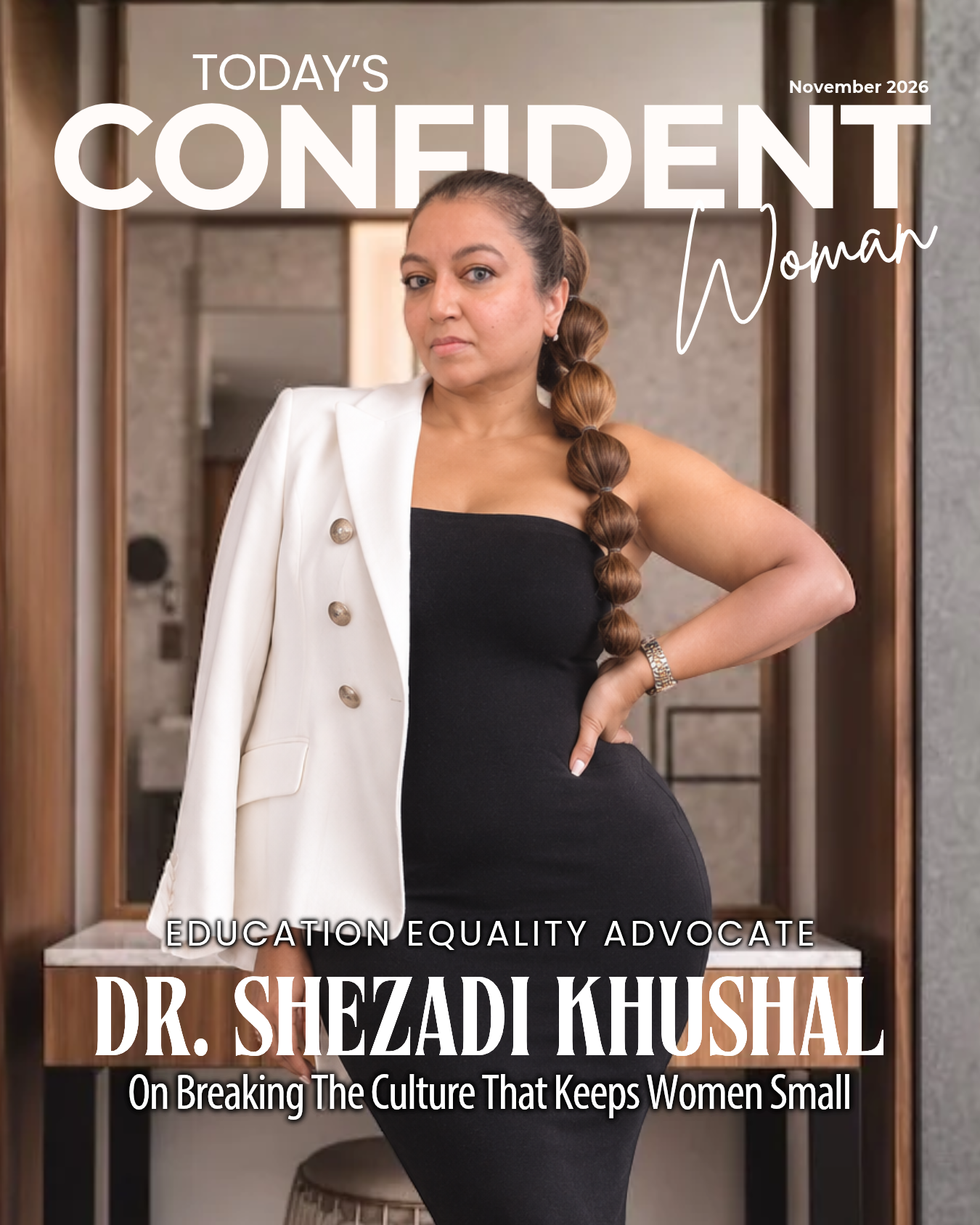
ABOUT SHEZADI KHUSHAL:
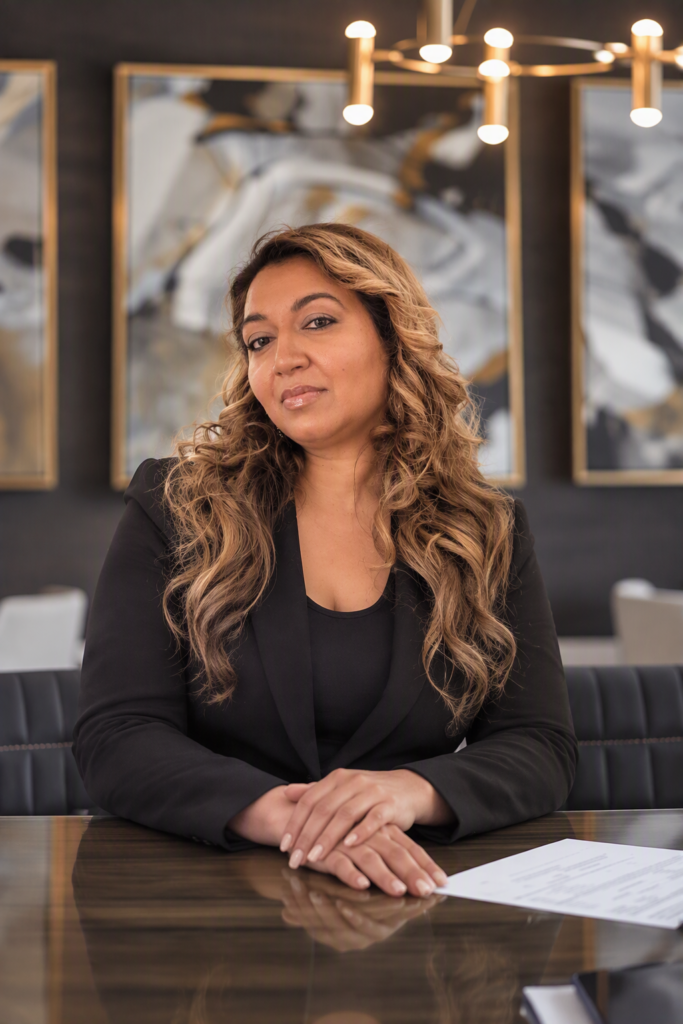
Dr. Shezadi Khushal is a scholar-practitioner and human rights leader dedicated to advancing diversity, equity, inclusion, and human rights within education. As a Human Rights Investigator in one of Ontario’s largest public school districts, she conducts human rights investigations and delivers trauma-informed, restorative, and equity-centred learning for educators and leaders. Her work bridges policy, practice, and institutional accountability, with a focus on creating sustainable change within educational systems.
She is also the Founder of the University of Toronto’s Human Rights and Equity Symposium, now entering its fifth year. This interdisciplinary forum brings together scholars, practitioners, students, and leaders to advance meaningful dialogue and action on human rights, anti-racism, accessibility, and educational equity.
Her commitment to equity and inclusion extends beyond institutional reform to empowering individuals and communities. Through leadership development, academic mentorship, public speaking, and community engagement, Dr. Khushal advocates for those from marginalized and underrepresented communities. She also champions the next generation of changemakers through the creation of a Human Rights Award for high school students, recognizing young people who uphold the principles of anti-discrimination, justice, and equity.
Her forthcoming book, Human Rights Policies and the Struggle for Educational Equity in Ontario Schools: From Performative to Transformative, scheduled for publication by Palgrave Macmillan in 2027, further reflects her commitment to institutional accountability and system-wide change. The book examines the implementation of human rights policies and the pursuit of meaningful educational equity, reinforcing the importance of translating institutional commitments into meaningful action.
Beyond her public sector and academic contributions, Dr. Khushal is the Founder and Lead Editor of Precision Writing & Consulting (PRWC), where she provides expert guidance and strategic writing support to scholars, researchers, and professionals. Through this work, she helps transform complex ideas, research, and expertise into writing that is clear, compelling, persuasive, and positioned to make an impact.

Her contributions to human rights, education, and equity have earned her numerous accolades, including the Women Empowerment Award for Diversity, Equality & Inclusivity, the Ludwik and Estelle Jus Memorial Human Rights Prize, and the Humanitarian and Social Justice Award. In 2026, she was also named “Top Trailblazer to Watch”, recognizing her continued leadership and impact in advancing equity, inclusion, and social change.
Today, Dr. Khushal’s work reflects a commitment to ensuring that human rights and equity extend beyond principles and policies to create meaningful, lasting change. From advancing institutional accountability and educational equity to mentoring underrepresented communities and recognizing emerging youth leaders, her contributions demonstrate the power of combining knowledge, advocacy, and action. Her journey is a powerful reminder that meaningful leadership is not simply about advancing change, but about creating the conditions for others to be heard, included, and empowered.
Q&A WITH SHEZADI KHUSHAL:
What is your most valuable possession and why?
My most valuable possession is education. Not simply the degrees or credentials I have earned, but the knowledge, perspective, curiosity, and sense of responsibility that education has given me.
Education has transformed the way I understand the world and my place within it. It has taught me to question what is presented as normal, to recognize inequities that may otherwise remain invisible, and to understand that knowledge carries a responsibility to contribute to something greater than oneself.
My own educational journey—from environmental studies to educational leadership, human rights, and policy—has continually expanded my understanding of how systems shape people’s lives. More importantly, it has given me the tools to challenge those systems when they create barriers or inequities.
I also see education as something that should never belong only to the person who receives it. The greatest value of education is in how we share knowledge, create opportunities, and use our learning to make a meaningful difference.
What are your top 3 life lessons and how have they changed your life for the better (in other words, how have you implemented them to better your life)?
- Passion and purpose can coexist – Being a mother of two has taught me that life is not about finding a perfect balance; it is about being intentional about what matters most. There have been seasons when work, education, and family have all demanded something from me at the same time. I have learned that I don’t have to choose between pursuing what I am passionate about and being present for the people I love. Motherhood has changed the way I understand success. It is no longer measured only by what I achieve, but also by the life I am creating, the purpose behind the work I do, and the example I hope to set for my children. It has made me more intentional with my time, more resilient in the face of challenges, and deeply grateful for the opportunity to pursue work that I care deeply about while raising two incredible human beings.
- Adversity can be a source of strength – Life does not always unfold the way we imagine, and some of our most difficult experiences can leave lasting lessons. I have learned not to allow challenges and setbacks to define the limits of what is possible. Instead, I ask myself, What can I build from this? What can I learn? Who might I be able to help because I have experienced this? That mindset has allowed me to transform difficult moments into motivation for my work in human rights, education, and equity.
- The world is bigger than our own perspective – Some of the most profound lessons in my life have come from leaving what is familiar and placing myself in unfamiliar environments, cultures, and communities. Through my research and professional experiences abroad (i.e., working with the United Nations in New York, and field experiences in Cuba, India and Indonesia) have given me a deeper appreciation for the complexity of people’s lives, the histories that shape them, and the systems they navigate. Those experiences taught me humility, and have made me a more thoughtful researcher, a more empathetic leader, and a more grounded human being.
Winning begins with simply having the courage to try.
~ Dr. Shezadi Khushal
What is the most valuable advice you’ve received and how did it set you up to win?
The most valuable advice I have ever received was: You can’t win if you don’t enter the race.
A famous surgeon was being interviewed. They asked her how did you go to three IVY league schools (Yale, Oxford and Harvard). Her response was remarkably simple: Because I applied.
There are three lessons to be learned from this story:
Lesson 1: The greatest barrier is often self-rejection, not rejection. The surgeon understood something that many high-achieving people, especially women and members of underrepresented groups, often struggle with: the biggest barrier is frequently not rejection, but self-rejection. As a result, they eliminate themselves before anyone else has the chance to evaluate them.
Lesson 2: Rejection and failure are not the same thing. Many people treat applying as though it should guarantee success. The surgeon’s response reframes the process. Her goal was not to be accepted. Her first goal was simply to apply. Submitting the application was within her control; the outcome was not. Too often, we judge ourselves on outcomes.
Lesson 3: One application can change everything. A single application can open the door to admission, scholarships, mentorship, networking opportunities, leadership experiences, and lifelong relationships. Had she never applied to her first Ivy League institution, she may never have attended any of them. Many extraordinary careers begin with one ordinary act of courage: putting yourself forward.
This advice has shaped many of the opportunities and accomplishments in my life. Rather than deciding I was not qualified enough, accomplished enough, or likely to succeed, I learned to put myself forward and let others make that determination. As a result, I have applied for awards, leadership opportunities, speaking engagements, and competitive programs that I might otherwise have dismissed as out of reach.
One example is the numerous awards and recognitions I have received for my work in human rights, equity, and community leadership. Had I allowed self-doubt to stop me from submitting a nomination package, those opportunities would never have materialized. Instead, I chose to enter the race. Those applications led not only to recognition, but also to new partnerships, speaking opportunities, and a broader platform to advance the causes I care about.
What this has taught me is that winning begins with simply having the courage to try.
What is the worst advice you’ve received and how did it impact you?
You can’t do it all.
While I understand the intention behind this advice, I came to realize that it was often used to encourage women to limit their aspirations rather than define success on their own terms.
For a time, I internalized that message and questioned whether pursuing multiple goals was unrealistic. However, I learned that the issue was never about doing it all perfectly. It was about being intentional, prioritizing what matters most, and recognizing that different seasons of life call for different commitments. By refusing to place arbitrary limits on my potential, I was able to advance my education, pursue award-winning research, build a meaningful career in human rights, and contribute to causes I am passionate about.
The experience taught me that women are far more capable than we are led to believe. Looking back, many of the barriers I faced were not actual limitations but expectations about what was possible. The key is believing in yourself enough to write your own definition of success.
What is the one mistake you regret in life, and why? How do you feel changing it would have impacted your life for the better, and why is that change important to you?
If I could revisit one decision, it would be not pursuing law school. Throughout my career, I have been passionate about justice, equity, and human rights, and the legal profession has always interested me. At the time, I chose a different path, one that ultimately led me into human rights research, advocacy, and policy work, and for that I am incredibly grateful.
A law degree could have given me another avenue to challenge injustice and influence systemic change more directly. While I am proud of the path I have taken, I believe it could have amplified my ability to shape legal decisions and public policy on a broader scale.
When you face a challenge, what’s your method to move past it?
When I face a challenge, I don’t see it as a blockage; I see it as a temporary obstacle that I can work through, learn from, and eventually move beyond. My first step is usually to pause rather than react. I take a step back, assess the situation, and ask myself: What is within my control? What can I learn from this? And what is the next step forward?
My faith is also an important part of how I navigate difficult moments. I turn to God for strength, patience, clarity, and perspective, trusting that even when I cannot see the full path ahead, there is a way forward. That faith helps me remain grounded and reminds me that not everything needs to be resolved immediately.
I then focus on what I can do – breaking the challenge into smaller, manageable steps and moving forward one step at a time. I also believe strongly in asking for help. I lean on my family, trusted people, and those who can offer perspective or support.
Most importantly, I remind myself that an obstacle is temporary. Challenges may change the route, slow the journey, or require me to take a different path, but they do not have to keep me from moving forward.
How do you create a work-life balance?
For me, work-life balance is about making sure my life has room for the things that bring me joy. My work and the projects I take on are often serious – they involve human rights, education, equity, research, and issues that matter deeply to me. But I have learned that I don’t have to be serious all the time.
My children are a huge part of that balance. I make time to be with them, laugh with them, and enjoy the ordinary moments that have nothing to do with work or achievement. I also make time for the things that make me feel like me – being in nature, going on outings with women I love and admire, swimming, dancing, and simply having fun.
I have also learned that joy is not something we should postpone until everything on our to-do list is finished. There will always be another project, another deadline, another email, or another goal. If I waited until everything was done to enjoy my life, I would miss too much of it.
So, I carve space for both purpose and play. I can spend one day talking about policy, human rights, or institutional accountability, and the next, be on a nature hike with my family or sharing meaningful conversations and creating memories with the people I care about most. Those moments are what keep me grounded, energized, and connected to myself.
Knowing your worth is not arrogance, speaking up is not disrespect, ambition is not selfishness, and acknowledging your accomplishments is not showing off.
~ Dr. Shezadi Khushal
What “women” hangups have you been a victim to, that you feel sets women up to fail in their professional career?
Growing up within a South Asian cultural context, I was surrounded by many values that I deeply appreciate – family, humility, respect, responsibility, community, and service to others. At the same time, I have had to unlearn some of the messages that can accompany those values, particularly for women.
There can be an expectation that women should be humble, accommodating, soft-spoken, and careful not to appear “too much.” We are sometimes taught not to be too loud, too outspoken, too ambitious, too independent, or too confident. There can be an unspoken discomfort with women openly celebrating their accomplishments because doing so may be perceived as showing off or seeking attention.
I have experienced the tension between wanting to honour humility and knowing that humility should never require invisibility. Women need to be able to say, “I did this. I worked hard for this. I am proud of this, I am proud of me,” without feeling that they have somehow violated an expectation of modesty. We should not have to make ourselves smaller to make other people comfortable.
There are also expectations around putting everyone first before our own needs and desires – sacrificing, compromising and carrying responsibilities quietly. These expectations can make women feel guilty for prioritizing their own ambitions, asking for support, setting boundaries, or saying no.
I have had to learn that knowing your worth is not arrogance, speaking up is not disrespect, ambition is not selfishness, and acknowledging your accomplishments is not showing off. You can be humble and still be confident. You can be compassionate and still be assertive. You can honour your family and culture while also creating your own definition of success.
For me, the greatest shift has been understanding that women do not have to choose between being good daughters, wives, mothers, or community members and being ambitious professionals and leaders. We can be all of those things.
And I think most importantly, especially as a mother to a daughter, I want the next generation of women to grow up knowing that they do not have to shrink themselves to fit someone else’s expectations. They should feel empowered to be heard, to take up space, to celebrate their accomplishments, and to ask for what they deserve.
Are you affected by the Confidence Gap, where studies show that women require confidence as well as competence to succeed in the workplace environment, whereas their male counterparts don’t?
Yes, I have experienced the confidence gap at different points throughout my career, education and leadership roles.
A specific example was when a professor encouraged me to enter a research competition. At the time, I hesitated because I did not believe I was ready. I questioned whether my research was strong enough and worried that more experienced researchers would be better positioned to compete. I decided to trust my professor’s confidence in me and presented my research in a 15-min pitch in front of a live audience. This oral competition challenged participants to clearly and persuasively communicate the significance of their research. To my surprise, I won first place in two categories: the Judges’ Choice Award (made up of faculty members and professors), and the People’s Choice Award (voted on by audience members).
Overcoming the confidence gap has required a conscious shift in mindset. Rather than waiting until I feel completely ready, I focus on whether I am capable of learning, growing, and contributing. Confidence is not something that appears automatically; it is built through experience, preparation, and the willingness to step outside our comfort zone. Today, I am more intentional about recognizing my achievements, trusting my expertise, and pursuing opportunities based on my potential and qualifications. I also encourage and mentor other women to do the same.

What does equality mean to you and is it important?
To me, equality means that every person has the right to be seen, heard, respected, and afforded dignity, opportunity, and protection – regardless of their gender, race, culture, religion, disability, socioeconomic circumstances, or other aspects of who they are. Equality is not simply treating everyone the same; it is about meeting them where they are and recognizing the barriers that prevent people from participating and thriving equitably. It is both a principle and a responsibility.
Equality is at the heart of everything I do, particularly my belief that human rights and equity must become part of education from the earliest years. We cannot wait until students enter adulthood to teach them about dignity, inclusion, discrimination, power, and justice. If we want to build more equitable communities, we have to begin by creating classrooms and schools where every child experiences belonging, learns to recognize inequity, and understands that they have both rights and responsibilities.
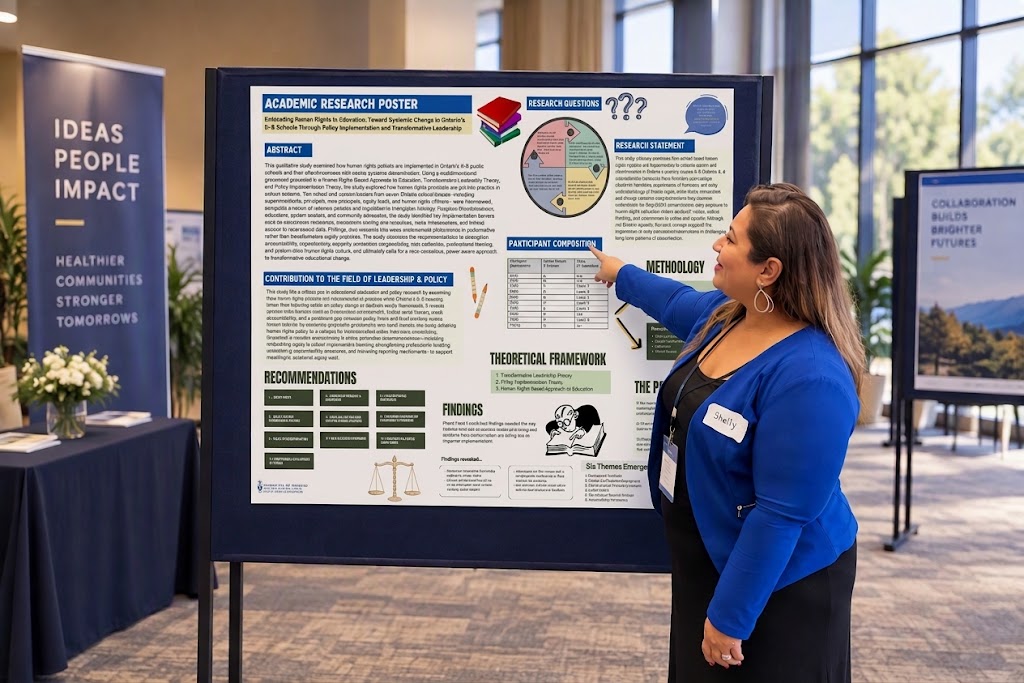
This commitment is also reflected in my PhD research and in my upcoming book, Human Rights Policies and the Struggle for Educational Equity in Ontario Schools: From Performative to Transformative. In my book, I move beyond asking whether schools have equity and human rights policies on paper and examine what it takes to make those commitments meaningful in practice. I offer ten recommendations for moving from performative commitments to transformative change, with a focus on accountability, implementation, leadership, organizational culture, and the lived experiences of students and communities.
Equality, therefore, is not an abstract ideal. It is something we teach, model, institutionalize, and protect.
Receiving the Women Empowerment Foundation’s Diversity, Equality & Inclusivity Award was deeply meaningful because it acknowledges the work I am doing around creating more equitable and inclusive environments.
Equality is important to me because it has the power to transform lives. When people feel seen, valued, and included, they are better able to thrive and contribute their talents and perspectives to their communities. This belief has guided my commitment to human rights, educational equity, and inclusion, and continues to inspire the work I do to help create a more just and equitable society for future generations.
In your experience, what types of male allyship do you feel women need to foster at home and at work, to encourage an equitable ecosystem?
We need men. I say that not as a woman asking men to create opportunities for us, but as a wife, a daughter, and a mother to a son who believes deeply in the importance of men being part of the conversation and part of the solution. Gender equity cannot be achieved by women alone. We need men who are willing to listen, challenge inequity, share responsibility, speak up when something is wrong, and use their influence to create space for women to be heard, respected, and represented.
At home, male allyship begins with how we raise the next generation. I have had many, many conversations with my children about dignity, discrimination, equality, fairness, and justice as values that should shape how they treat people and how they understand the world around them. As a mother to a son, I want him to understand that being a man carries a responsibility to respect women, recognize inequity, challenge injustice, and use his voice and privilege thoughtfully. It also means sharing caregiving, household responsibilities, and emotional labour so that equality is something children witness, not simply something they are taught.
In the workplace, male allyship means going beyond mentorship. It means sponsorship, opening doors, amplifying women’s voices, challenging biased practices, questioning inequitable systems, and being willing to have difficult conversations.
The most meaningful part of my own journey has been realizing that personal achievement becomes far more powerful when it creates possibility for others.
~ Dr. Shezadi Khushal
What would you tell your 18-year-old self, looking back over your life’s experiences?
I would tell my 18-year-old self not to make herself smaller to make other people comfortable. Be humble, but never diminish yourself. Be kind, but do not confuse kindness with accepting less than you deserve. Ask more questions. Take up space. Challenge what does not feel right. And do not wait for someone to give you permission to become the person you know you can be.
I grew up in a time and culture where we were taught to keep our heads down, respect authority, and accept things as they were. We were taught to endure before we were taught to assert ourselves, to accommodate before we were taught to advocate, and to be grateful for what we had rather than ask whether something could be better. There was tremendous value in the humility, resilience, respect, and responsibility I learned, and I carry those values with me today. But I also wish I had learned earlier that humility does not require silence, respect does not mean surrendering your own voice, and gratitude does not mean settling for less than you deserve.
I would also tell her that success is not a race, and it is certainly not a checklist. There will be moments when you compare yourself to people who seem further ahead. Do not. Your journey is your own. Some of the greatest achievements in your life will not be measured by titles, degrees, awards, or recognition. They will be measured by the people you have helped, the barriers you have challenged, the doors you have opened for others, the students whose lives you have touched, and the children you have raised.
And I would tell her to protect the people and things that matter most. Work hard, dream boldly, and pursue your purpose—but make time for family, laughter, friendship, rest, and the small moments that you cannot get back. Do not become so focused on building a meaningful life that you forget to live it.
Most importantly, I would tell her: you are allowed to become someone you have not yet imagined. Your life will surprise you. There will be chapters you could never have predicted, challenges you will not believe you survived, and opportunities you never imagined would find you. Keep your values close. Stay grounded. Remain compassionate. And never lose the part of yourself that believes you can make a difference.
And finally, I would tell her: be proud of yourself sooner. You will spend so much of your life becoming, achieving, giving, and building. Remember to pause along the way and recognize the woman you are becoming. She is already worthy. She always was.
What advice would you give to women to help them step into their power?
I would tell women: do not wait until you feel ready. Step forward anyway. One of my favourite quotes is, “be afraid and do it anyway”. You don’t have to have it all figured out.
Stepping into your power does not mean becoming louder, harder, or less compassionate. For me, it has meant becoming more comfortable with my own voice, trusting my instincts, recognizing the value of my perspective, and being willing to speak when something matters…even when it would be easier to remain silent.
I would also tell women to stop measuring their worth by whether everyone approves of them. You will not always be understood. You will not always be liked. And sometimes, stepping into your power means entering spaces where women like you have not traditionally been represented and having the courage to belong there anyway.
I have a motto I live by, especially as a mother of two: be competitive – highly competitive – but compete only with yourself. Challenge yourself to be better than you were yesterday, to learn something new, to grow, and to keep moving forward. I think about James Clear’s Atomic Habits and his powerful idea that improving by just 1% each day can compound into remarkable growth over time. You do not have to transform your life overnight. Small, consistent choices to become better, stronger, wiser, and more purposeful can ultimately create extraordinary change. That is the kind of competition I believe in – not trying to be better than another woman, but becoming the best version of yourself.
And finally, do not step into your power only for yourself; use it to create space for someone else. Mentor. Sponsor. Share what you know. Open doors. Bring someone into the room with you. The most meaningful part of my own journey has been realizing that personal achievement becomes far more powerful when it creates possibility for others.
Can you share one resource (book, course, mastermind/masterclass, etc.) that you feel all women need to have?
I Am Malala by Malala Yousafzai is a powerful testament to the belief that education can change lives, communities, and societies. What makes her story so remarkable is not only her courage in defending girls’ right to learn, but her unwavering conviction that every child deserves the opportunity to realize their full potential. The book reminds us that meaningful change often begins with a single voice willing to challenge injustice and stand up for the rights and dignity of others.

What mantra do you live by and how has it impacted your life?
I have two mantras that guide how I live and lead: If a door opens for you, hold it open for someone else and Do good, even when no one is watching.
The first speaks to my belief that achievement is not only about personal success, but also about helping others succeed. Throughout my career, I have tried to mentor, support, and advocate for people whose voices are often unheard, particularly those facing barriers to inclusion and equity. The second keeps me grounded in integrity and humility. It reflects my belief that the most meaningful contributions are sometimes the ones made quietly, without recognition or applause. These have influenced how I approach my work, my leadership, and my relationships.
Which therapies/modalities have helped to shape your healing and empowerment journey that you think would be helpful for other women?
For me, healing has not been one single therapy or modality. It has been an ongoing process of self-reflection, learning, faith, meaningful conversations, and giving myself permission to grow and evolve. I have found tremendous value in praying, journaling, reflective practices, mentorship, and creating intentional space to understand my experiences rather than simply moving through them.
I have also learned the importance of having a handful of meaningful relationships with women with whom I can be completely honest; women who listen without judgment, challenge me when necessary, celebrate my growth, and remind me of who I am when I temporarily lose sight of it.
I have learned that healing is not about erasing the difficult parts of your story; it is about understanding them, making peace with what you cannot change, and deciding what you want to carry forward. Some experiences have taught me resilience, some have taught me boundaries, and others have taught me that I am capable of far more than I once believed.
We should not have to make ourselves smaller to make other people comfortable.
~ Dr. Shezadi Khushal
ABOUT 'MY LOVE LETTER TO INDIA':
My Love Letter to India: On Colonialism, Legacy, and Endurance is a deeply personal and poetic exploration of ancestry, identity, belonging, and the enduring legacies of colonialism through the lens of the diaspora experience.
Through vivid narratives of Ahmedabad, Delhi, Jaipur, Agra, Goa, and Mumbai, the book takes readers on a journey through India’s history, culture, and enduring spirit. More than a travelogue, it is a reflection on memory, resilience, and self-discovery, exploring how the connection between land, heritage, and personal identity can reveal larger histories of endurance and belonging.
At its heart, the book is both a celebration of India’s resilience and an intimate exploration of what it means to reclaim one’s roots and sense of identity. It invites readers to reflect on their own connections to heritage, history, and the places that shape who they are.
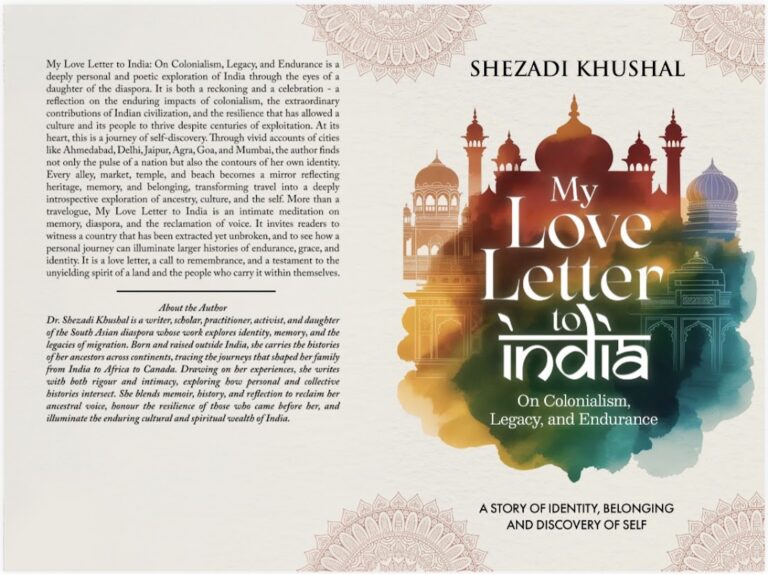
Through its exploration of a nation shaped by centuries of colonialism yet defined by resilience, creativity, and determination, My Love Letter to India offers a powerful reminder that understanding where we come from can deepen our understanding of who we are. It is a tribute to the enduring spirit of a people and a place, and to the profound connections between personal journeys and collective histories.
Discover the journey of heritage, resilience, and belonging. Purchase your copy of My Love Letter To India: On Colonialism, Legacy, and Endurance today.
To contact or learn more about Dr. Shezadi Khushal: Website, LinkedIn, Purchase Your Copy Here